(469) 361-2277
 (469) 361-2277











Mathnasium of Allen Awarded in Reader's Choice Contest for Best Tutoring and Best Early Education
Aug 11, 2026 | Allen


Your child brings home a math worksheet, and you sit down to help. The problem looks simple enough, but when you explain the rule you learned years ago, they insist their teacher said something different.
Sound familiar?
Math education has evolved, but many of the shortcuts and patterns we memorized in elementary school still stick with us. Some of those rules were oversimplified to make early concepts easier to grasp. Others only worked because we hadn't yet encountered fractions, negatives, or variables.
The challenge is that these same patterns can create real obstacles when students move into more complex math. Our tutors have seen and heard it all, so today, they're sharing 9 math myths that parents should be aware of, along with the truth behind them.

When kids first learn multiplication and division, the pattern seems clear:
10 × 5 = 50 (The number got bigger!)
10 ÷ 5 = 2 (The number got smaller!)
After years of working with whole numbers, these rules feel universal. However, both of these rules break down once fractions and decimals enter the picture.
Multiply 5 by 0.5, and you get 2.5. The number shrinks! It might seem counterintuitive, but it actually makes a lot of sense. You’re basically asking, “If I have five halves of a pizza, how many whole pizzas do I have in total?”
Division follows the same principle but in the opposite direction.
Divide 5 by 0.5, and you get 10. The number grows because you're asking, "How many pizza halves are there in 5 pizzas?" Since two halves make one whole, the answer is ten.
📕 You May Also Like: 8 Common Mistakes Kids Make with Decimals & How to Fix Them
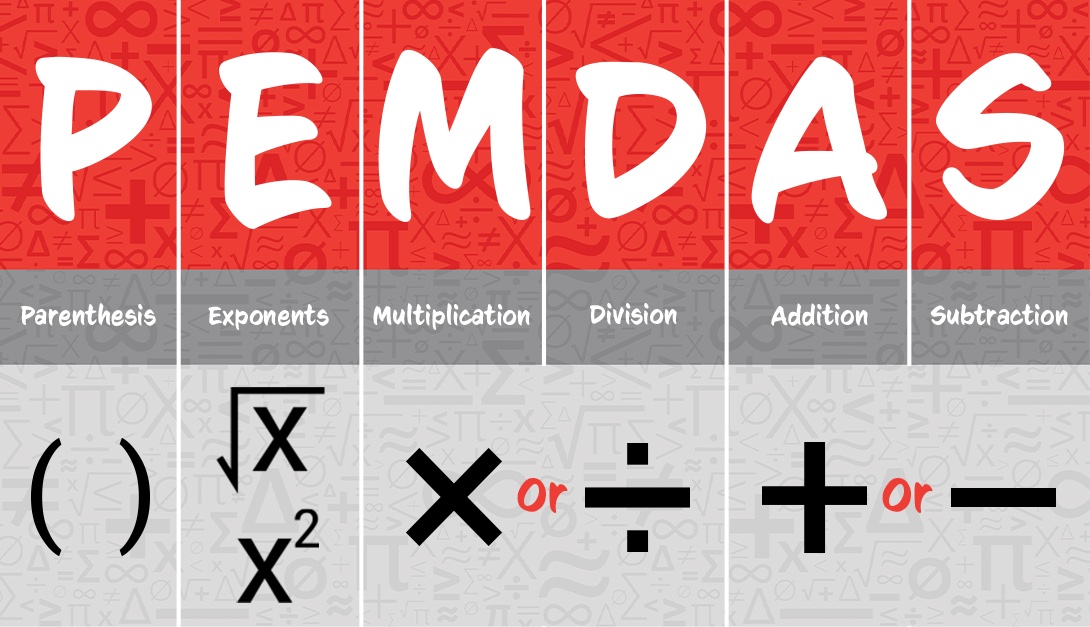
PEMDAS (Parentheses, Exponents, Multiplication, Division, Addition, Subtraction) is taught in nearly every elementary classroom. The problem is that the acronym itself creates confusion.
Because M comes before D and A comes before S, students think you always do multiplication before division and addition before subtraction.
The truth is that multiplication and division have equal priority, as do addition and subtraction. When operations are at the same level, you work from left to right.
Look at this example: 12 ÷ 3 × 2
Working left to right (the correct way): you will first calculate 12 ÷ 3 = 4, and then 4 × 2 = 8
But if you did multiplication first, it would be: 3 × 2 = 6, and then 12 ÷ 6 = 2
Same numbers, completely different answer.
This is why we make it a point to highlight that it’s multiplication OR division, addition OR subtraction. So, always work from left to right, and whatever comes first takes priority.
📕 You May Also Like: The Order of Operations in Math
Before fractions, bigger numbers always meant more. Ten is greater than five. One hundred is greater than fifty. So when kids see \(\Large\frac{1}{4}\) and \(\Large\frac{1}{2}\), some assume \(\Large\frac{1}{4}\) must be bigger because 4 is greater than 2.
But fractions flip this logic. When the numerator (the number on top) stays the same, a larger denominator (the number on the bottom) actually creates smaller pieces. Compare \(\Large\frac{1}{2}\) (which equals 0.5) to \(\Large\frac{1}{8}\) (which equals 0.125). The fraction with 8 in the denominator is much smaller.
To paint a picture, if you cut a pizza into 2 slices, each slice is pretty big. Cut the same pizza into 8 slices, and each slice is much smaller.
📕 You May Also Like: How to Compare Fractions? A Kid-Friendly Guide
Some students discovered a tempting shortcut when simplifying fractions. They look at \(\Large\frac{16}{64}\) and think, "I can just cross out the 6s and get \(\Large\frac{1}{4}\)." And surprisingly, it works! The answer is correct.
But here's the problem: this works by pure coincidence, not by mathematical rule. The correct method is to cancel common factors (both 16 and 64 are divisible by 16), not individual digits.
Try the same trick with other fractions, and you'll see why it fails.
Take \(\Large\frac{12}{24}\). If you cancel the 2s, you get \(\Large\frac{1}{4}\). But the actual answer is \(\Large\frac{1}{2}\) because you need to divide both the numerator and denominator by their greatest common factor, which is 12.
The digit-canceling trick occasionally stumbles into the right answer, but it’s not something students should ever rely on.
📕 You May Also Like: Simplifying Fractions: Quick Steps to Reduce and Compare
Students often resist the idea that multiplying two negative numbers gives a positive result. After all, if being in debt is bad, how can two debts turn into something good? The logic feels backwards.
But look at the following pattern:
2 × (-2) = -4
1 × (-2) = -2
0 × (-2) = 0
(-1) × (-2) = 2
(-2) × (-2) = 4
Each time the first number decreases by 1, the result increases by 2. To keep the pattern consistent, (-2) × (-2) must equal 4. The math follows a logical progression, even if it feels counterintuitive at first.
📕 You May Also Like: How to Subtract Positive and Negative Integers?
When students first learn to solve equations, the process is straightforward. Whatever you do to one side, you do to the other. The equal sign stays put, and everything works out.
But inequalities have an extra rule: if you multiply or divide both sides by a negative number, you must flip the inequality sign. Many students miss this because they're focused on solving the problem and forget that the relationship between the two sides has changed.
Here's an example. Start with -2x < 6. To solve for x, divide both sides by -2. The answer is x > -3. Notice the sign flipped from less than to greater than.
Why does this happen?
Let’s put it this way: we know that -2 is less than 3. Now multiply both sides by -1. You get 2 and -3.
But 2 is not less than -3, so the inequality must flip to 2 > -3 to stay true.
📕 You May Also Like: What Is Inequality in Math?
This one trips up students and adults alike. Looking at 0.999... with nines continuing forever, it seems like it should be just a tiny bit less than 1. There's always another 9, so it never quite reaches 1, right?
Well, not exactly. Looking at it mathematically, the number 0.999... (with infinitely repeating nines) is exactly equal to 1. Not approximately. Not "so close it doesn't matter." Exactly the same number.
Here's why the confusion happens: we're used to finite decimals. We know that 0.9 is less than 1, and 0.99 is less than 1, and 0.999 is less than 1. So our brains assume the pattern continues even when the nines repeat infinitely. But infinity acts differently.
We can see this in practice through algebra.
For example, when learning fractions, students learn that \(\Large\frac{1}{3}\) is equal to 0.333…
To get from \(\Large\frac{1}{3}\) back to 1, we just need to multiply the number by 3. This means that:
0.333… x 3 = 1
So, going back to 1 and 0.999…, we can conclude that the two are the same number.
This concept shows students that infinity isn't just "a really big number." It behaves differently, and our everyday intuitions don't always apply.
When students learn about prime numbers, they learn that primes are numbers divisible only by 1 and themselves. Since 1 is divisible by 1 and itself (which is also 1), many students conclude that 1 must be prime.
The problem is that prime numbers are defined as having exactly two distinct positive divisors: 1 and the number itself. The keyword here being distinct. The number 1 only has one distinct divisor, so it doesn't qualify.
The prime numbers start at 2, 3, 5, 7, 11, and continue from there. The number 1 stands alone in its own category: as neither a prime nor a composite number.
📕 You May Also Like: What Is Prime Factorization?
Imagine flipping a coin and getting heads ten times in a row. Many people would bet that tails is coming next. After all, things should even out, right? The coin can't just keep landing on heads forever.
But, mathematically speaking, on the next flip, the probability is still exactly 50/50.
This is called the gambler's fallacy.
And the best way to understand this is to remember that neither you nor the coin “knows” how many times it has been flipped or what the results were in the past.
📕 You May Also Like: How to Find the Probability of Two Events Happening

At Mathnasium, our specially trained tutors can help identify exactly where understanding broke down and rebuild it with patience and proven strategies.
Mathnasium is a math-only learning center dedicated to helping K–12 students of all levels excel in math.
Behind our personalized math programs is a proprietary teaching approach called the Mathnasium Method™. Beyond rote drills or shortcuts, our method is built to help students truly make sense of what they're learning.
We support math mastery through:
Personalized learning: Each student begins with a diagnostic assessment that helps us identify current skills, knowledge gaps, and how they naturally think through math. We use those insights to build a custom learning plan tailored to their needs.
Teaching for understanding: We explain math in clear, everyday language, using a mix of verbal, visual, mental, tactile, and written techniques. This allows students to approach each concept in the way that makes the most sense to them.
Caring, responsive tutors: Our tutors are specially trained in both the technical and emotional aspects of teaching. They know when to guide, when to challenge, and how to help students regain trust in their thinking.
Independent problem-solving and critical thinking: We give students space to work through challenges on their own, then rejoin them to check their reasoning. Instead of just giving the answer, we help them understand the how and why. This helps them develop problem-solving skills and critical thinking tools they can use in math and life.
A supportive, fun environment: Many of our activities are hands-on or game-based. We use reward systems and consistent encouragement to keep students engaged. And we celebrate progress because confidence grows with every win.
The result? Real, measurable progress.
94% of parents report improvement in their child's math skills and understanding
93% of parents notice a more positive attitude toward math
90% of students see higher grades in school
Mathnasium operates over 1,100 learning centers across the U.S., bringing our proven approach close to your community.
For families in or near Allen, TX, Mathnasium of Allen is a trusted local center with years of experience transforming how students think and feel about math. With over 100 five-star Google reviews and multiple Reader's Choice Awards from Living Magazine, it's been recognized for:
Best Tutoring (2021-2024)
Best Early Education (2023)
Community Votes 2025 Best Tutor in Allen
If your child is ready to move past math myths and build real confidence in math, our team is happy to assist.
📅 Schedule a Free Diagnostic Assessment at Mathnasium of Allen
Not located near Allen?
Mathnasium of Allen is a math-only learning center for K-12 students in Allen, TX. Trusted by over a million parents, Mathnasium uses personalized learning plans and the proprietary Mathnasium Method™ to help students catch up, keep up, and get ahead on their math journey.
Our specially trained tutors deliver face-to-face instruction in a supportive and fun small-group environment, working with students both in center and online to develop a deep understanding of math, build confidence, and improve academic performance.
Schedule Free Assessment