

Allen
845 W Stacy Rd
, #120B
Allen, TX 75013
Allen, TX 75013
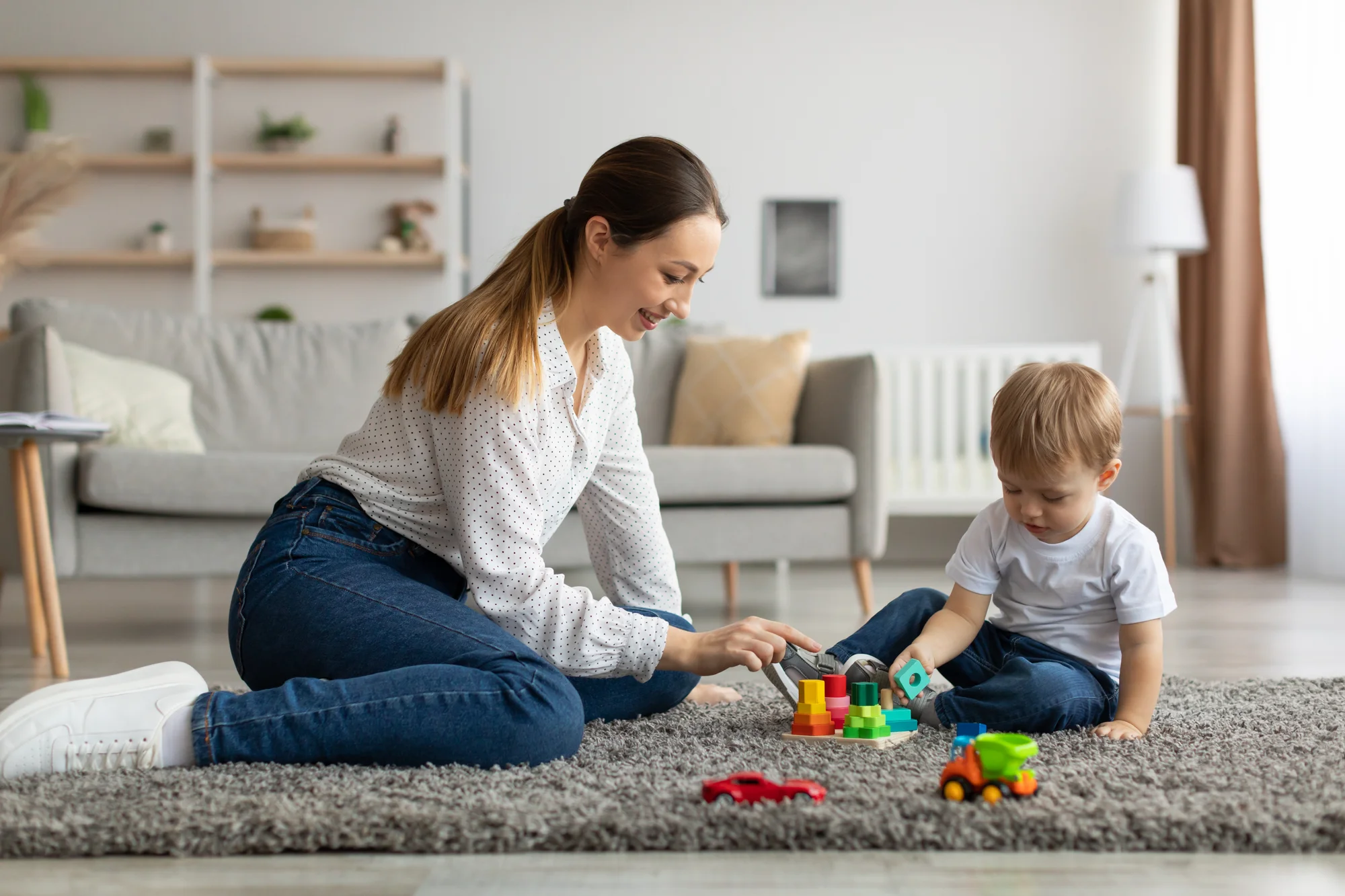
Finding time for structured math practice on top of everything else an average day contains can be difficult. But here's the thing: your day already has math in it. Cooking, shopping, driving, or playing outside — all of these activities can easily accommodate math practice.
At Mathnasium centers, disguising math practice as just another fun activity is our specialty. Therefore, our tutors have gathered a list of eight practical, fun-filled ways to practice math at home.
Cooking and baking give you several opportunities to practice math in an engaging way.
Our personal favorite is practicing fractions by changing the recipe. The main hurdle with fractions in general is that they are quite abstract. But physically measuring the amount of flour and then figuring out how much half of a \(\Large\frac{3}{4}\) cup equates to is as concrete as you can get.
But you can also do simpler practices, such as figuring out the overall cooking time by adding together the time needed for different steps, counting cups and cutlery, practicing division by calculating how many cookies each family member gets from one batch, and so on.
Whichever practice you decide to go with, your student is a lot more likely to stay engaged, as they aren’t working with abstract ideas. And knowing how many cookies they can eat at the end is apt motivation for students of all ages.
📕 You May Also Like: 5 Math Skills You Can Teach in the Kitchen

Aside from brushing up on their math, this practice also helps children learn a valuable life skill.
Parents occasionally tell us that their children have a hard time sitting down and practicing math. Whether this is due to math anxiety or just a surplus of energy, there is something you can do.
The five minutes before bed are usually a lot calmer than the rest of the day. For this reason, your student is more likely to be relaxed.
So, what you can do is use this time to do a quick "I'm thinking of a number" riddle: simple addition and subtraction clues for younger students, multi-step clues involving multiplication or division for older ones.
Some example cues you can use:
"I'm thinking of a number. If you add 6 to it, you get 13. What is it?" (grade 1 to 2)
“The number is bigger than 20 and smaller than 30, and it is even. What could it be?" (grade 2 to 3)
“If you multiply my number by 4 and then subtract 3, you get 21. What is it?" (grade 4 to 5)
"The number is a multiple of 6, it’s less than 50, and when you divide it by 4, you get a remainder of 2. What is it?" (grade 5 to 6)
It’s a very quick activity that can easily be tailored for your student’s level. But the main benefit is that it helps a lot in the long run to battle the negative association of “math practice = stress."
📕 You May Also Like: Understanding Math Anxiety and How to Overcome It
Aside from just being a fun activity, jigsaw puzzles also lend themselves to a bunch of different math exercises.
If doing fractions in the kitchen sounds a bit too messy, use puzzles instead. If you and your child have placed down 25 of the 100 pieces, what fraction is that? And what does that come out to as a percentage?
You can also get a lot more granular here, as representing \(\Large\frac{3}{200}\) is very difficult to do with flour but pretty simple with a puzzle.
However, you don’t have to stick to fractions. How about geometry?
Build out the edges of the puzzle and then calculate the approximate perimeter by measuring one piece. From there, calculate the area as well.
Or just do basic subtraction to figure out how many pieces are left in the box. And for very young learners, encourage them to count as you place each piece down.
📕 You May Also Like: Perimeter vs. Area: Why Kids Mix Them Up
Set up a pretend restaurant at dinner time with a simple handwritten menu and prices. Ask your child to calculate the total bill for the table, work out what change you would receive from a $20 note, and figure out the tip.
This is particularly useful for students who are learning to add multi-digit numbers or work with decimals, because money provides an immediate reality check.
For example, if the total comes out to $47 and your child looks at their hand and sees a $20 bill, they can intuitively figure out that something went wrong.
Younger students can focus on adding up the order while older ones handle the percentage and change calculations.
We like this math activity a lot because going to an actual restaurant now feels like a low-pressure test. This, in turn, gives students the motivation needed to fully master the concepts at play.
📕 You May Also Like: Financial Literacy for Kids: Teaching Money Management Through Math
If spring cleaning is right around the corner, there are plenty of math activities at your disposal.
If you’re doing laundry, simply ask:
How many items are there in total?
How many of each color?
What fraction of the pile are socks?
How many pairs can be made from nine socks?
That last question is particularly convenient for explaining an otherwise abstract concept: remainders.
Nine socks making four pairs with one left over is immediately obvious in a way that 9 ÷ 2 = 4 remainder 1 often isn't.
But there are also simpler options, such as measuring a drawer to see whether a new organizer will fit. Counting how many items are in each room before you start and comparing once you're done. Estimating how many boxes you'll need before you start packing, and so on.
📕 You May Also Like: What Is Regrouping in Math? A Student Guide
While it becomes intuitive as you get older, elapsed time is one of the most consistently tricky topics in grades 2 through 4, because the base-60 system of hours and minutes doesn't behave like the base-10 arithmetic students are used to.
So, why not practice while watching TV?
How long until their favorite show starts?
How many episodes fit into two hours?
What fraction of the evening is being spent watching?
Do they have enough time to watch a movie?
This is another math activity that we recommend to parents if their child shows resistance to regular math practice. After all, for most kids, screen time is when they are the most engaged.
📕 You May Also Like: 9 Ways Analog Clocks Teach Both Time and Fractions

If you have a scheduled movie night, this is an easy way to also ensure consistent math practice.
Math starts off by focusing on number sense, but spatial reasoning quickly becomes another dominant skill. Building something together helps young learners practice both.
A small bookshelf from a flat-pack kit, a cardboard model, or a simple birdhouse from craft supplies; as long as your child enjoys the process, it doesn’t matter what you are making.
Before you start, ask your child to measure the space it needs to fit, calculate whether the pieces are the right size, and figure out how many screws or cuts are needed.
Already, they’re practicing measurements and basic arithmetic. But by figuring out how all the pieces come together, they’re also building the needed foundation for later geometry concepts, such as transformations.
📕 You May Also Like: 3 Ways Early Spatial Skills Impact Long-Term Math Success
Lastly, we’re going to step away from strictly arithmetic and practice interpreting data.
Pull up the week's weather forecast together and ask your child to draw a simple bar graph showing the temperature for each day.
Once they’re done, ask them to identify the warmest and coldest days, calculate the difference between them, and find the average temperature across the week.
Data interpretation is introduced early in the curriculum, but often doesn’t get enough practice time, because it tends to feel less urgent than computation. This exercise aims to address that issue. You can also experiment with other graph types, such as pie charts or line charts.
📕 You May Also Like: How to Read 4 Most Common Graphs - A Kid-Friendly Guide
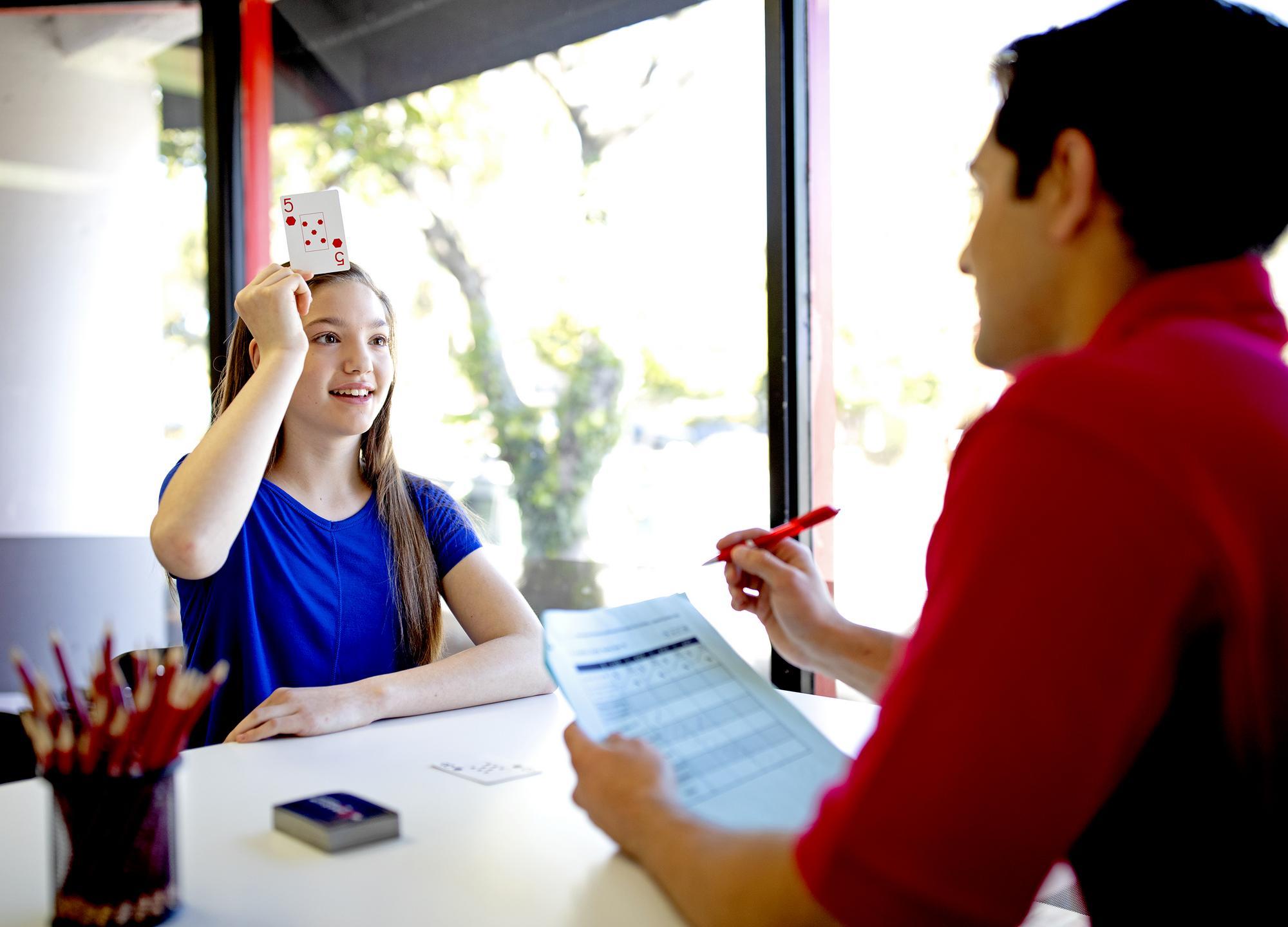
Mathnasium tutors strive to make math both fun and approachable at every stage.
Mathnasium is a math-only learning center dedicated to helping K-12 students learn and master math at every level, from the foundational skills of early elementary through the more demanding content of high school.
The activities we’ve discussed build the same habits Mathnasium reinforces in every session: applying math to real situations, thinking flexibly, and developing the kind of number sense that makes structured learning more effective.
They are a great starting point, and when your child is ready for more targeted support, we're here to take it further.
Our approach, the Mathnasium Method™, is proprietary, personalized, and designed to meet each student exactly where they are. Each student starts with a diagnostic assessment that identifies their strengths and knowledge gaps, from which we build a personalized learning plan.
Our specially trained tutors take it from there, working with students face-to-face in a caring and fun group environment, making math feel purposeful rather than obligatory.
And the results speak for themselves:
94% of parents report an improvement in their child's math skills and understanding
93% of parents report an improved attitude toward math after attending Mathnasium
90% of students saw an improvement in their school grades
With over 1,100 centers across the country, we bring the Mathnasium Method™ close to your community.
For families in or near Allen, TX, Mathnasium of Allen has spent years changing the way students think and feel about math.
Our community recognizes our commitment to student success and has rewarded us with:
Over 100 five-star Google reviews reflect our parents' trust in proven results
Multiple Reader's Choice Awards from Living Magazine: Best Tutoring (2021–2024) and Best Early Education (2023)
Community Votes 2025 Best Tutor in Allen
Business Rate Best of 2025 Tutoring Service for Allen
If your child is looking to catch up, keep up, or get ahead in math, our team is delighted to help!
📅 Schedule a Free Diagnostic Assessment at Mathnasium of Allen
Not near Allen?
Mathnasium of Allen is a math-only learning center for K-12 students in Allen, TX. Trusted by over a million parents, Mathnasium uses personalized learning plans and the proprietary Mathnasium Method™ to help students catch up, keep up, and get ahead on their math journey.
Our specially trained tutors deliver face-to-face instruction in a supportive and fun small-group environment, working with students both in center and online to develop a deep understanding of math, build confidence, and improve academic performance.
Schedule Free Assessment
 (469) 361-2277
 (469) 361-2277