
 (847) 777-1772
 (847) 777-1772











Prevent The Winter Slide & Finish The School Year Strong With Mathnasium
Jan 4, 2024 | Buffalo Grove


Math anxiety interferes with the brain’s ability to retrieve information and solve problems efficiently. Researchers have shown that worry competes with working memory, making it harder for students to apply what they already know. Even simple math facts become harder to access when the brain is busy managing stress.
Today, we’ll look at what math anxiety looks like, why it shows up most during testing, and what parents can do to help their child stay calm, focused, and confident.
With the right support, students don’t have to “power through” test anxiety. They can learn how to manage it and perform at their full potential.
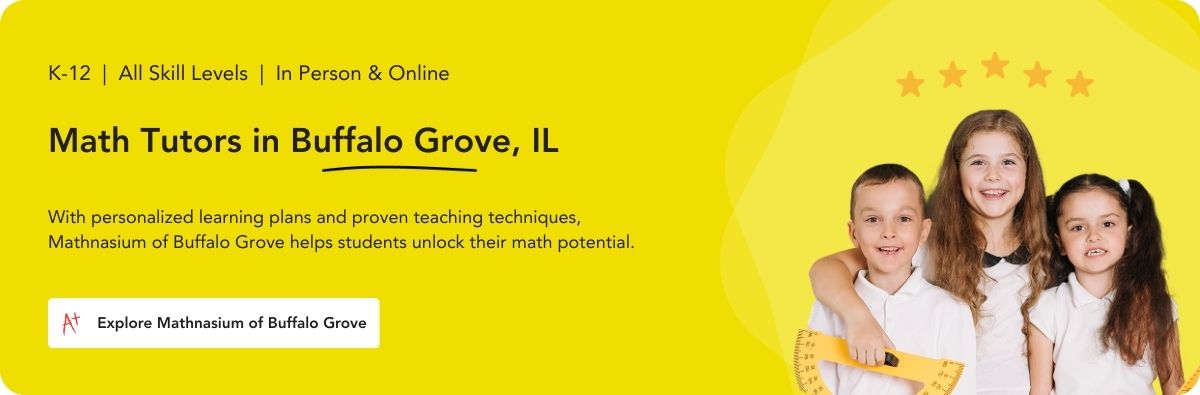
Math anxiety isn’t always obvious. For some students, it emerges through headaches, stomachaches, or irritability, particularly before a quiz or test. These physical symptoms are part of the body’s stress response, triggered when the brain perceives a high-stakes situation as a threat.
The science behind this response lies in working memory, which is the brain’s short-term mental workspace. Solving math problems requires students to juggle numbers, rules, and steps all at once.
When anxiety enters the picture, it crowds this space with intrusive thoughts. The brain begins multitasking between problem-solving and emotional regulation, reducing a child’s ability to focus and recall even familiar math facts.
This dynamic is especially disruptive during multi-step problems, where students must hold ideas in place while moving between operations. Research by Ashcraft and Krause (2007) and Ramirez and Beilock (2011) shows that even students who understand the material can start to feel lost or overwhelmed when their working memory becomes overloaded.
As mathematics becomes more abstract in the later elementary years, these internal difficulties can quickly affect a student's confidence. Recognizing these patterns early helps parents provide support before that doubt becomes discouragement.

Anxiety impacts students’ working memory, reducing their ability to focus and recall math facts.
A pep talk can help, but it can rarely make a tangible impact on math anxiety.
The only sustainable solutions to math anxiety are a few very specific habits, practiced consistently. These strategies are grounded in educational research and real experience with students who’ve learned to face math assessments with clarity and calm:
Avoidance creates friction. The longer a child stays away from math, the more effort it takes to re-engage. Confidence, on the other hand, builds through exposure. Even short, consistent practice reshapes math into something familiar and approachable.
A 2023 study highlights spaced practice and retrieval strategies as the most effective tools for long-term retention. Students who revisit small amounts of math each day recall information more easily under pressure.
Add 10-minute problem sets to the evening routine
Use weekend reviews to develop focus for longer school assessments
This steady exposure builds fluency and prevents stress from taking over during testing.
📕 You May Also Like: Creating a Math-Friendly Homework Environment at Home
Test anxiety is rooted in the body. Math feels harder when the brain is flooded with stress hormones. Instead of telling kids to “calm down,” give them tools they can use.
Box breathing—a steady inhale, hold, exhale, hold for four seconds each—activates the parasympathetic nervous system and returns the brain to a state where problem-solving is possible.
Progressive muscle relaxation helps release tension that blocks focus.
These techniques work best with regular practice outside of test situations, so they’re available on demand.
📕 You May Also Like: 5 Morning Routines for Math Success in the New School Year
Students build their internal narrative early. A child who believes math tests are about proving worth becomes hypervigilant. Every unfamiliar problem feels like a threat.
Research on cognitive reappraisal (Jamieson et al., 2011) shows that shifting the interpretation of physical symptoms, like a racing heart, can lead to measurable gains.
You might say, “Your heart’s working hard to help you think clearly,” or “That nervous energy is your focus kicking in.”
The goal is to get the student out of the “I’m facing a threat” and into the “I’m working on a task” mindset.
📕 You May Also Like: How Positive Math Talk Encourages a Growth Mindset at Home
Pressure shrinks curiosity. Outside of school, math can become a space for discovery again. Real-world examples, games, and collaborative problem-solving activate reasoning in environments free from evaluation.
Board games and puzzles build fluency without time limits
Recipes, budgets, and travel plans use math in concrete ways
Acknowledge the thinking that went into a partial solution, not just the result
These experiences train the brain to approach math with interest, not defense.
📕 You May Also Like: 5 Math Skills You Can Teach in the Kitchen
The quickest way to lower anxiety is to redirect attention from the answer to the process. Students open up when they feel safe explaining their thinking, even if they didn’t solve the problem “correctly.”
Instead of asking “Did you get it right?”, ask:
“What did you notice about the problem?”
“What was your first step?”
“Where did it start to feel confusing?”
Research confirms that oral explanation reduces performance pressure and reinforces understanding. As students learn to track their own reasoning, mistakes become useful signals and learning tools.
📕 You May Also Like: Why Parents Should Teach Kids to Embrace Math Mistakes
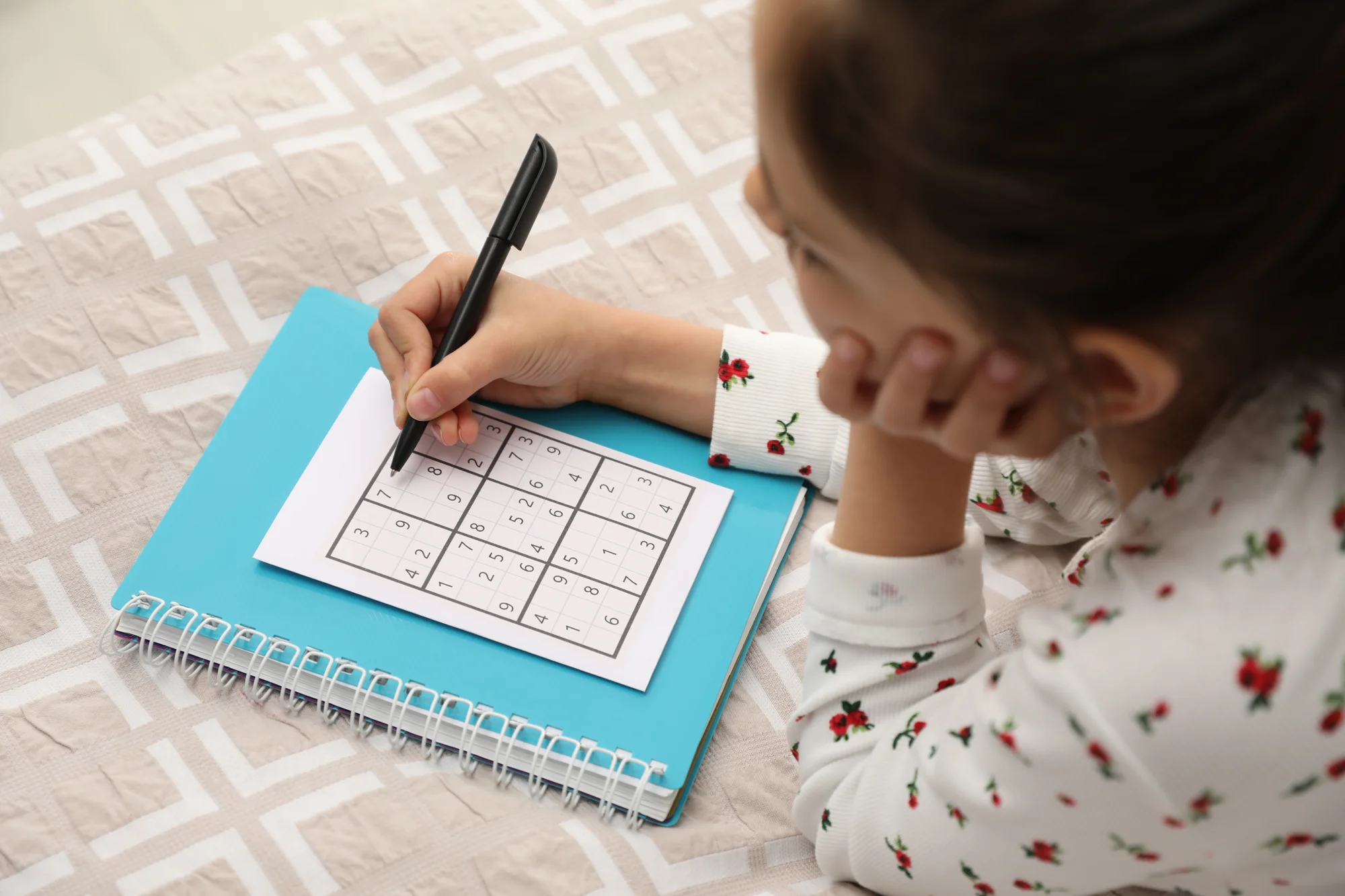
Routines reduce stress because predictable, repeated steps tell the brain, “You’ve been here before.” This lowers cognitive friction and helps students approach test day as a familiar process they can navigate.
Here are some pre-test routines that work:
Keep reviews short and focused. Reinforce concepts your child already understands to build confidence. Skip new material that could trigger last-minute frustration.
A screen-free wind-down that can include reading, stretching, or listening to calming music, helps the brain shift into rest mode for better sleep.
Physical readiness sets the tone for mental focus.
Serve a protein-rich breakfast and take two minutes for box breathing: inhale, hold, exhale, and hold for four seconds each.
Use a 5-minute expressive writing session. Ask your child to write down every thought or worry that’s bouncing around. This frees up working memory by clearing mental space previously occupied by anxiety.
The same research by Ramirez & Beilock (2011) we saw earlier found that students who wrote about their worries before a math test showed measurable improvements in performance.
A simple affirmation, like “I know how to work through this,” gives the mind a focal point to return to during moments of stress.
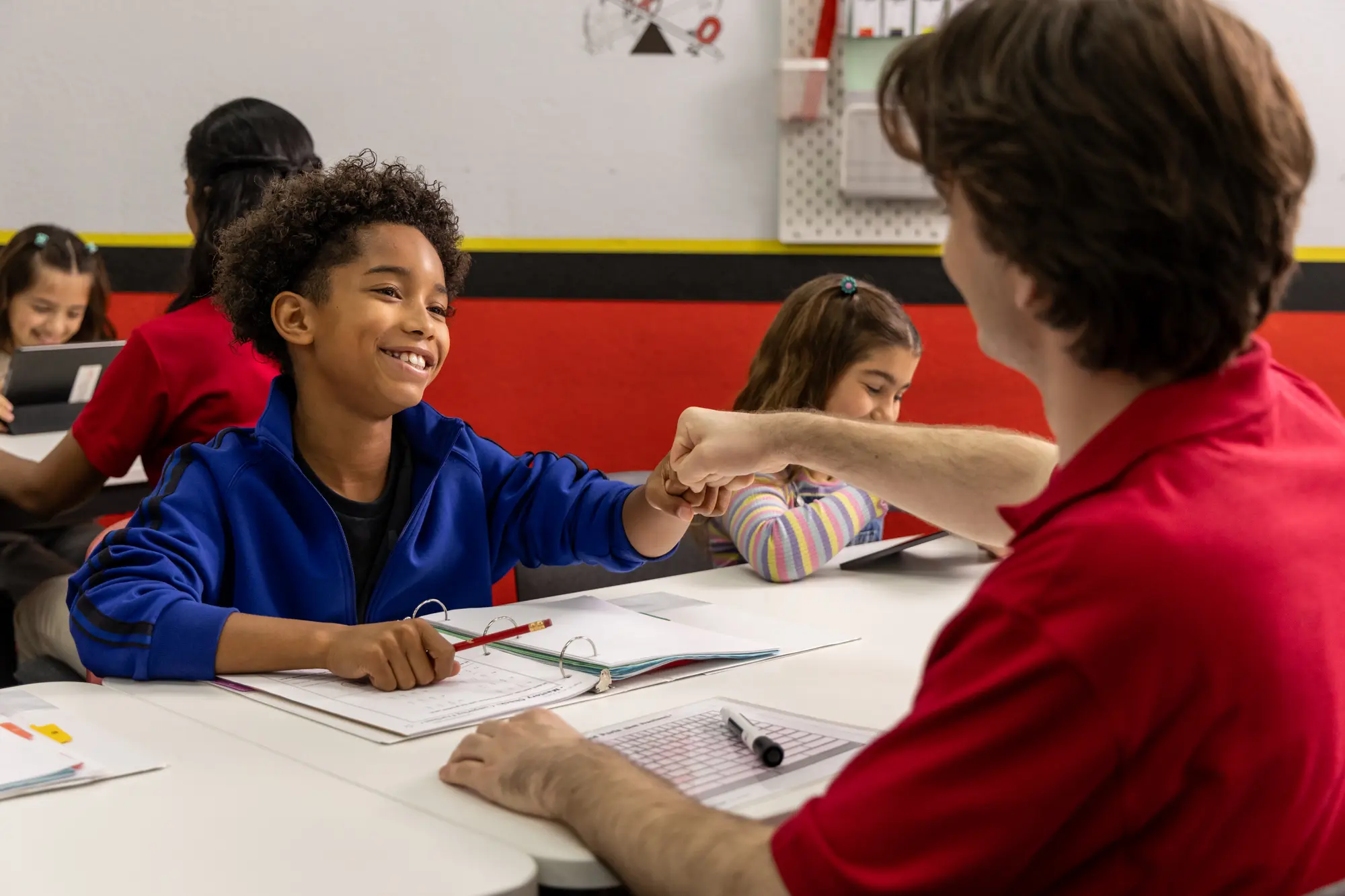
Mathnasium is a math-only learning center for students of all skill levels.
Test-day confidence is built through consistent guidance, clear strategies, and a learning environment that encourages students to think through problems, not rush to answers.
At Mathnasium, we use the Mathnasium Method™, a proven approach that develops deep understanding, number sense, and independent problem-solving. Our tutors teach students how to reason through them. We give students space to explore their thinking, then support them in refining it.
Students begin their Mathnasium journey with a diagnostic skills assessment to identify what they know, where the gaps are, and how they learn best. From there, we create a personalized learning plan that builds fluency, strengthens logic, and helps students stay calm under pressure both during math tests and throughout their academic journey.
Students work face-to-face with specially trained math tutors in a caring and fun group environment. As they build mastery, they gain more than test readiness—they develop the kind of confidence that follows them into every subject, every classroom, and every challenge.
And the results speak for themselves:
94% of parents report an improvement in their child’s math skills and understanding
93% of parents report a more positive attitude toward math
90% of students see an improvement in their school grades
With over 1,100 centers nationwide, Mathnasium helps families across the country find the right support.
For families in Buffalo Grove, IL, Mathnasium of Buffalo Grove provides expert math instruction, personalized learning plans, and a clear path to success.
📅 Schedule a free assessment today to get started.
Mathnasium of Buffalo Grove is a math-only learning center for K-12 students in Buffalo Grove, IL. Trusted by over a million parents, Mathnasium uses personalized learning plans and the proprietary Mathnasium Method™ to help students catch up, keep up, and get ahead on their math journey.
Our specially trained tutors deliver face-to-face instruction in a supportive and fun small-group environment, working with students both in center and online to develop a deep understanding of math, build confidence, and improve academic performance.
Schedule Free Assessment
