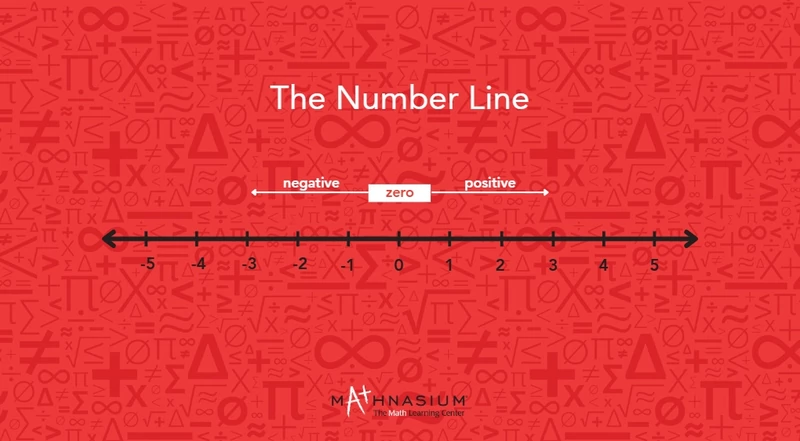
The number line shows up at every stage of the math journey because it makes abstract operations visible. They first appear when learning to count, and again while working through negative numbers, integer operations, and fractions.
When we only learn rules, like “a negative plus a negative gives you a negative,” we usually can't explain the reasoning behind it, which makes those rules harder to apply reliably. The number line solves this by giving us a visual we can follow.
Let’s walk through exactly how the number line works, how it represents positive and negative numbers, and how we can use it to add and subtract.

How Numbers Live on the Number Line
A number line is a straight line where every number has one fixed position.
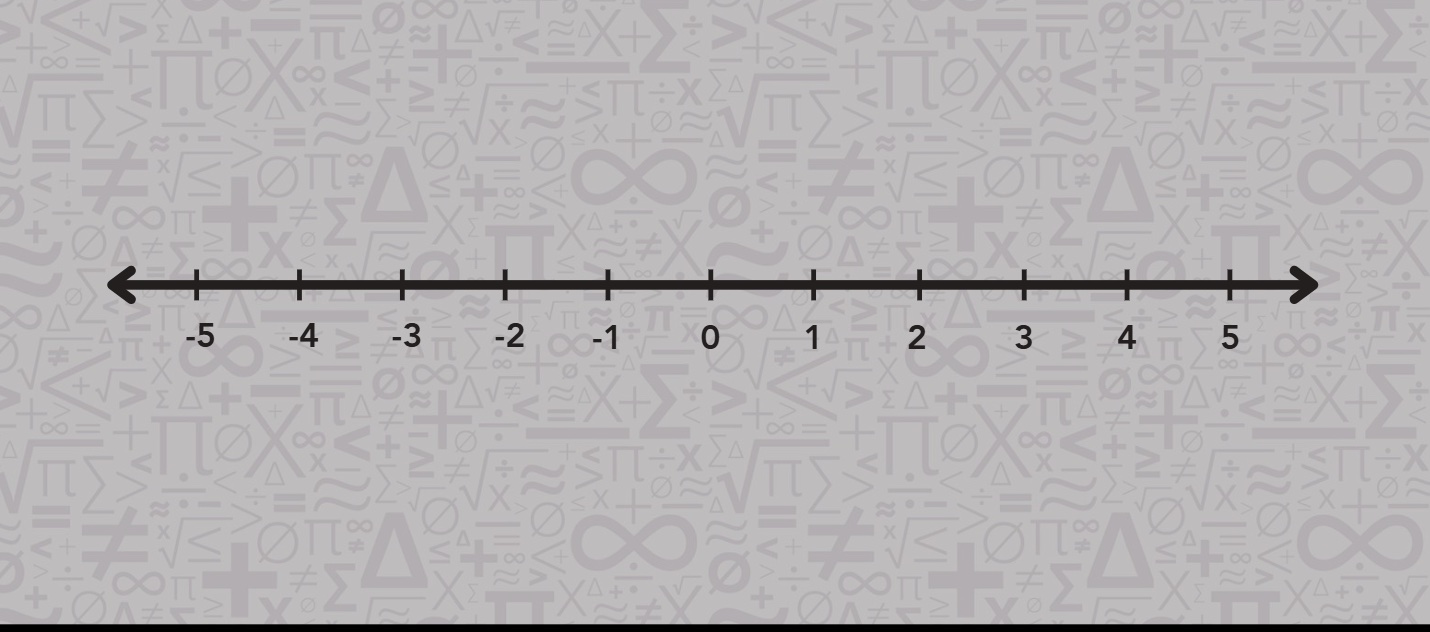
Zero sits at the center and is the reference point for every operation. From there, the line extends in both directions, and the arrows at each end signal that it goes on indefinitely.
-
Positive numbers sit to the right of zero and represent values above zero. Think of them as floors above ground level in a building: the higher the floor, the greater the number. Floor 5 is higher than floor 2, and both are above the ground floor.
-
Negative numbers sit to the left of zero and represent values below zero. Using the same building analogy: below the ground floor, you have basement levels: B1, B2, and B3. The further down you go, the further left on the number line. B3 is lower than B1, just as -3 is less than -1.
What makes the number line useful as a calculation tool is equal spacing. Numbers are marked on it, and the distance between every tick mark is the same.
📕 You may also like: How Number Lines Improve Math Understanding in Grades 1 Through 5
How to Find a Number on the Number Line
Finding any number on the number line comes down to four steps:
-
We start at zero. Everything else is measured from here.
-
Determine the direction. Positive numbers are to the right of zero; negative numbers are to the left.
-
Count the intervals. Each step represents one unit, and the spacing is always equal, so counting carefully from zero lands you in the right place.
-
Mark the point. Once located, that number has a precise, fixed position on the line.
This skill is the foundation for everything else the number line is used for. Once you can place any number confidently, using the line to add and subtract becomes simple.
Example 1:
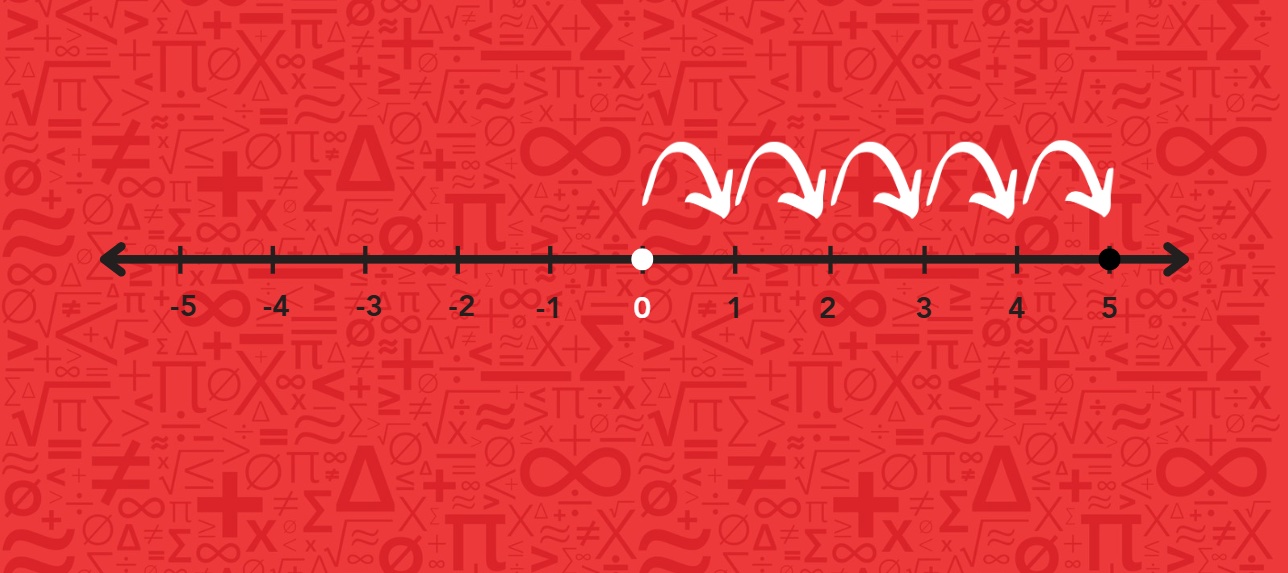
Since 5 is a positive number, start at zero and move right, counting five tick marks, and place your dot there.
Example 2:
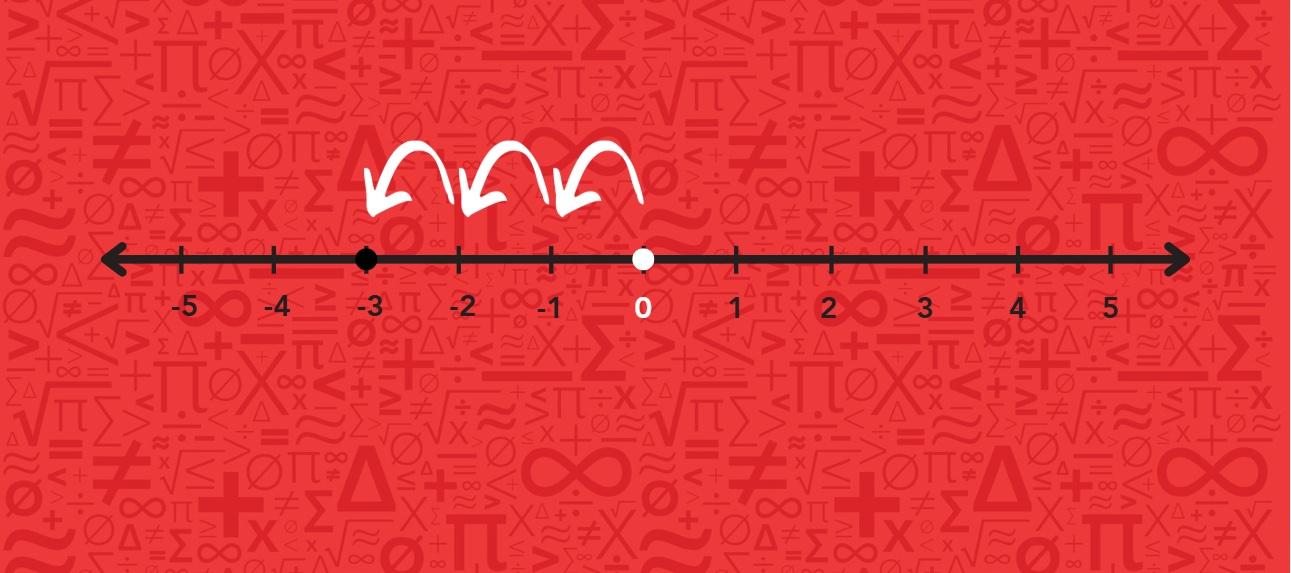
To find a negative number like -3, start at zero and move left, counting three tick marks, and place your dot there.
How to Add Numbers Using the Number Line
The secret to using the number line is simple: moving right means increasing in value, and moving left means decreasing. Once that clicks, addition and subtraction become natural movements instead of abstract rules to memorize.
Adding a positive number moves you to the right. Adding a negative number moves you to the left.
Let's go through two simple examples to establish the pattern.
Example 1
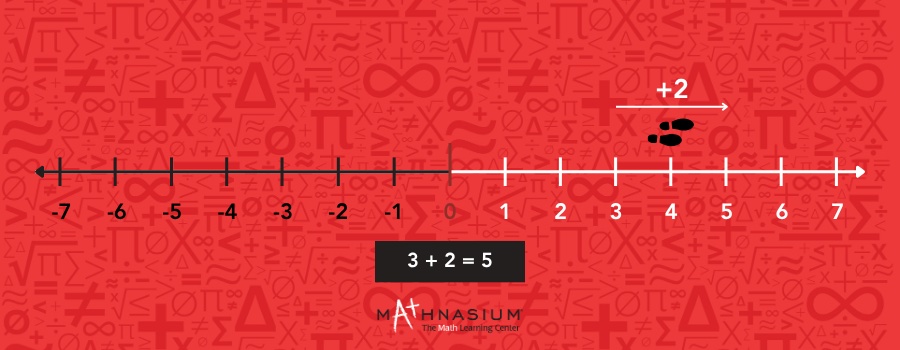
3 + 2: Start at 3. You're adding a positive number, so move 2 steps to the right. You land on 5.
Example 2
-2 + (-4): Start at -2. Because we are adding a negative number, we need to move left. Starting at -2, move 4 steps, and you will land on -6.
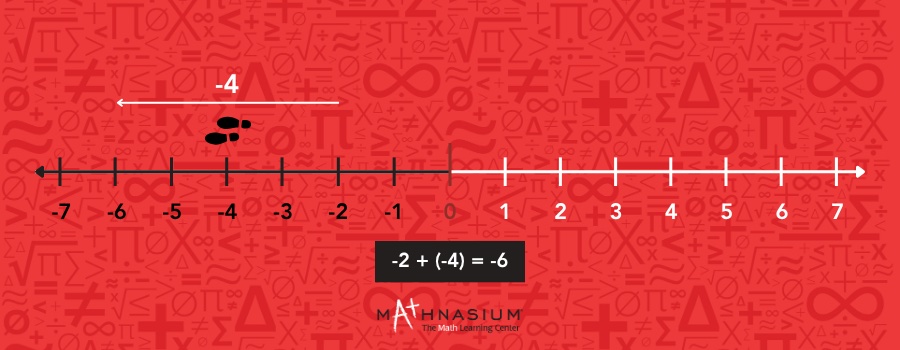
Let's pause on this one, as starting in negative territory can feel disorienting at first. The rule is: adding a negative always moves you left, wherever you begin. Work through it step by step.
📕 You may also like: How to Add Positive and Negative Integers: A Complete Guide
How to Subtract Numbers Using the Number Line
Subtracting a positive number moves you to the left. Subtracting a negative number moves you to the right.
That second rule can cause some struggles. When you subtract a negative, the two negatives cancel out and you move right instead of left.
Example 1
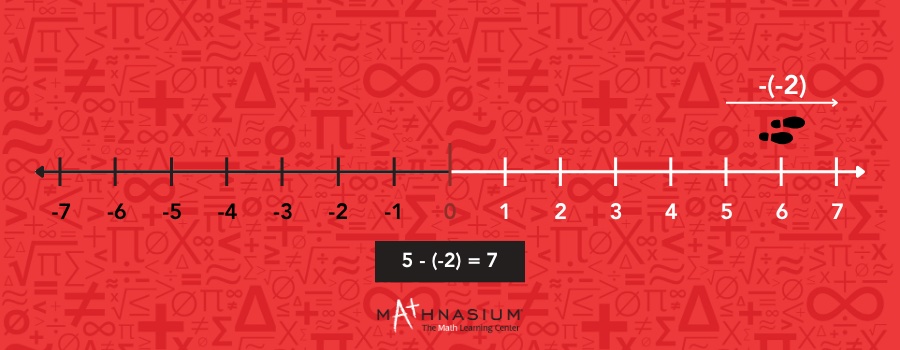
5 - (-2): Start at 5. You're subtracting a negative number, so move 2 steps to the right. That puts you at 7. Subtracting a negative number is the same as adding a positive.
Example 2
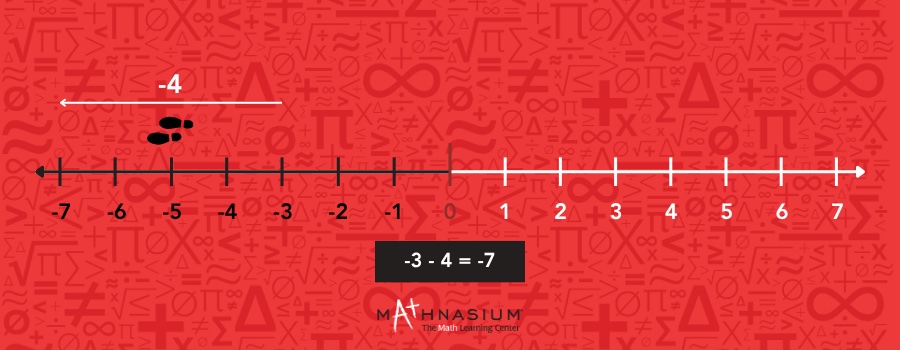
-3 - 4: Start at -3. Subtracting a positive number means moving left. Hop 4 steps to the left and that will bring you to -7.
📕 You May Also Like: How to Subtract Positive and Negative Integers? A Simple Guide
Where Students Usually Get Stuck
Struggles with positive and negative numbers on the number line come down to one of three specific difficulties.
We’ve noticed confusion with the direction of movement when a negative sign appears, particularly when subtracting a negative. Without a visual reference, the double negative doesn’t make sense.
If we are still a bit unsure of where negative numbers live on the line, it’s easy to lose track of our starting position or apply a movement rule backward.
When we rely on memorized rules without understanding what they mean, those rules tend to fail under pressure or with unfamiliar numbers. The number line addresses this directly: it maps each step out visually, so you don’t have to track the operations mentally.
Troubles like these usually stem from a gap in earlier education. Shaky number sense or uncertainty about where numbers live on the line makes the operations harder than they need to be. We identify and fill those gaps before moving to operations.
Your Turn: Place Numbers, Add and Subtract
Task 1: Place These Numbers
Place these numbers on the number line: -5, -3, 4, 6.
Task 2: Add These Numbers
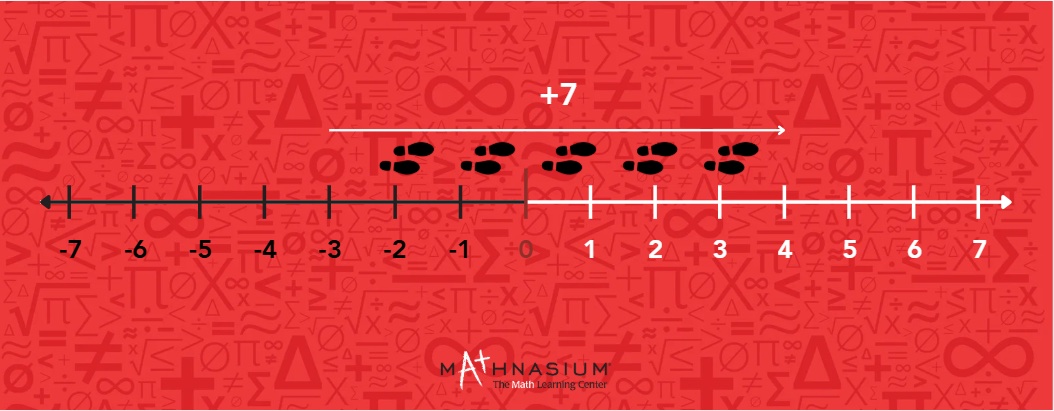
Solve: -3 + 7
Task 3: Subtract These Numbers
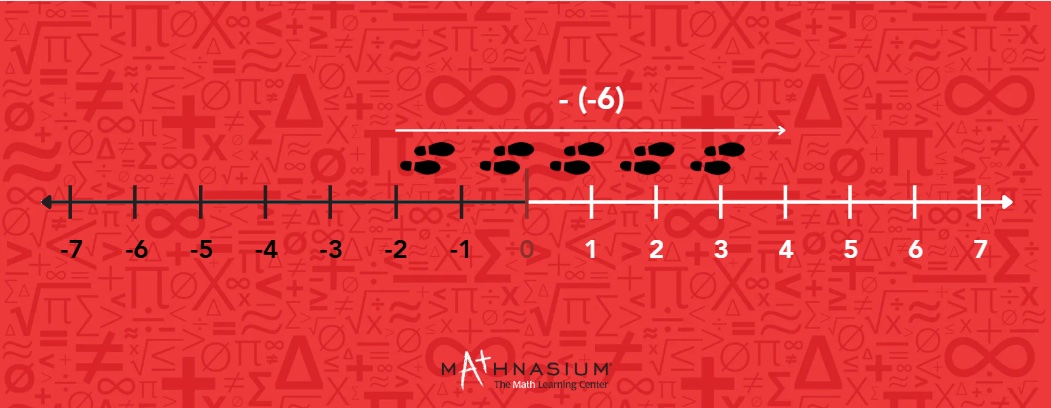
Solve: -2 - (-6)
FAQs About the Number Line
These are some of the questions we received from both parents and students:
1. When do students first encounter negative numbers?
Students get their official introduction to negative numbers in 6th Grade (around ages 11–12), aligned with standard curricula.
However, the concept of negatives often pops up much earlier in real life! Kids encounter them whenever they talk about temperatures below zero or owing a friend a dollar. Introducing the number line early on helps bridge the gap between these real-world experiences and formal math.
2. How does this connect to the coordinate plane?
Think of the number line as the foundational building block for the coordinate plane.
When you cross a horizontal number line (the x-axis) with a vertical number line (the y-axis) right at their zero points, you get the coordinate plane. Navigating the x-axis uses the exact same rules you just learned.
3. What’s the difference between a negative number and subtraction?
Negative (-x) is a sign that tells us that a number is smaller than zero, while subtraction (A - B) is an operation that lets us find the difference between two values.
Relating to the number line, a negative number lives to the left of zero, while subtraction is an operation where we change our position to find the exact distance (or difference) between two values.

At Mathnasium, the goal isn't just the right answer, it's understanding why it's right.
How Mathnasium Helps Students Master the Number Line
Mathnasium is a math-only learning center for students of all skill levels. We use the number line and math manipulatives, among other techniques, to help students truly learn and master math concepts.
We use the Mathnasium Method™, our proprietary teaching approach designed to help students truly understand math, not just memorize it. Our approach begins with a diagnostic assessment that shows us exactly where your student is in math. With these insights, we build a personalized learning plan for them, focused on (re)building solid math foundations and expanding mathematical thinking gradually.
Whether your child needs to catch up, keep up, or get ahead, our specially trained tutors are ready to meet them where they are.
The results speak for themselves:
-
94% of parents report an improvement in their child's math skills and understanding
-
93% of parents report their child's improved attitude toward math after attending Mathnasium
-
90% of students saw an improvement in their school grades
For students in and around California, MD, who are working through positive and negative numbers, or who have foundational gaps that are making this harder than it should be, Mathnasium of California, MD is here to help.
Ready to get started?
🗓️Schedule a free assessment at Mathnasium of California, MD
Not near California, MD?
📍Find a Mathnasium Learning Center near you.
Let’s Check Your Answers
Task 1:
Your dots should be placed 5 spaces to the left of zero (-5), 3 spaces to the left of zero (-3), 4 spaces to the right of zero (4), and 6 spaces to the right of zero (6).

Task 2:
Starting at -3 and hopping 7 steps to the right brings you past zero into positive numbers and you land on 4.
Task 3:
Subtracting a negative flips your direction to the right, changing the problem to -2 + 6. You will land on 4.


 (301) 737-1357
 (301) 737-1357