Math doesn’t need to stay inside a workbook. In fact, some of the strongest math habits form when kids explore numbers in the world around them.
Why?
Because real-life contexts help students truly understand why math works the way it does.
We’ve listed simple, creative, screen-light activities for school breaks, long weekends, or those after-homework evenings when you want something enriching but fun.
Ready to make math part of everyday life?
1. Cooking & Baking Together
Cooking is one of the easiest ways to turn math into a hands-on experience. Recipes introduce fractions, ratios, multiplication, measurement, and timing, all in a low-pressure and (might we add) delicious way.
Ask your child questions like: “If we double this recipe, how many cups of flour do we need?” or “Does cutting this recipe in half make sense for the number of cookies we want?”
Baking cookies, for instance, is a particularly good opportunity to explore equal groups.
Kids can divide trays into equal sections, calculate how much frosting is needed for 24 cookies versus 12, or experiment with ratios to perfect a family recipe.
And yes, tasting the results counts as quality control!
📕 You May Also Like: Math in the Kitchen: Real-World Learning Through Cooking
2. Shopping & Money Skills
Every grocery trip is a math lesson in disguise. Kids can estimate totals, compare prices, round to the nearest dollar, calculate discounts, or help stick to a family budget.
When paying with cash, ask: “If the total is $12.73 and we give the cashier $20, how much change will we get?”
Many parents tell us this helps decimals and the base-10 system finally “click.”
A lemonade stand teaches pricing, profit, measurement, and even marketing. Kids can track costs, decide fair prices, and calculate their earnings. It’s a confidence-boosting, entrepreneur-in-training moment that reinforces real-world number sense.
📕 You May Also Like: Decimal Sense: Connecting Money and Math
3. Travel & Road Trip Math
Heading out for a family vacation or weekend drive? Turn travel time into math time with playful challenges.
Try:
-
Counting how many red cars you see while driving
-
Adding or subtracting numbers on plates
-
Estimating how long it will take to reach the next stop, given the speed
-
Tracking miles per gallon and comparing fuel efficiency
For winter holiday trips, make a version of “license plate math bingo” to keep spirits bright and brains active.
To integrate more math into roadtrips, while at the airport or at the poolside, try portable mini math games like Kanoodle or Math Dice.
📕 You May Also Like: 10 Fun Math Games to Play at Home with Your Child
4. Games That Sneak in Math (Kids Don’t Even Notice!)
Board games and card games build strategic thinking, probability sense, pattern recognition, and multi-step reasoning. Many students use these skills later when working through algebraic thinking or word problems.
Here are some games that develop different skills:
-
Money management, probability, patterns, addition: Monopoly, Yahtzee, Rack-O, Set, Blokus, Uno.
-
Probability, counting combinations: Strategy games like Settlers of Catan, which reinforce resource management and probability.
-
Spatial reasoning, logic: Classic logic games such as chess, checkers, Qwixx, and Sudoku.
Wondering why these help?
Games require kids to think ahead, evaluate choices, and mentally track quantities. These are the same thinking patterns that help them truly understand algebra and higher-level math later on.
Family tip: Rotate a small “math game basket” to keep things fresh and easy to grab on a Friday night.
📕 You May Also Like: 3 Ways Early Spatial Skills Impact Long-Term Math Success
5. Building Projects
Kids who love hands-on projects thrive when math becomes part of construction and design. Measuring boards for a fort, planning garden plots, or assembling building block sets all reinforce geometry, area, perimeter, and spatial reasoning.
Ask questions like, “How much space will this garden bed take up?” or “What’s the perimeter of your LEGO® City?”
This will help kids visualize math as something that shapes the world around them.

Calculating the dimensions of buildings or 3-D shapes can become a great pastime, and even entice kids into the world of architecture and urban design.
6. Math Journals or Storytelling
Keeping an “observations journal” during the holiday seasons can help integrate both math and storytelling into seemingly un-mathy days. Encourage kids to write or draw about math moments in daily life.
They can sketch symmetrical snowflakes, describe patterns they notice in nature, or create their own math problems.
Asking reflective questions such as “Why do you think that pattern repeats every 6 units?” helps students develop deeper reasoning skills.
📕 You May Also Like: How Math Journaling Helps Homeschooled Students Improve Their Skills
7. Art + Math
Blending art with math is a powerful way to help kids see structure and beauty in numbers.
You can try drawing geometric patterns, exploring tessellations, graphing mystery pictures (plotting coordinates to reveal a snowman or summer sun) or making origami on a cozy Sunday evening.
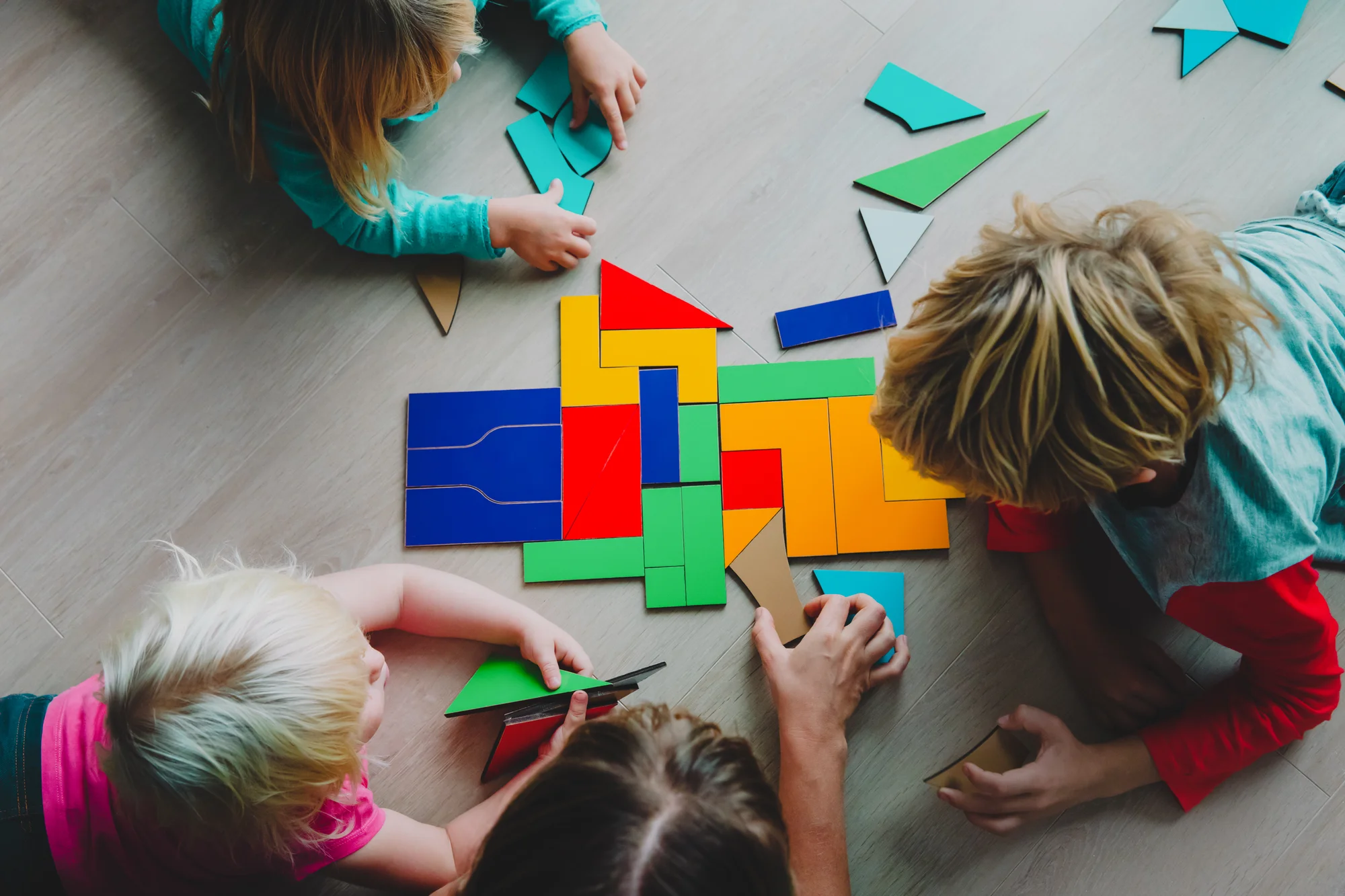
These activities reinforce geometry and coordinate graphing in a relaxing, creative way.
8. Apps & Quick Online Games
If you allow limited screen time, short 10-15 minute digital sessions can reinforce skills without burnout. Parents often position these as “screen time rewards,” which keeps learning positive in today’s digital world.
Kid-friendly apps include:
-
Prodigy – a fantasy-style role-playing game where students answer curriculum-related math questions to cast spells, complete quests, and level up.
-
Khan Academy Kids – a free educational app designed for children ages 2-8, offering interactive math activities, stories, and games.
-
IXL – a platform that offers practice across all math topics, with personalized skill recommendations based on real-time diagnostic assessments.
Choose sessions that fit your child’s energy level; high-focus apps earlier in the day, lighter ones before dinner.
📕You May Also Like: Math and Technology: Top Apps and Tools for K-8 Learners
9. Family Challenges
Make math playful with a daily or weekly family challenge. Try:
-
A “Problem of the Day” calendar: Each morning (or evening), reveal a quick question that takes less than five minutes to solve. The problems don’t need to be difficult; they just need to prompt thinking. Try problems like “How many minutes are left until bedtime?” or “What’s 25% of the items in this basket?”
-
Estimating the amount of wrapping paper needed for a gift: Have kids measure the box, calculate surface area, and estimate how much paper is needed. It turns gift wrapping into a fun geometry challenge that builds spatial reasoning.
-
Budgeting for holiday shopping: Give kids a set budget and a list of people to shop for. Let them compare prices, prioritize gifts, and track totals. It’s a practical way to explore addition, subtraction, and financial literacy.
-
Planning the most cost-effective way to host a family gathering: Invite kids to help compare meal options, calculate servings, and evaluate costs for ingredients or takeout. They learn decision-making, unit pricing, and proportional reasoning while planning a real event.
Mini-challenges teach kids how math supports real decision-making. This is exactly the kind of thinking Mathnasium tutors reinforce through personalized learning plans and caring guidance.
📕You May Also Like: Family Math Nights: Fun Ways to Learn Together
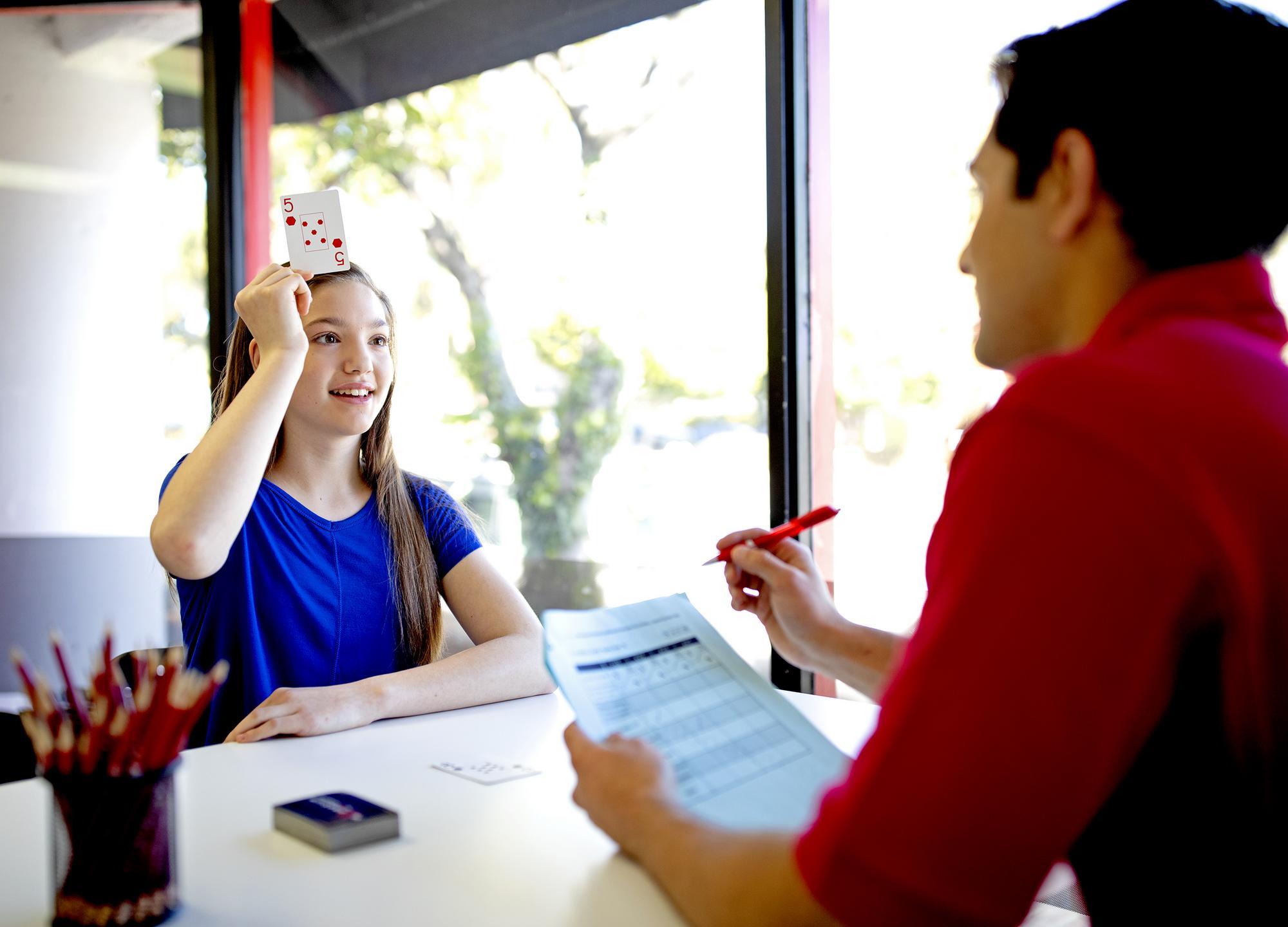
Mathnasium provides real-time feedback and positive reinforcement that restores confidence and motivation.
How Mathnasium Helps Students Stay Sharp Year-Round
Keeping math skills on track doesn’t require hours of drills or a rigid schedule. With the right approach, students can stay sharp through engaging, hands-on experiences that make learning feel both natural and rewarding.
At Mathnasium, we make that possible. Whether your child needs ongoing support, enrichment, or a structured way to prevent holiday/summer slide, we offer flexible programs that help students grow all year long.
Every student begins with a diagnostic assessment that reveals their strengths, knowledge gaps, and how they think about math. From there, we build a personalized learning plan and guide them forward, step by step.
Our instructors teach face-to-face, using clear explanations, visual models, and interactive strategies that go far beyond worksheets. It’s a method designed to help students not just do math, but understand it. And it works:
-
94% of parents report improved math skills and understanding
-
90% of students see better grades in school
-
93% of parents say their child feels more confident in math
Mathnasium isn’t just a place to get through homework. It’s where students develop real problem-solving skills, build lasting confidence, and start to enjoy math again.
Ready to help your child stay sharp, confident, and curious, no matter the season?
Book a free assessment and get started with Mathnasium today.


 (972) 939-6284
 (972) 939-6284