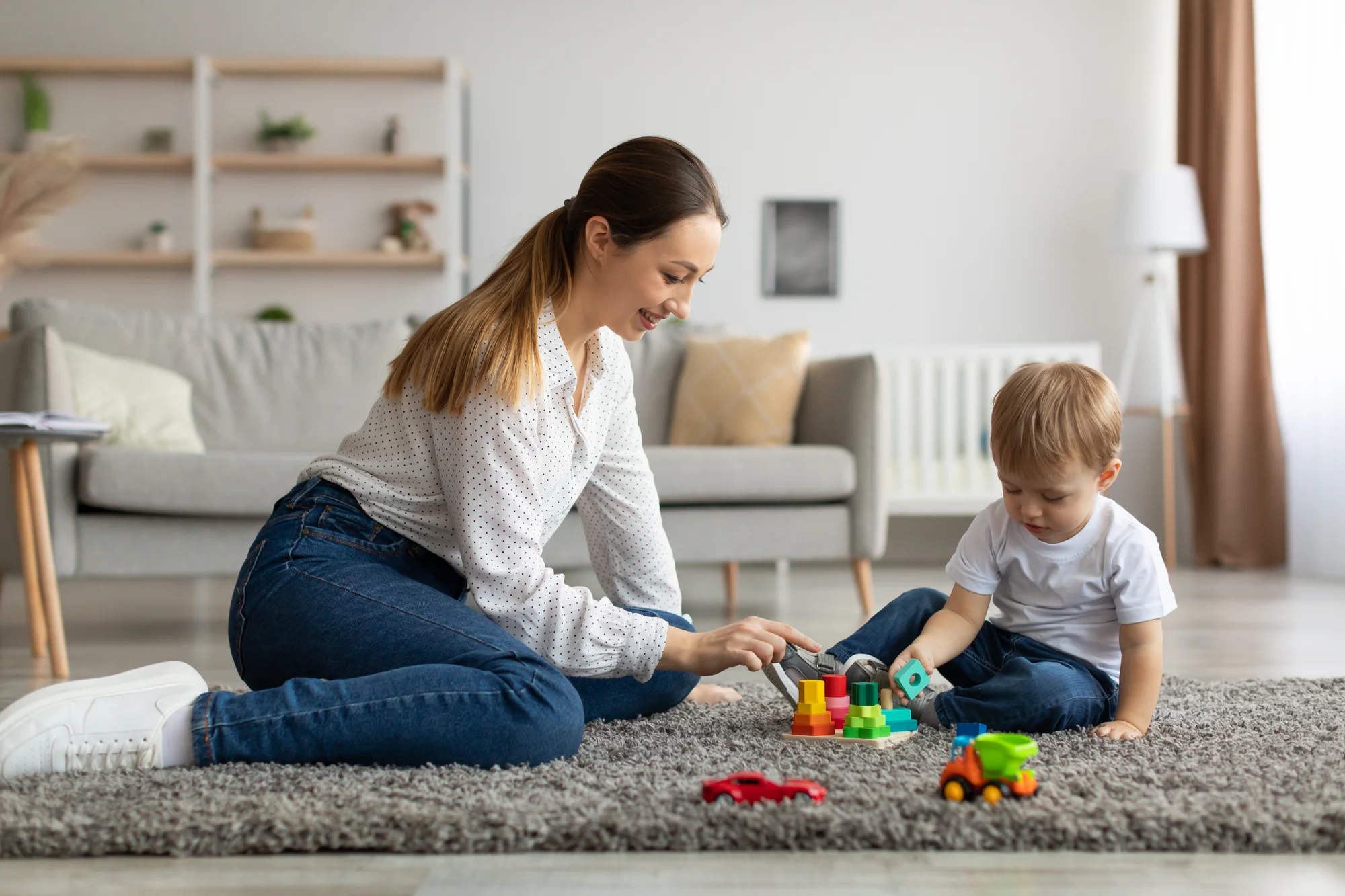
Between school, play, and family time, finding extra moments for math practice can feel impossible. You want your child to build stronger math skills, but adding more worksheets to an already full schedule rarely sounds appealing to anyone.
What if we told you that your home is already filled with opportunities to work with numbers, measurements, and calculations?
The laundry needs folding, dinner needs cooking, and the garden needs tending anyway. Why not turn those necessary tasks into chances to build mathematical thinking?
Mathnasium tutors have prepared a list of different math exercises that your kids can do during everyday activities to both make chores a little more fun and build up their problem-solving skills.

Why Household Math Tasks Work
Math chores create a completely different learning experience than sitting down with a worksheet.
Abstract concepts, such as counting, are a lot easier to understand when your child is counting socks into pairs or making sure their toys are all accounted for.
And the benefits don’t stop there. When math becomes part of everyday responsibilities, it naturally creates opportunities for deeper learning. For example:
-
Children see practical applications of concepts they learn in school.
-
Practice happens naturally without resistance or "homework mode."
-
Kids learn that numbers are tools adults use to solve real problems.
-
Foundational math skills are explained in new, more vivid ways.
So, not only are kids learning how to help out with chores, but they are also practicing math in a very beneficial way.
📕 You May Also Like: Why Regular Math Practice Matters
1. Grocery Shopping Calculations
The grocery store transforms into a math classroom without much effort. Before heading to checkout, ask your child to estimate the total cost of items in your cart by rounding off the prices.
You can also try these activities during your next shopping trip:
-
Compare unit prices on different package sizes
-
Weigh produce and predict the cost based on the price per pound
-
Calculate the change you should receive at checkout
-
Read nutrition labels and multiply serving sizes
Shopping trips happen regularly, so they can be relied on for everyday math practice. Plus, the numbers involved are constantly changing, which makes the practice varied and flexible.
2. Kitchen and Cooking Activities
The kitchen offers some of the richest opportunities for household math tasks because cooking naturally involves precise measurements, timing, and adjustments.
Recipe Math
Baking and cooking naturally lend themselves to discussions about fractions and measurements. Have your child measure ingredients while you supervise:
These actions give meaning to fractional amounts that might seem confusing on paper. Walk them through how you can measure these different amounts and visually compare the quantities.
Take this further by asking your child to double a recipe for extra portions. If the original calls for two eggs, how many do you need for a double batch? What about three-quarters cup of brown sugar?
Halving recipes works just as well. If a casserole serves eight people but you only need four servings, what happens to the three cups of rice and the one and a half teaspoons of garlic powder?
📕 You May Also Like: Bake Up Some Love: A Maths-Infused Cookie Recipe
Mealtime Mathematics
Setting the table and serving food contain valuable opportunities for geometry and multiplication practice.
Have your child set the table by counting out the right number of plates, forks, knives, and spoons based on how many people are eating. If you're having five people for dinner and each person needs one of each item, how many do you need in total? This multiplication practice happens naturally.
Some additional mealtime math activities can include:
-
Identifying shapes in tableware (circular plates, rectangular placemats)
-
Folding napkins into geometric shapes like triangles or squares
-
Dividing pizza slices into equal portions and discussing fractions
-
Comparing portion sizes and making estimations (dad’s portion size is about 20% larger than mine, for example)
3. Laundry Room Learning
Sorting clothes can teach grouping and counting.
Ask your child to separate the laundry into piles by color, then count how many items are in each category. You might have 12 dark items, 8 whites, and 5 blue ones.
Matching socks provides another layer of mathematical thinking.
As your child pairs socks, discuss the concept of pairs.
-
If you have 14 socks total and they're all matched, how many pairs is that?
-
What happens if there's one sock left over?
This introduces division, odd and even numbers, and remainders.
📕 You May Also Like: Exercises to Improve Beginner Math Skills: Counting and Grouping
4. Garden and Outdoor Math Chores
Gardening naturally involves measurements, spacing, and long-term data tracking. Here are just a few examples we like to use:
-
Planning a garden bed involves working with your child to measure the space. A rectangular plot that's 4 feet wide and 6 feet long has an area of 24 square feet. What's the perimeter if you need to build a border?
-
Planting seeds offers multiplication practice through spacing requirements. If each tomato plant needs 2 feet of space and you're planting them in rows of 4, how much space does each row need? If you have 3 rows of 4 plants each, how many total plants are you putting in the ground?
-
Over the course of a year, measuring plant growth creates opportunities for data collection. Keep a chart tracking how tall the sunflowers grow each week. After a month, which plant grew the most? What was the average growth per week? You can also start introducing visualization tools, such as bar graphs.
📕 You May Also Like: How to Read the 4 Most Common Graphs
5. Room Cleanup Calculations
Tidying up bedrooms and play areas creates chances to practice sorting and spatial reasoning.
We recommend trying some of these activities during cleanup time:
-
Sort toys by type and count how many are in each category
-
Estimate whether all items will fit in a specific container
-
Measure room dimensions and furniture pieces before rearranging
-
Calculate how much wall space remains after placing a bookshelf
Cleanup becomes more engaging for children when they're actively counting, measuring, and comparing rather than just tidying up mindlessly.
📕 You May Also Like: 3 Ways Early Spatial Skills Impact Long-Term Math Success
6. Time and Schedule Management
Daily schedules and routines provide consistent opportunities to work with time, calendars, and planning calculations.
Use a physical calendar to count the days until upcoming events. If your child has a project due in 12 days and wants to work on it a little each day, how much should they complete daily? Practice telling time on analog clocks during timed chores by setting a timer for 10 minutes of cleanup.
Estimate travel time together during errands. If the library is 15 minutes away and you need to be there by 3:00, what time should you leave? What if you also need 5 extra minutes for parking?
These exercises are doubly useful as children also learn time management, which is a skill they will need outside of math as well.
📕 You May Also Like: Time Management with Math: How to Organize Your Day
7. Chore Reward Systems
Creating a point-based reward system for chores turns the tracking itself into math practice. Parents have also told us that this does wonders for motivating kids to get tasks done.
Assign different point values to various chores based on difficulty or time required:
At the end of the week, have your child add up their total points.
If they're saving for a reward that costs 100 points, how close are they? How many more points do they need? You can introduce division by dividing points for shared tasks. If two siblings work together on a 12-point chore, they each earn 6 points.
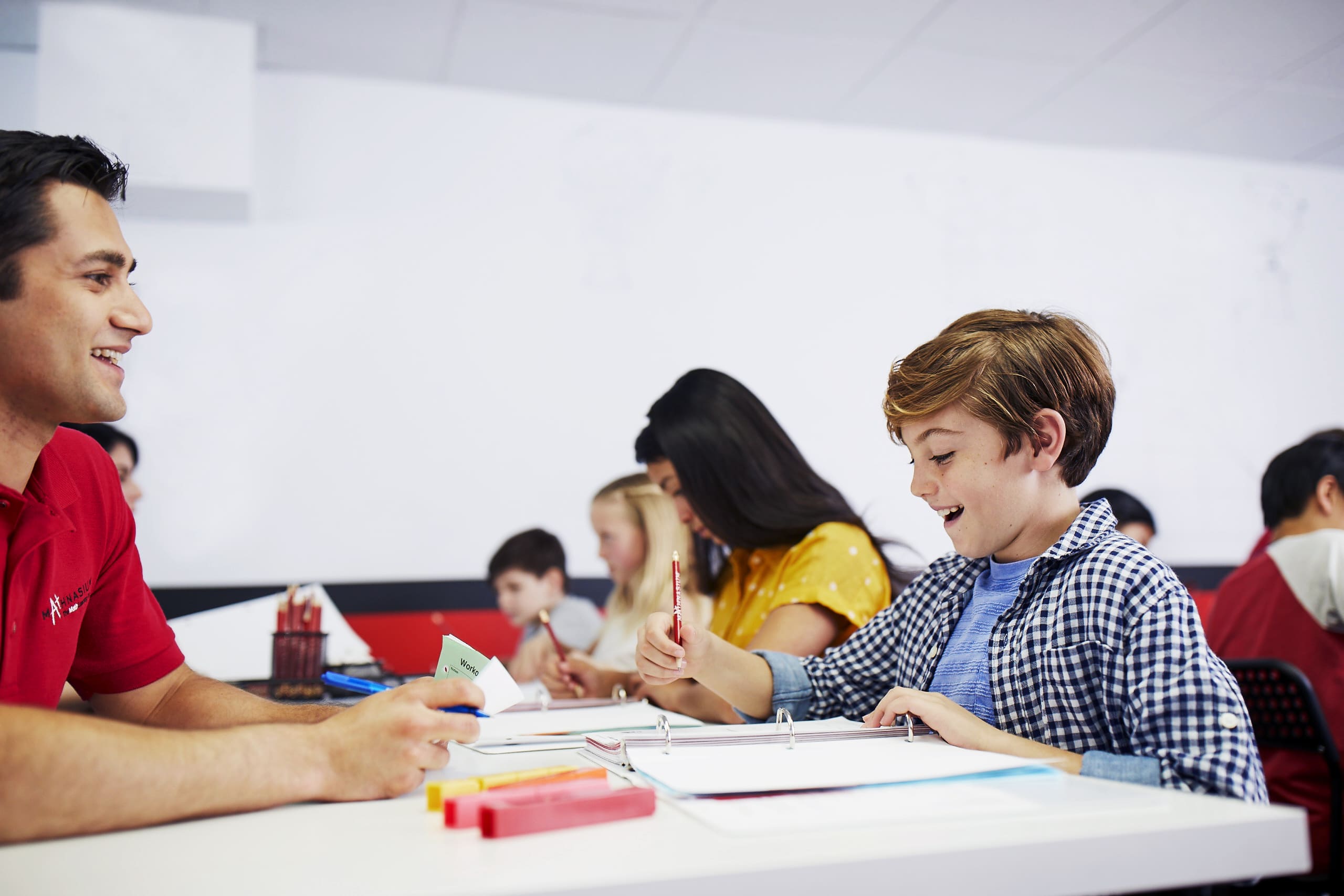
Hands–on learning and real-world applications are a core part of how we teach math at Mathnasium.
How Mathnasium Makes Math Exercises Fun and Effective
Mathnasium is a math-only learning center dedicated to helping K–12 students truly understand and enjoy math. And real understanding doesn’t happen through worksheets alone. Students need opportunities to apply what they learn in practical, everyday contexts.
That’s why real-world problem-solving is woven into the Mathnasium Method™, our proprietary approach to building lasting mathematical confidence and skill.
To foster flexible mathematical thinkers, our approach includes:
-
Personalization on a granular level: Each student begins their enrollment with a diagnostic assessment. This allows us to pinpoint their strengths, knowledge gaps, and how they approach math. From there, we create a learning plan customized to their needs, whether they're working on foundational skills or tackling advanced topics.
-
Teaching for understanding: We explain math using clear, everyday language and support each concept with a blend of visual, verbal, written, mental, and hands-on techniques. This layered instruction helps students truly make sense of what they're learning.
-
Caring instruction: Our tutors are trained not just in math but in how to connect with students. They know how to support a child who's feeling discouraged and how to challenge one who's ready for more.
-
Independent problem-solving and critical thinking: During instruction, we always set aside time for students to work through problems on their own. This gives them space to test their understanding and trust their own thinking. We guide them to see both the how and the why behind each concept.
-
Singular focus on math: Our curriculum spans thousands of pages and has been continuously refined over the past 20 years. This singular focus on math allows us to take a deep dive into how students best absorb, learn, and retain mathematical concepts.
-
Empowering, fun learning environment: Our environment is designed to be both motivating and enjoyable. Our materials are game-based, and we give students a chance to earn rewards to keep them motivated as they continue advancing to higher levels of achievement.
The results speak volumes:
-
94% of parents report an improvement in their child's math skills and understanding
-
93% of parents report an improved attitude towards math after attending Mathnasium
-
90% of students saw an improvement in their school grades
With more than 1,100 centers across the United States, Mathnasium provides trusted, structured math instruction close to home.
For families in or near Denver, CO, Mathnasium of Cherry Hills is a trusted local center with years of experience transforming how students think and feel about math.
Read how one parent described their child’s experience at Mathnasium of Cherry Hills:

If your child is ready to catch up, keep up, or get ahead in math, our team is happy to assist.
📅 Schedule a Free Diagnostic Assessment at Mathnasium of Cherry Hills
Not near Denver?
📍 Find a Mathnasium Learning Center Near You


 (720) 474-1878
 (720) 474-1878