In our parts of the world, children typically begin formal math education in kindergarten, around age five or six. But long before the first day of school, math is already part of their world: in the counting games, puzzles, board games, or sorting activities they do at home.
Even with the best intentions, this early stage is also when parents can unintentionally make small missteps in how they introduce math.
To help families approach these moments more thoughtfully, Mathnasium tutors have put together a list of the most common mistakes parents make when supporting their children's early math learning and what to do instead.

1. Focusing Only on Numbers
What is the first thing that comes to mind when you think about early math? For most parents, the answer is numbers or counting. That is not a wrong answer, but it is certainly not the whole picture.
Counting to 10 or 20, recognizing digits, writing a few — these feel like the most visible and measurable signs of math readiness, and it makes sense that parents gravitate toward them.
Our tutors, however, caution against letting numbers take center stage entirely.
When they do, other areas quietly get left behind. Spatial reasoning and patterns are just as much a part of early mathematical thinking, and in the preschool years, they may matter even more.
A study examining early childhood development found that spatial skills, how children reason about shapes, orientations, and how objects move or fit together, are reliable predictors of later math performance, including number work, geometry, and word problems.
Similarly, a study on preschoolers' mathematical patterning found that children's ability to recognize and represent patterns predicted their numeracy and general math performance in kindergarten and beyond.
So, how to go beyond the numbers?
Think of numbers as just one piece of the puzzle. To make it a complete one, we recommend adding activities that build spatial reasoning, pattern recognition, and logical thinking alongside counting:
-
Play sorting and classification games, by color, size, shape, or texture, to build the logical thinking that underpins early math
-
Draw attention to shapes in the environment: the rectangular door, the circular clock, the triangular roof
-
Introduce simple patterns using everyday objects, clap-clap-stomp, red-blue-red-blue, and ask your child what comes next
-
Talk about size and measurement naturally: bigger, smaller, heavier, longer, the same
-
Use puzzles and building toys to develop spatial reasoning alongside number work
2. Treating Math as a Sit-Down Activity
Parents tend to associate early math learning with a dedicated activity, such as sitting their child down with a puzzle, a counting book, a set of flashcards, or maybe even a math-based app. Those moments have their place, but they are far from the only ones that count.
If you ask, "Who has more grapes?" at dinner, that is a math conversation. Similarly, if your child counts the steps on the way upstairs, that is number sense in action. If you point out that the clock is round and the window is square, mathematical vocabulary is being built.
None of it looks like math, and that is exactly why it works so well.
A 2023 study published in the journal Early Childhood Education found that family math activities, including games, mini-books, and casual math conversations at home, significantly boosted preschoolers' math knowledge compared to conventional instruction alone.
Most of these moments are already happening in your day. All it takes is pausing to name the math out loud when they do.
-
During bath time, count how many toys are in the tub. Ask your child to hand you two at a time, then count what is left.
-
At the grocery store, use comparison language without making it a quiz. "This watermelon is heavier than that one" is a math observation, not a test.
-
On a walk, point out shapes in the environment. A stop sign is an octagon. A window is a rectangle. Let curiosity lead.
-
Instead of drilling number facts, ask open questions. "Which bowl has more?" invites thinking. "What is three plus two?" invites recall.
-
Pull out a simple board game. Snakes and ladders, war, or dominoes all build counting and number recognition through play.
📕 You May Also Like: 7 Fun Preschool Math Activities to Try at Home
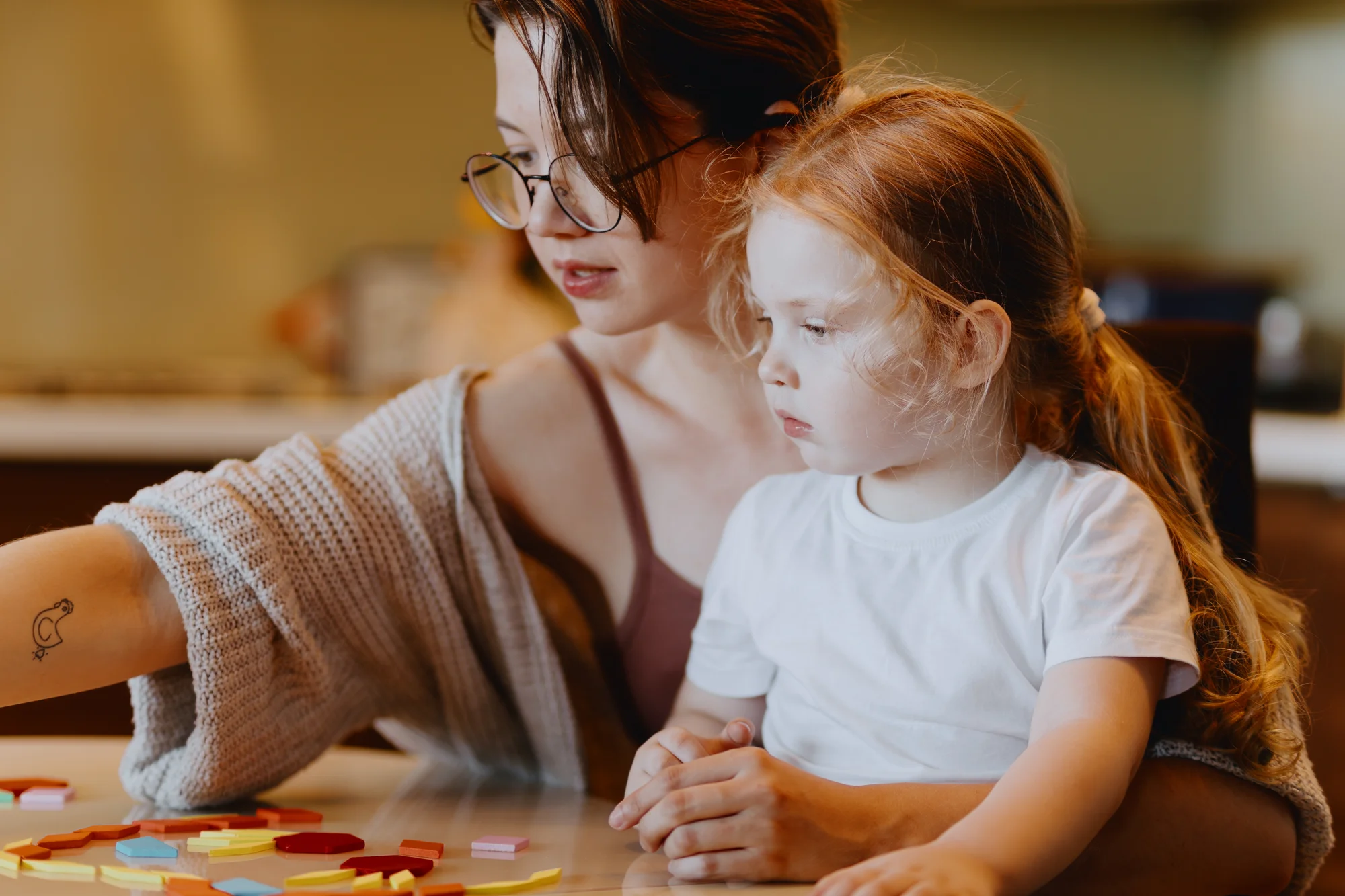
Everyday moments at home are where early math understanding quietly takes root.
3. Over-Formalizing Early Math Learning
With kindergarten on the horizon, it is natural to want your child to be ready.
For many parents, that looks like structure: workbooks, drills, a dedicated math session at the kitchen table each evening. The intention is good, but the timing can work against them.
Preschool-aged children learn through movement, play, and exploration.
If math arrives too early through sitting still and completing exercises, it tends to feel frustrating rather than exciting. A child who associates math with getting things wrong before they are ready may arrive at kindergarten already wary of it.
So, to put it simply, more structure does not mean more readiness.
Play is not a detour from learning at this age. It is the learning.
At Mathnasium, we work with young learners every day, and the ones who arrive most ready for formal math are rarely the ones who drilled the hardest. They are the ones who explored the most.
Here are a few things our tutors recommend for this stage:
-
Build with blocks, sort objects by color or size, and let your child take the lead. These activities develop spatial reasoning and classification skills without a worksheet in sight.
-
Follow your child's energy. If they are curious and engaged, stay with it. If they pull away, let it go. Resistance at this age is valuable information.
-
Frame math as something to wonder about rather than perform. "How many do you think fit in here?" is a very different invitation than "What is two plus two?"
-
Celebrate the attempt as much as the answer. At three and four years old, curiosity is the skill worth building.
📕 You May Also Like: What Is Number Sense & Why It Matters in Early Math Education
4. Correcting Math Errors Instead of Exploring Them
Say your preschooler counts wrong or misjudges a quantity. What is your first instinct? Most likely to step in and correct. It feels like the helpful thing to do. Kind, even.
But that quick correction has a cost.
What looks like a mistake is often a productive struggle, a necessary part of how young children build real understanding.
If you jump straight to the right answer, that takes away the chance for a child to notice something feels off and work their way toward understanding on their own terms. Repeated often enough, it sends a quiet message: math is about getting it right fast, not thinking it through.
At this age, however, the thinking matters more than the answer.
Before stepping in, give your child a beat. They may notice something feels off on their own.
-
Try "Does that feel right to you?" before offering a correction. It puts the thinking back in their hands.
-
"Interesting, how did you get that?" invites a child to retrace their steps without signaling that something went wrong.
-
If your child counted six objects but there are only five, ask them to touch each one as they count. That physical connection between hand and object helps young children self-correct naturally.
-
One gentle redirect is enough. Repeating a correction tends to close the moment down rather than open it up.

At Mathnasium, early math learning looks a lot like play, and that's exactly the point.
How Mathnasium Supports Early Math Learners
Mathnasium is a math-only learning center dedicated to helping students of all skill levels excel in math.
Our early childhood program is designed specifically for 4- to 6-year-olds, building the number sense, critical thinking, and problem-solving skills that set them up for success in school and beyond.
Every program we offer, including this one, is guided by our proprietary teaching approach: the Mathnasium Method™.
Here is how it works for our youngest learners:
-
Diagnostic Assessment: We start with a low-pressure diagnostic assessment designed to feel like a conversation rather than a test. Through a mix of verbal and hands-on components, we identify each child's current strengths and knowledge gaps, so we know exactly where to begin.
-
Personalized Learning Plan: Based on the assessment, we build a personalized learning plan tailored to your child's needs, pace, and goals. Every session builds on what they already know, introducing new concepts gradually so progress feels natural and confidence grows alongside it.
-
Teaching for Understanding: Our specially trained tutors use everyday language to make math make sense. Through a mix of verbal, visual, mental, tactile, and written techniques, they meet each child where they are and adapt to how they learn best.
The results speak for themselves:
-
94% of parents report an improvement in their child's math skills and understanding
-
93% of parents report a more positive attitude toward math after attending Mathnasium
-
90% of students saw an improvement in their school grades
With over 1,100 learning centers across the U.S., Mathnasium brings top-rated math instruction close to your community.
For families in or near Germantown, MD, Mathnasium of Germantown MD is a trusted local resource helping young learners build solid foundations and a lasting love for math.
📅 Schedule a Free Diagnostic Assessment at Mathnasium of Germantown MD
Not near Germantown, MD?
📍 Find a Mathnasium Learning Center Near You


 (301) 363-4744