

Huntington Beach
6854 Edinger Ave
Huntington Beach, CA 92647

If your child has just started second grade or is about to, you may have noticed that math is starting to feel like a bigger deal.
The problems are more involved, the strategies are more varied, and for the first time, your child is being asked to explain their thinking, not just give an answer.
This is a pivotal year, and the skills that develop now will underpin everything from multiplication to fractions and beyond.
Parents have a real role to play in this. Knowing which strategies to look out for and how to reinforce them at home can make a meaningful difference in how your child progresses through the year.
Mathnasium tutors have prepared this guide to help parents understand which math strategies matter most in 2nd grade and how to actively support their child's development at home.
Second grade is the year math starts to require real reasoning.
In first grade, the focus is on building familiarity with numbers, learning to count, and grasping basic addition and subtraction.
By the time children reach 2nd grade, those early skills are expected to be in place, and the work becomes about using numbers to think and problem-solve.
Where a first grader might count on their fingers to reach the answer to 8 + 5, a 2nd grader is expected to recognize that 8 + 2 makes 10, and then add the remaining 3 to get 13.
That kind of flexible, structured thinking is crucial for developing number sense.
The strategies children develop at this age also form the basis of almost every math topic they will encounter through middle school and beyond, from multiplication and division to fractions and algebra.
In other words, a student who reaches 3rd grade with a firm understanding of place value and number patterns will approach new material with far greater ease than one who is still working to catch up on 2nd-grade fundamentals.
Below, we cover the five core math strategies your 2nd grader should be developing this year.
Each one connects to the next, so as you read through them, you will start to build a picture of where your child is thriving and where they might benefit from a little extra practice.
Place value is one of the most important primary math methods introduced in 2nd grade, and it is the foundation that almost every other math skill rests on.
At this stage, students are expected to understand three-digit numbers up to 1,000, breaking them down into hundreds, tens, and ones.
A great way to make this real at home is to use coins as a visual stand-in for each place value column:
A penny (1 cent) represents the ones
A dime (10 cents) represents the tens
A dollar coin (100 cents) represents the hundreds
Take the number 143 as an example. Ask your child to build it using coins: 1 dollar coin, 4 dimes, and 3 pennies. Then ask them to point to each group and say what it stands for.
You can also flip it around and lay out a random combination of coins and ask your child to tell you what number it represents.
This visual, hands-on approach makes an abstract concept tangible.
Students who have a firm grasp of place value find addition, subtraction, and eventually multiplication far easier to manage because they understand what numbers actually represent.
📕 You May Also Like: How to Teach Place Value Using Base-10 Blocks
One of the most valuable early elementary strategies your child will encounter in 2nd grade is learning to solve addition and subtraction problems using flexible thinking.
Second graders typically work with three approaches:
Making a ten: Turning 8 + 7 into 8 + 2 + 5 to pass through 10.
Decomposing numbers: Breaking a number into smaller, easier parts before adding or subtracting.
Using a number line: Counting in jumps to work through a problem step by step.
Here is an example of how to practice.
Say your child needs to solve 37 + 25. They might draw a simple number line, start at 37, jump forward 20 to land on 57, then jump forward 5 more to reach 62.
This approach builds number sense in a way that goes far deeper than memorization alone. It also gives students a reliable method to reach an answer through their own reasoning.
📕 You May Also Like: How Number Lines Improve Math Understanding in Grades 1 Through 5
Skip counting, which means counting by 2s, 5s, 10s, and 100s rather than by ones, is one of the primary math methods that tends to look simple but carries a lot of weight.
This is because it trains children to see patterns in numbers and to understand that numbers relate to each other in structured, predictable ways.
You can bring this to life at home very naturally:
Count a pile of nickels together by 5s.
Pair up socks from the laundry and count by 2s to find the total.
Count groups of 10 items around the house, like crayons or building blocks.
These small moments help your child internalize skip counting as a real skill rather than a classroom chant.
When multiplication arrives in 3rd and 4th grade, students who are fluent skip counters have a significant head start.
📕 You May Also Like: Skip Counting: The Bridge Between Counting and Multiplication
By the end of 2nd grade, children should be able to identify whether any number is even or odd and explain why.
This is more than a labeling exercise.
Understanding that even numbers can be split into two equal groups, while odd numbers always have one left over, introduces students to early thinking about division and fairness in grouping.
For an at-home explanation: grab a small pile of grapes, blueberries, or building blocks and ask your child to split them into two equal groups.
One left over means the number is odd.
Everything pairing up perfectly means it is even.
This hands-on approach makes the concept click in a way that a worksheet often cannot.
📕 You May Also Like: Difference Between Odd & Even Numbers: A Kid-Friendly Guide
Second graders are also introduced to measurement and basic data collection, two areas that are sometimes overlooked but are central to the primary math methods taught at this level.
Children learn to:
Measure objects using a ruler in both inches and centimeters.
Compare the lengths of two or more objects.
Read and interpret simple bar graphs and tally charts.
At home, hand your child a ruler and let them measure things they are curious about: their favorite book, their shoe, or even the family dog if it will sit still long enough.
For data, try creating a tally chart together of something fun, like the family's favorite dinner options.
These activities build logical reasoning and show students that math is a tool for making sense of real life.
📕 You May Also Like: How to Use Tally Marks to Count and Organize Data
Every child develops at their own pace, but there are some practical benchmarks you can look out for as the year progresses.
By the end of 2nd grade, most students who are developing well with these early elementary strategies should be able to:
Solve two-digit addition and subtraction problems with ease, using reasoning rather than finger counting.
Read and write numbers up to 1,000 and explain what each digit represents.
Skip count by 2s, 5s, and 10s starting from different numbers.
Identify even and odd numbers and explain their reasoning.
Measure an object with a ruler and compare two lengths accurately.
Explain how they arrived at an answer, walking you through their thinking process.
That last point is particularly telling.
A child who can walk you through their thinking is one who genuinely understands the material and has moved beyond memorized procedures.
If your child struggles to explain their reasoning, it may be worth spending more time on the "why" behind each strategy.
You do not need to be a math expert to help your child develop these skills.
The most effective support tends to come in short, regular moments rather than long formal sessions.
A few minutes of math talk during everyday activities can reinforce what your child is learning at school far more than an hour of drilling on the weekend.
Some simple ways to weave 2nd-grade math techniques into daily life are:
At the grocery store: Point to a price and ask your child what the digit in the tens place is worth, or ask them which of two items costs more and by how much.
During cooking or baking: Use measuring cups and spoons to explore fractions and measurement in a practical way.
On car journeys: Play skip-counting games or ask simple mental math questions.
At bedtime: Spend five minutes on a number of the day, exploring what it is made of and how it relates to other numbers.
The most important habit you can build is asking your child to explain their thinking.
Ask "how did you get that?" or "can you show me another way?"
These questions encourage the kind of reasoning that sits at the heart of every early elementary strategy.
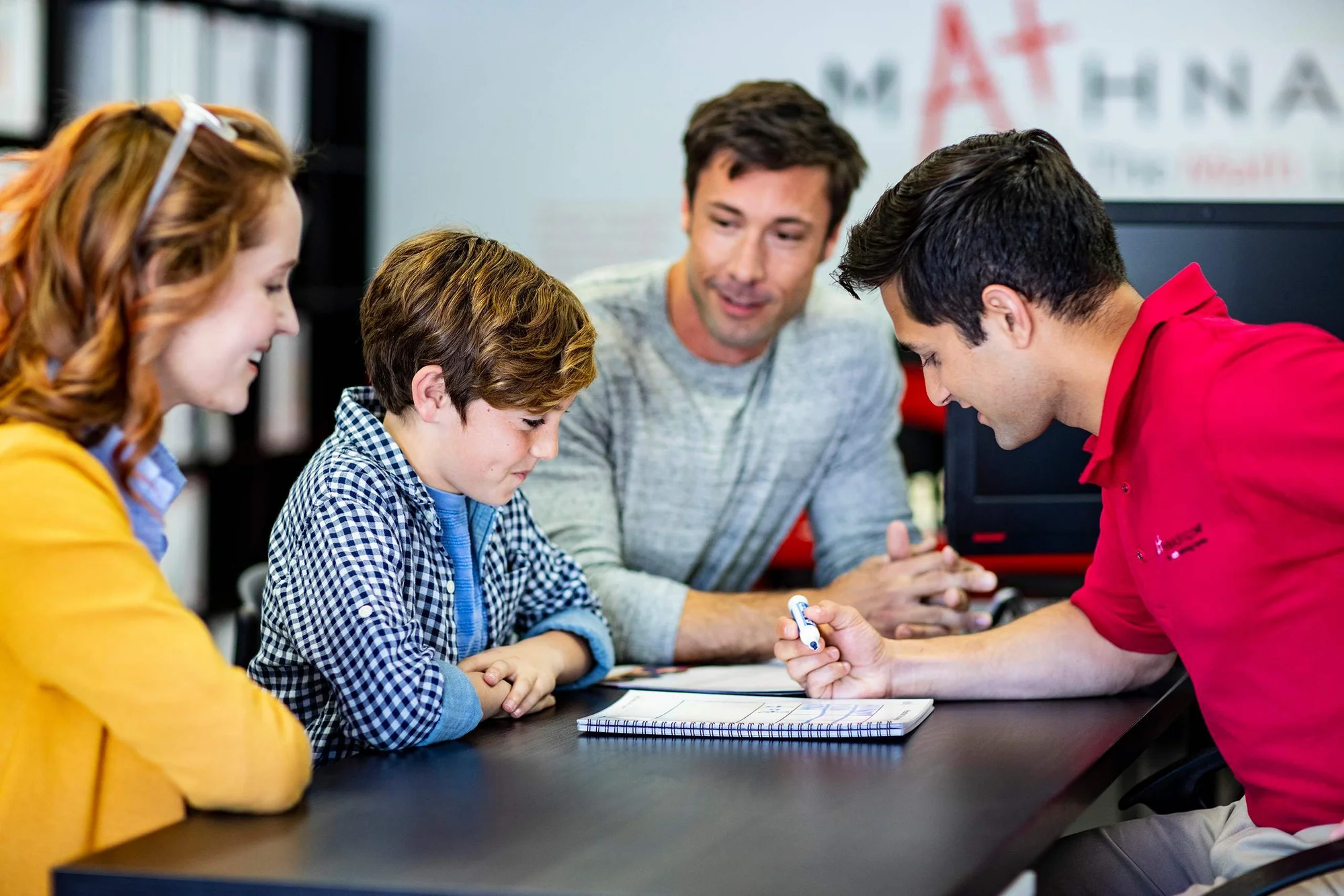
Math-only learning centers like Mathnasium focus on building up these essential learning strategies effectively.
Mathnasium is a math-only learning center dedicated to helping students excel in any math skill or concept, including the foundational strategies that make such a difference in the early elementary years.
When students come to us for support, we do not rely on drills or isolated practice. Our approach, the Mathnasium Method™, is proprietary, personalized, and designed to help students truly understand how math works.
To foster lasting mastery, our approach relies on six core principles:
Personalization on a granular level: Each student begins with a diagnostic assessment that identifies their strengths, knowledge gaps, and how they approach math. Tutors then follow personalized learning plans that guide steady, structured progress.
Teaching for understanding: We explain math using clear, everyday language and support each concept with visual, verbal, written, mental, and hands-on techniques so students develop a deep understanding of math. For 2nd graders, this might mean using coins to explore place value or drawing number lines to work through addition.
Caring instruction: Our tutors provide caring guidance in a fun group environment where students feel supported as they tackle challenging material.
Independent problem solving and critical thinking: Each session includes time for students to work through problems on their own. Tutors guide them to understand both how and why a concept works, which supports concept reapplication across topics.
Singular focus on math: Our program spans thousands of pages and has been continuously refined over the past 20 years. This singular focus on math allows us to take a deep dive into how students best absorb, learn, and retain mathematical concepts.
Empowering, fun learning environment: Our environment is designed to be both confidence-building and fun. Our materials are game-based, and we give students a chance to earn rewards to keep them motivated as they continue advancing to higher levels of achievement.
And the results? They speak volumes:
94% of parents report an improvement in their child's math skills and understanding
93% of parents report an improved attitude towards math after attending Mathnasium
90% of students saw an improvement in their school grades
With over 1,100 centers, we bring the Mathnasium Method™ close to your community.
Families in Huntington Beach are in good hands at Mathnasium of Huntington Beach.
If you're looking to strengthen your child’s skills and build lasting confidence in math, schedule a free assessment at Mathnasium of Huntington Beach and see real progress take shape, session by session.
📅 Schedule a Free Diagnostic Assessment at Mathnasium of Huntington Beach
Not located near Huntington Beach?
Mathnasium of Huntington Beach is a math-only learning center for K-12 students in Huntington Beach, CA. Trusted by over a million parents, Mathnasium uses personalized learning plans and the proprietary Mathnasium Method™ to help students catch up, keep up, and get ahead on their math journey.
Our specially trained tutors deliver face-to-face instruction in a supportive and fun small-group environment, working with students to develop a deep understanding of math, build confidence, and improve academic performance.
Schedule Free Assessment
 (657) 203-2304