(513) 832-8773
 (513) 832-8773



How to Multiply One-Digit by Two-Digit Numbers
Oct 23, 2025 | Hyde Park

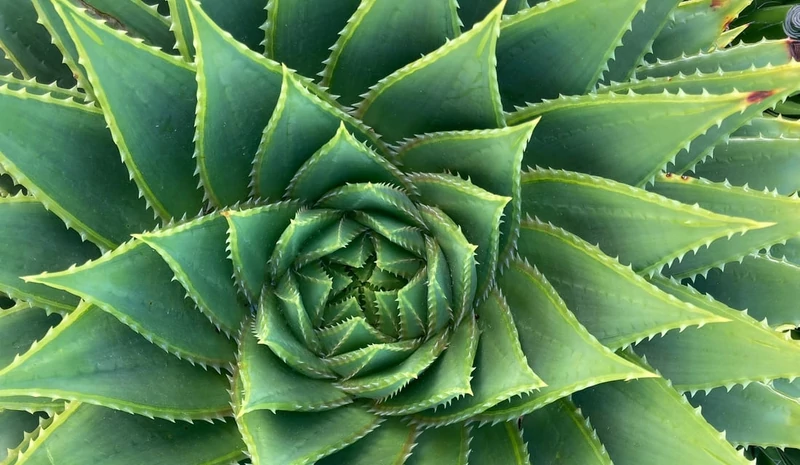
When we stop to admire the beauty of a snowflake, the branches of a tree, or the curve of a seashell, we’re often struck by how perfect nature seems. But what many people don’t realize is that behind these amazing designs are powerful geometric patterns.
One of the most fascinating is called a fractal.
In this blog, we’ll show you what fractals are, why they matter in math and science, and share 10 fantastic examples of fractals in nature that reveal just how geometrical the world around us really is.

A fractal is a complex geometric shape made using math that repeats the same pattern over and over, no matter how closely you zoom in. This quality is called self-similarity, meaning each small part looks like a tiny version of the whole.

The term fractal was introduced in 1975 by mathematician Benoit Mandelbrot, who explored patterns that didn’t fit into the neat shapes of traditional geometry.
He noticed that many irregular or jagged shapes, like clouds or coastlines, weren’t random. Instead, they followed simple math rules and repeated in smaller and smaller parts.
To describe these endlessly repeating patterns, he coined the word fractal, based on the Latin fractus, meaning “broken.”
You May Also Like: 9 Examples of the Golden Ratio in Nature
Beyond their eye-catching patterns, fractals play an important role in how we understand and describe the world around us.
In traditional geometry, we use shapes like circles, squares, and triangles to describe the world. But what happens when something doesn’t fit those neat categories?
That’s where fractals come in. They let us describe shapes that twist, branch, or spiral in ways that repeat again and again, just like many systems in real life.
This matters because many things in science, nature, and technology follow these kinds of patterns. For example:
Biologists and medical researchers use fractals to study how blood vessels carry oxygen, how lungs expand and branch, and how germs grow and spread.
Engineers apply fractal designs to antennas, making it easier for phones and wireless devices to pick up signals across a wide range of frequencies.
Environmental scientists rely on fractals to understand natural systems like coastlines, clouds, and river networks, systems that are always changing but follow repeating patterns.
Computer scientists and digital artists use fractal geometry to build detailed graphics, landscapes, and animations, creating realistic worlds from simple repeating shapes.
You May Also Like: Real-Life Applications of Trigonometry
Once you know what to look for, fractals start to show up everywhere. From branching systems to spiral shapes, these repeating patterns appear across nature in ways that are both surprising and beautifully structured.
Let’s take a look at 10 of the most fascinating examples of fractals in nature and discover how mathematics shows up in the world in ways we might never expect.
Ferns are a classic example of fractals in nature. Each frond is made up of smaller leaflets that look like miniature versions of the whole. This pattern of self-similarity continues all the way down to the smallest divisions, showing how simple rules can create complex, repeating structures.
The fractal design helps ferns gather sunlight efficiently and grow in different environments. Ferns give us a clear look at how fractal geometry appears in the structure and function of living things.
 A close-up of fern fronds showing self-similar patterns, each leaflet mirrors thestructure of the whole, a classic fractal formation in nature.
Romanesco broccoli might look like a vegetable from another planet, but its design follows a very real and very mathematical structure. Its spiral shape is built from cone-like sections that shrink in size as they wrap around the center.
What’s even more amazing is that Romanesco grows in a spiral that follows the Fibonacci sequence, a set of numbers often found in nature. This pattern helps the plant pack its buds tightly while still getting enough light to grow.
Romanesco is one of the clearest ways to see how math can shape the way living things grow.
 Romanesco broccoli forms spiral cone shapes that repeat in a mathematical pattern—an edible example of fractal geometry in nature.
Lightning doesn’t just flash; it branches. When a bolt of lightning travels through the air, it doesn’t follow a straight line. Instead, it splits into multiple paths, and those split again, forming a web-like structure.
This branching pattern is a clear example of fractal geometry in motion. Each part of the lightning bolt looks similar to the whole, even at smaller scales. The shape helps show how energy moves through space by following paths of least resistance.
Fractals help scientists study these kinds of energy systems, because what looks chaotic can still follow a rule.
 Lightning forms branching paths as it moves, creating a natural fractal pattern with repeating shapes at different scales.
Inside the human body, blood flows through an incredible network of vessels that branch again and again to reach every cell. Large arteries split into smaller ones, which divide into even tinier capillaries. This repeated branching forms a fractal pattern that helps deliver oxygen efficiently throughout the body.
What makes this design so effective is how it balances complexity with structure. Every level of the system looks similar to the one before, which helps blood travel quickly and reach even the smallest, hardest-to-access areas.
Fractals like this aren’t just beautiful; they’re functional.
 Blood vessels branch into smaller and smaller paths, each level repeating the pattern of the last, just like a fractal.
Coastlines might look smooth on a map, but up close, their edges tell a different story. Jagged rocks, inlets, and curves appear at every level of detail, and the closer you look, the more there is to see. That’s exactly why coastlines were one of the first natural patterns to inspire the study of fractals.
This idea, known as the coastline paradox, shows how traditional geometry can't fully measure shapes that change at every scale. Fractals, on the other hand, offer a way to describe this complexity, one layer at a time.
 Coastlines reveal more detail at every scale, from sweeping curves to tiny jagged edges, one of the first natural patterns to inspire fractal geometry.
When rivers carve their way through the land, they create patterns that repeat again and again. A main river flows into smaller streams, and those divide even further, forming branching shapes that mirror each other at every level.
This structure isn’t random. It follows predictable paths that help water move efficiently and shape the terrain along the way. The repeating flow of rivers and streams is a strong case of fractal geometry appearing in nature’s design.
 River systems show repeated branching patterns that help water flow efficiently across land.
No two snowflakes are exactly alike, but they all share something in common: a repeating, six-sided structure. As a snowflake forms, water molecules freeze in a way that creates branches with tiny copies of themselves.
That repeating design is what makes snowflakes fractal. The structure grows outward, and each new layer follows the same set of rules, just at a smaller scale. The result is a detailed, symmetrical pattern built entirely by nature, one step at a time.
 Snowflakes and ice crystals grow outward in repeating six-sided patterns, tiny, natural fractals built by freezing water molecules.
Pinecones grow with an orderly, spiraling design that repeats as new layers of scales form around the center. This kind of structure isn’t just efficient; it follows the same fractal patterning found in many natural forms.
The number of spirals often matches values from the Fibonacci sequence, just like we’ve seen in other plant patterns. This repeating growth helps the cone protect its seeds while making the most of its space, nature’s way of combining function with beautiful math.
 Pinecones show spiral growth and repeating structure, often linked to Fibonacci numbers, through fractal-like arrangements of their scales.
Clouds may seem soft and shapeless, but their edges tell a different story. As clouds build and move, their outlines take on irregular, fluffy shapes that repeat at different scales. This rough, layered edge is where fractal geometry comes in.
Fractal models help meteorologists understand how clouds form and change, especially during storms, where small changes can grow into massive systems.
 Clouds often form layered patterns that repeat at different scales, an atmosphericexample of fractal geometry.
Look closely at the surface of a tree, and you’ll often see a pattern of cracks, ridges, or scales that repeat in uneven but familiar ways. These patterns don’t follow clean lines, but they aren’t random either. Over time, as the bark expands and shifts, it forms fracture patterns that grow in layers, much like a fractal.
Each section might look slightly different, but the overall structure follows the same type of repetition at different scales. This kind of pattern helps trees adapt as they grow and age, while also giving us a close-up look at math in nature.
 Tree bark forms rough, swirling grooves and cracks that repeat in layered patterns, fractal textures shaped by time and growth.
Fractals are just one fascinating way geometry shows up in the world around us, from tree bark and lightning bolts to snowflakes and rivers.
At Mathnasium of Hyde Park, we help students not only recognize these patterns but also truly understand the math behind them. Our math-only learning center in Cincinnati, OH, serves K–12 students of all skill levels.
Using the Mathnasium Method™, our proprietary teaching approach, our specially trained math tutors combine personalized learning plans and face-to-face instruction in a caring group environment to guide students through any math class and topic, including geometry, where students are first introduced to fractals through lessons on patterns and symmetry.
Each student begins their enrollment with a diagnostic assessment to identify what they already know and where they need support. From there, we build a personalized learning plan that strengthens skills, boosts confidence, and helps them thrive in math, whether they’re reviewing the basics or preparing for advanced coursework.
If your child is ready to catch up, keep up, or get ahead in geometry, we’re here to help.
Schedule a free assessment at Mathnasium of Hyde Park today and see your child excel in geometry and throughout their math journey.
Mathnasium of Hyde Park is a math-only learning center for K-12 students in Cincinnati, OH. Trusted by over a million parents, Mathnasium uses personalized learning plans and the proprietary Mathnasium Method™ to help students catch up, keep up, and get ahead on their math journey.
Our specially trained tutors deliver face-to-face instruction in a supportive and fun small-group environment, working with students both in center and online to develop a deep understanding of math, build confidence, and improve academic performance.
Schedule Free Assessment