9 Examples of Symmetry in Nature, Art & Architecture
May 12, 2026
| Mount Vernon
Symmetry is everywhere: in a butterfly's wings, in the buildings downtown, in the patterns on a tiled floor.
Long before it became a chapter in a geometry textbook, it was simply part of how the world is shaped. Math simply gave us the language to describe it, the vocabulary of reflections, rotations, and transformations that lets us name what we're seeing and reason about why it works.
So let's look at some examples. We show you the four types of symmetry you will encounter from grades 2 through 8, and where to spot each one in nature, art, and architecture.
If the shape looks the same after that move, it has symmetry.
Let’s have a look at the four types you will encounter from grades 2 through 8:
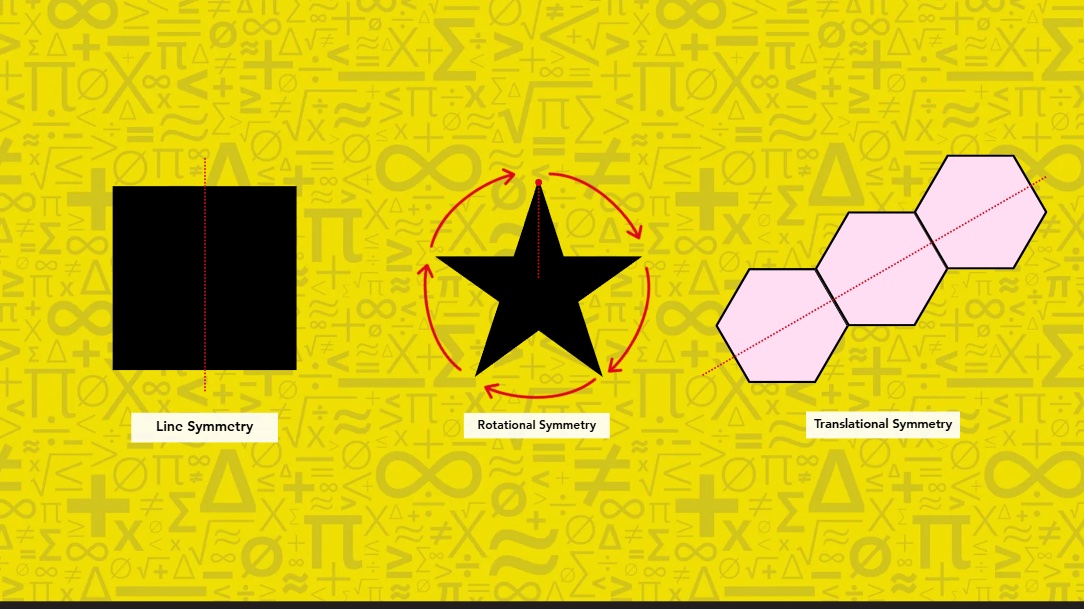
Reflectionalsymmetry (linesymmetry): One half mirrors the other across a line. Fold the shape along that line, and both halves match perfectly.
Rotationalsymmetry: The shape looks identical after a rotation. To find the angle of rotation, divide 360° by the number of repeated sections. A five-pointed star, for example, looks the same after a 72° turn (360° ÷ 5 = 72°).
Translational symmetry: A pattern repeats by sliding in one direction, with no flipping or turning.
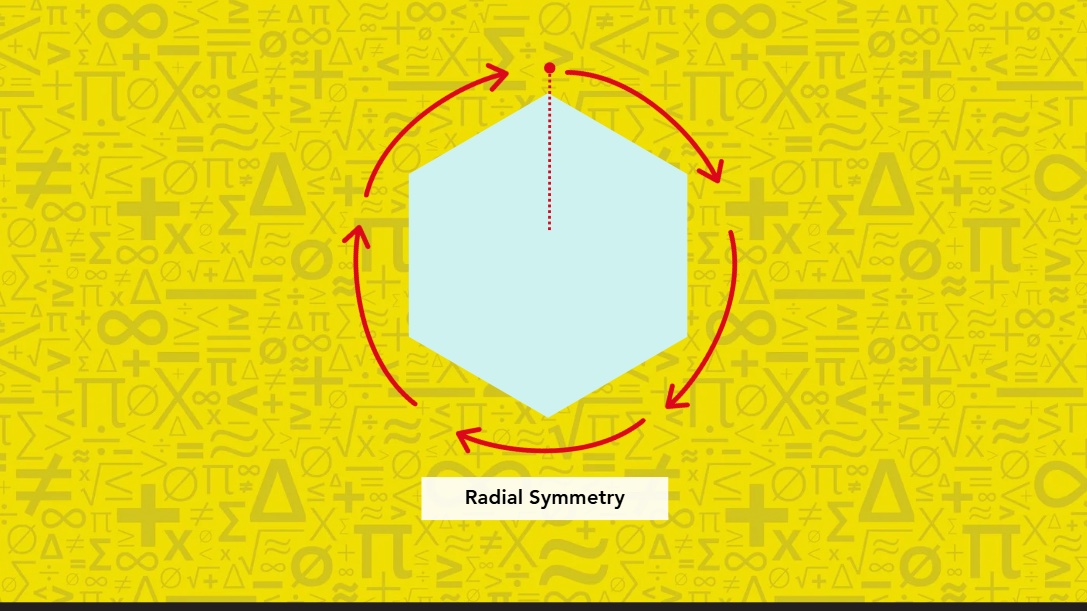
Radial symmetry: Multiple lines of symmetry radiate from a central point. It combines reflectional (line) and rotational symmetry together.
Radial symmetry is a particularly interesting one. If you take a regularhexagon, you will see that it has 6 lines of reflectional symmetry, each passing through the center.
It also has rotational symmetry of order 6, meaning it looks identical after every 60° turn (360° ÷ 6 = 60°). Both properties exist in the same shape at the same time. That is what makes it radial.
In grade 4, Common Core asks you to draw lines of symmetry for two-dimensional figures. That is reflectional symmetry in action, and you will see it everywhere once you know what to look for.
Nature is one of the best math teachers out there. Long before you study symmetry in class, you encounter it on a walk, in a garden, or even in your own reflection. Here are some of the most striking examples.
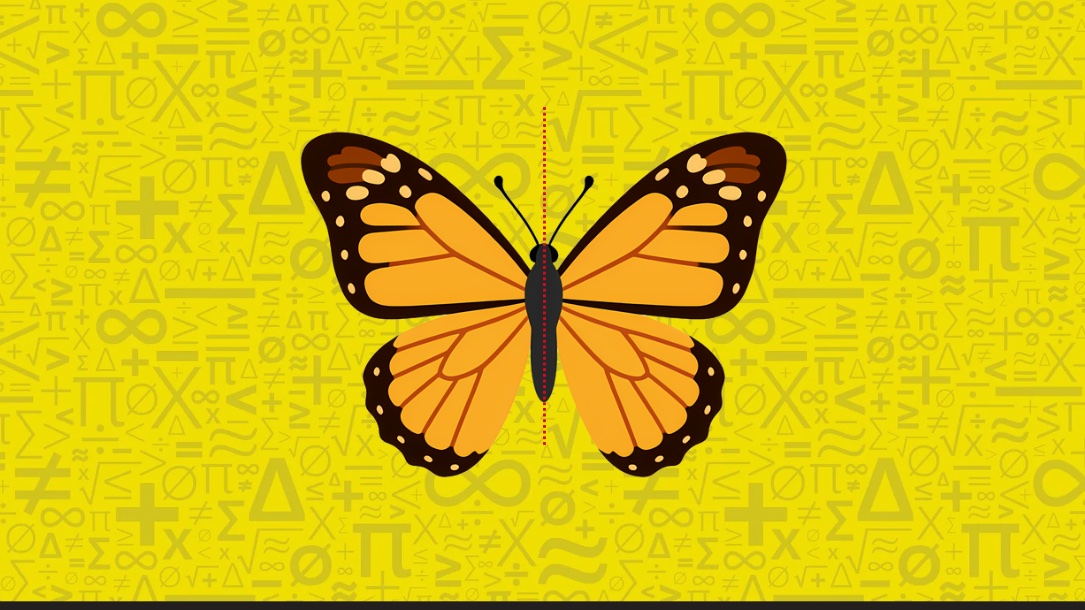
1. Butterfly Wings: Reflectional Symmetry
If we take a close look at a butterfly, every color, spot, and shape on the left wing appears again on the right wing.
Draw an imaginary vertical line down the center of its body, and you have a perfect line of symmetry.
2. Snowflakes: Radial Symmetry
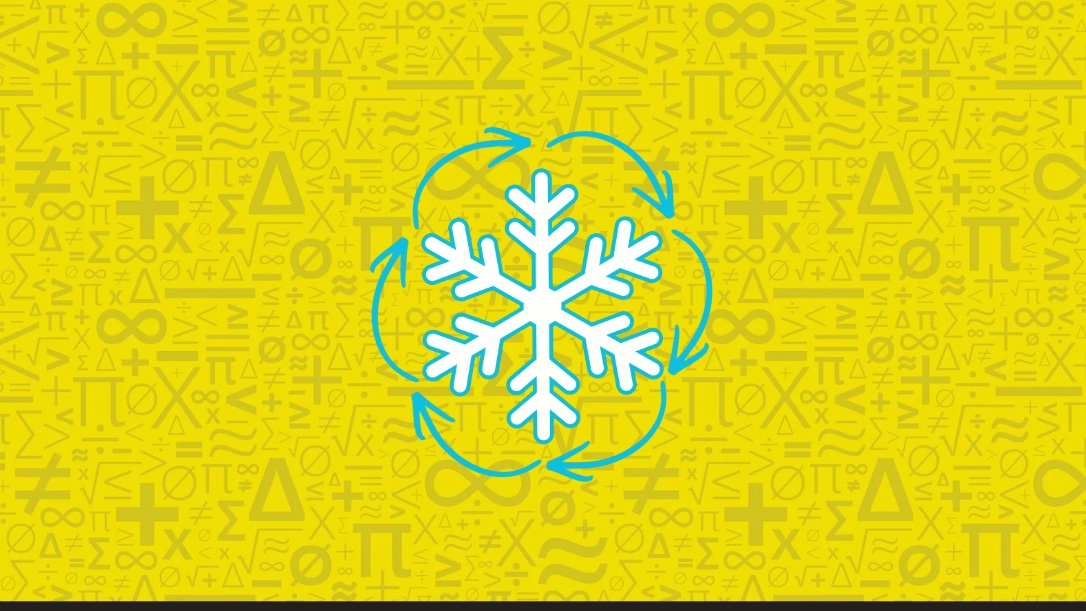
Each snowflake is unique, but every snowflake shares the same structure: six identical arms radiating from a central point. That gives each one six lines of reflectional symmetry and rotational symmetry of order 6.
What does order 6 mean?
It means the snowflake looks identical after a rotation of 60° (360° ÷ 6 = 60°). If we rotate it six times, we are back to the start.
3. Honeycombs: Translational Symmetry
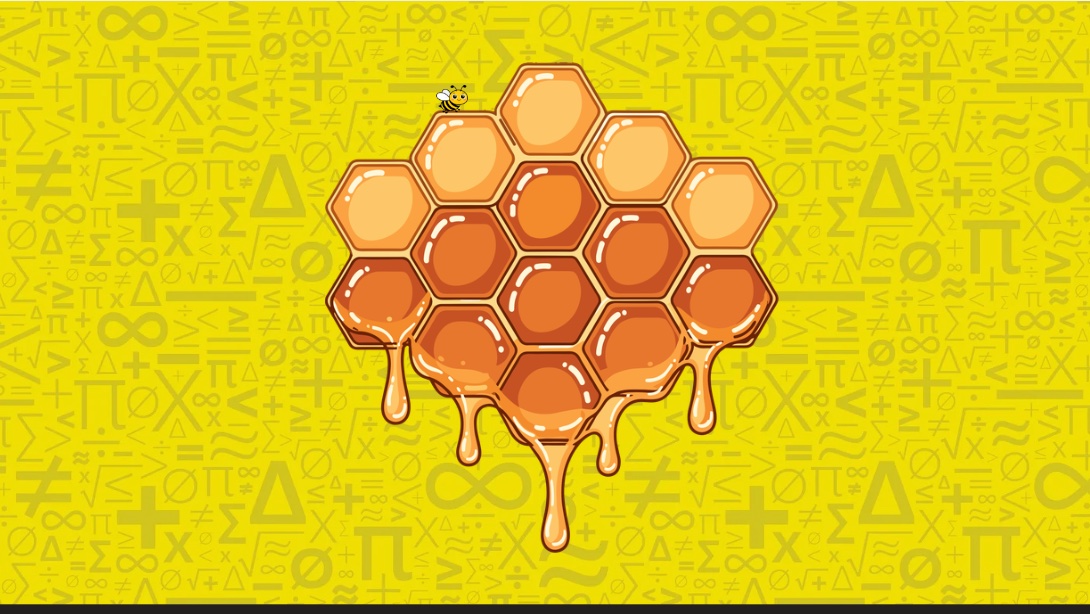
Let’s take a close look at a beehive. Bees build their honeycombs from hundreds of identical hexagonal cells, each one placed right next to the other with no gaps and no overlaps. The same shape repeats by sliding in multiple directions across the entire surface.
That is translational symmetry in action. No flipping, no turning, just the same hexagon, sliding and repeating, perfectly tiled by nature itself.
Artists and designers have used symmetry for thousands of years. It creates balance, harmony, and a sense of order that the human eye finds naturally pleasing.
Let’s take a look at some of the most recognizable examples.
1. Mandalas: Rotational and Radial Symmetry
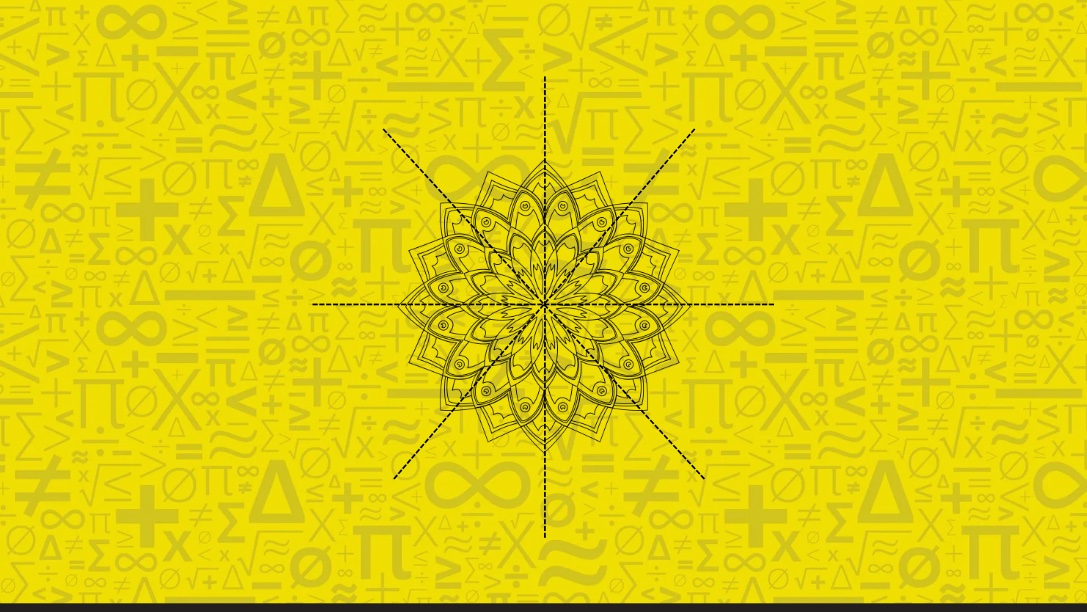
A mandala is a circular design built entirely around a central point. Every element repeats outward at equal angles, giving it both rotational and radial symmetry. A mandala with 8-fold symmetry, for example, looks identical after a rotation of 45° (360° ÷ 8 = 45°).
Many students find mandalas a great way to practice dividing 360° by different numbers, connecting art directly to angle work in geometry.
2. Tessellations: Translational Symmetry
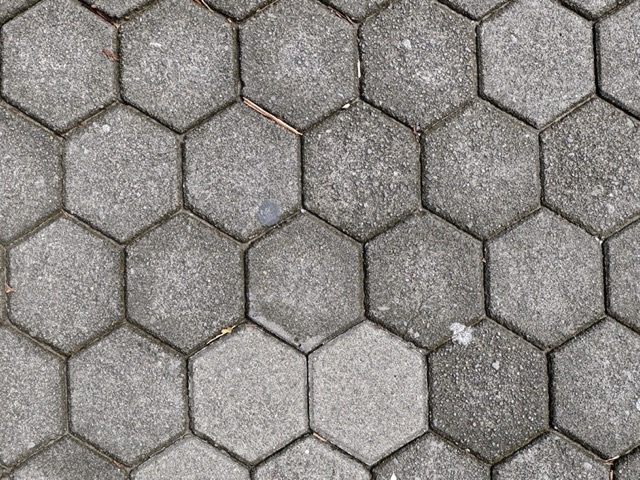
A tessellation is a pattern of shapes that covers a flat surface with no gaps and no overlaps. You see it in honeycomb structures, tiled floors, and the geometric patterns found in Islamic art and architecture.
Tessellations rely on translational symmetry: the same shape slides repeatedly in one or more directions. Only three regular polygons tessellate on their own:
Each one works because its interior angles divide evenly into 360°, allowing shapes to fit perfectly around every point.
3. Kaleidoscopes: Reflectional and Radial Symmetry
A kaleidoscope uses mirrors arranged at precise angles to reflect a small set of objects into a radially symmetric pattern. The math behind it is straightforward: the number of reflected images equals 360° divided by the angle between the mirrors.
Mirrors at 60° produce 6-fold symmetry. Mirrors at 45° produce 8-fold symmetry. Change the angle, and you change the entire pattern.
Architects rely on symmetry for both beauty and function, as a symmetric building distributes weight evenly, looks balanced and grand, and feels intuitive to navigate.
You don't have to travel far to see some of the world's best examples. Washington, D.C., just a short drive from Mount Vernon and Alexandria, is one of the greatest showcases of architectural symmetry anywhere.
1. The Lincoln Memorial: Reflectional Symmetry
If you stand in front of the Lincoln Memorial and draw an imaginary vertical line through its center, every column, step, and decorative detail on the left side appears again on the right. That single line of symmetry gives the building its powerful sense of balance and permanence.
The memorial has 36 columns, one for each state in the Union at the time of Lincoln's death. 36÷2=18 columns per side. Reflectional symmetry expressed through arithmetic.
2. The U.S. Capitol Dome: Rotational Symmetry
If you view it from above, the Capitol dome looks identical after any rotation. It has the same rotational symmetry as a circle: infinite order. No matter how many degrees you turn it, the shape maps perfectly onto itself.
That is not just beautiful. It is structural. A dome distributes weight evenly in all directions precisely because of its rotational symmetry. There is no weak side.
3. Tiled Floors and Facades: Translational Symmetry
Look down at the floor of almost any grand public building, and you will find a tessellation. Geometric tiles repeat by translation across the surface, creating patterns that are both decorative and mathematically precise.
Many of the most intricate examples come from Islamic architecture, where artisans built complex patterns using only a compass and a straightedge, the same tools you use in geometry class today.
Try It Yourself
The best way to understand symmetry is to go looking for it. Here are a few simple activities you can try on your own or with a friend.
1. The Leaf Fold Test: Pick up a leaf and fold it in half lengthwise. Do both sides line up? Most leaves have reflectional symmetry. Try it with different leaves and see if the result is always the same.
2. Symmetry Scavenger Hunt: Head outside and see how many examples of symmetry you can spot. Challenge yourself to find:
One example of reflectional symmetry
One example of rotational symmetry
One tessellation
3. Make Your Own Tessellation: Cut a triangle, square, or hexagon out of cardstock. Try tiling it across a sheet of paper with no gaps and no overlaps. Which shapes work? Which ones don't?
4. Build a Mandala: Draw a circle and divide it into equal sections. Decorate one section, then repeat the same pattern in every other section. The more sections you use, the higher the order of rotational symmetry your mandala will have.
5. Kaleidoscope Math: Next time you look through a kaleidoscope, count the number of repeated images you see. Divide 360° by that number, and you have the angle between the mirrors.
At Mathnasium, instructors help students connect what they learn in class to the world they see every day.
How Mathnasium Helps Students Master Math
Mathnasium is a math-only learning center dedicated to helping K-12 students catch up, keep up, and get ahead in math.
Symmetry starts simple and keeps growing. From lines of reflection in a butterfly's wings to the rotational order of a Capitol dome, it connects geometry to the world you move through every day. The deeper you understand it, the more the geometry that comes after it makes sense.
From there, we build a personalized learning plan that fills knowledge gaps, builds on existing strengths, and introduces new concepts gradually until they become second nature.
Our tutors use everyday language to explain math concepts, which adds to students' familiarity and comfort with the material. We also draw on a mix of verbal, visual, mental, tactile, and written techniques to adapt to different learning styles.
When a concept causes difficulty, we break it down into manageable parts, always teaching both the how and the why behind the answer. That understanding is what builds the critical thinking tools students can apply independently in math and beyond.
Fun is a core part of the Mathnasium Method™. Sessions often don't feel like lessons, and that is by design. We incorporate games, let students earn rewards, and celebrate every bit of progress, big or small. That consistent encouragement grows confidence with each session.
The results speak for themselves:
94% of parents report an improvement in their child's math skills and understanding
93% of parents report their child's improved attitude toward math after attending Mathnasium
90% of students saw an improvement in their school grades
With over 1,100 centers, we bring the Mathnasium Method™ close to your community.
For families located in or near Alexandria, VA, Mathnasium of Mount Vernon is a trusted local center with years of experience helping K-12 students excel in math.
Whether your child is looking to catch up, keep up, or get ahead in math, our team is happy to help.
Mathnasium of Mount Vernon is a math-only learning center for K-12 students in Alexandria,
VA. Trusted by over a million parents, Mathnasium uses personalized learning plans
and the proprietary Mathnasium Method™ to help students catch up, keep up, and get ahead on their math journey.
Our specially trained tutors deliver face-to-face instruction in a supportive and fun small-group environment,
working with students to develop a deep understanding of math, build confidence,
and improve academic performance.
Mathnasium instructors explain when to use digits vs. words, how to convert between them, and common mistakes to avoid, with practice problems included.


 (571) 281-7202