Picture this: It's homework time, and you mention the dreaded M-word. Your child's face falls, shoulders slump, and suddenly they need to use the bathroom, get water, and reorganize their entire backpack. Sound familiar?
If you're nodding along, you're definitely not alone. I've watched countless parents struggle with this exact scenario. But here's what I've discovered after years of working with families: math doesn't have to be the enemy.
What if I told you that your child could actually look forward to math time? Better yet, what if it became something you both enjoyed doing together?
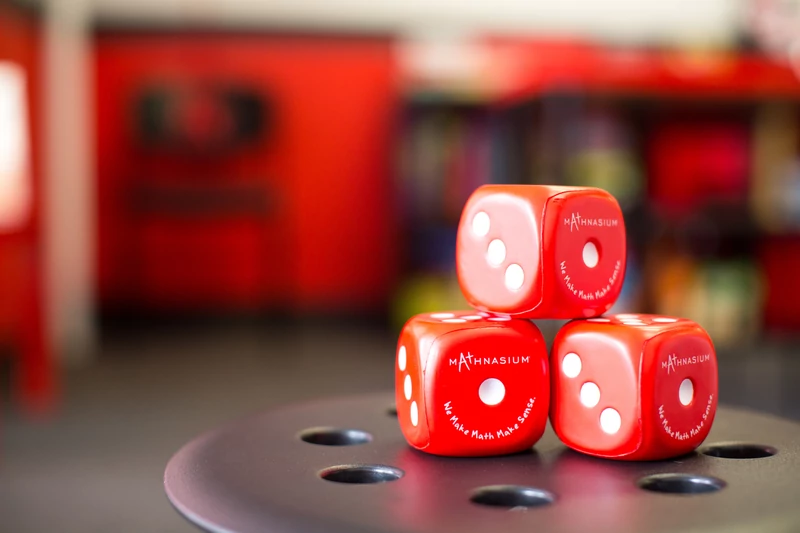
The game-changer (literally) is turning math into play. And trust me, it's easier than you think.
Why Math Games Actually Work (And Why Your Kid Will Love Them)
Let's be honest - sitting at a kitchen table with worksheets isn't exactly thrilling for anyone. But when you turn those same concepts into games? Everything changes.
Here's what happens when kids play math games with their parents:
- The pressure disappears: No red pen corrections or "wrong answer" stress
- They remember more: Ever notice how your kid can recite every Pokémon name but forgets 7+8? That's because play creates stronger memory pathways
- Problem-solving becomes natural: Games require thinking on your feet
- You actually connect: Shared laughter beats shared frustration every time
- Math becomes real: Games show kids how numbers work in the real world
And here's a bonus: research from the National Council of Teachers of Mathematics shows that kids who regularly play math games with parents don't just do better on tests - they actually start enjoying math. Imagine that!
Games That Work (No PhD Required)
For Your Little Ones (Ages 3-5): Keep It Simple and Silly
At this age, we're not worried about calculus. We just want kids to feel comfortable with numbers.
The Great Counting Adventure Turn your home into a treasure hunt. "Can you find 5 blue things?" or "Let's collect 3 round objects!" Your toddler gets to explore, you get to see them think, and everyone wins.
Shape Detectives Unite Make your child the world's greatest shape detective. "Quick! Find something triangular!" Watch them scan the room with serious concentration. Pro tip: act impressed when they spot that sandwich cut diagonally.
Storytime Math "Once upon a time, 2 bears went for a walk. They met 3 more bears. How many bears were walking together?" Let your little one act it out with stuffed animals. They'll be so busy playing, they won't realize they're doing addition.
Elementary Adventurers (Ages 6-8): Getting More Confident
Now we can tackle some real math, but we're keeping it fun.
Kitchen Chemistry (Okay, It's Really Math) Cooking is secretly amazing for math practice. Need to double that cookie recipe? Boom - multiplication. Dividing pizza among family members? Hello, fractions! Plus, there's always the reward of eating your math homework.
The Family Store Set up shop in your living room. Price everything (use stickers), give your kid some play money, and let them go shopping. They'll practice addition, subtraction, and making change without realizing they're in "math class."
Card Game Champions Grab a regular deck of cards and remove the face cards. Each player flips two cards and adds them up. Highest sum wins the round. It's like War, but with math. Kids love the competition, and you love the practice they're getting.
The Big Kids (Ages 9-12): Ready for Real Challenges
These kids can handle more complex thinking, and honestly, they often surprise you with how clever they are.
Pizza Fraction Frenzy Draw circles, divide them into slices, and create pizza scenarios. "If you ate 3/8 of the pizza and Dad ate 1/4, how much is left for Mom?" Use actual pizza occasionally for maximum engagement.
Multiplication Detective Work Turn word problems into real scenarios. "If we're buying snacks for your sleepover and each kid wants 2 juice boxes, and 6 kids are coming, how many juice boxes do we need?" Suddenly, multiplication matters.
The Pattern Game Start a number pattern and let them figure out the rule. Begin with easy ones (2, 4, 6, 8...) then get trickier (1, 4, 9, 16...). Kids love feeling like they've cracked a secret code.
Teenagers: Making It Matter
Teens need to see the point. Fair enough - so let's show them.
The Real Budget Challenge Give them a fake monthly salary and real expenses to manage. Rent, groceries, car payment, entertainment fund. Watch them suddenly care about percentages when they realize how much taxes take out of a paycheck.
Sports Stats Central Use their favorite team's statistics. Calculate batting averages, shooting percentages, fantasy football points. Math becomes relevant when it's about something they actually care about.
Dream Vacation Planner Let them plan a trip anywhere in the world. Calculate flight costs, hotel rates, daily expenses. They'll use addition, multiplication, percentages, and currency conversion without even thinking about it.
Quick Games for Real Life (Because Who Has Time for Elaborate Setups?)
Car Math
- Count license plates from different states
- Add up the numbers on license plates
- Calculate how long until you arrive
- Play "I spy numbers that add up to 10"
Grocery Store Games
- Estimate the total before checking out
- Compare unit prices
- Calculate savings with coupons
- Figure out how many items fit in the cart
Bedtime Numbers
- Count by 2s, 5s, or 10s instead of regular counting
- Create number stories: "5 little bears went to sleep, 2 more joined them..."
- Play "What comes next?" with number patterns
How to Keep It Fun (And Not Turn Into a Math Teacher)
Here's the thing - the moment this feels like school, you've lost them. Keep these tips in mind:
Celebrate the "almost right": If they say 7+5=13, say "Ooh, so close! You're thinking really well!" Not "Wrong, try again."
Follow their lead: If they're into dinosaurs, use dinosaurs in your math stories. Obsessed with Minecraft? Count blocks and calculate materials needed.
Take breaks: The second someone gets frustrated, switch gears. Math games should leave everyone smiling.
Make mistakes yourself: Say "Oops, I think I messed up that addition" sometimes. It shows them that mistakes are normal and fixable.
What NOT to Do (Learn from My Mistakes)
I've seen parents accidentally turn fun games into stressful experiences. Here's what to avoid:
Don't Do This Do This Instead
|
Correct every tiny mistake immediately
|
Let them work through problems naturally |
| Make it a competition between siblings |
Focus on personal improvement |
| Use games as punishment |
Keep games completely separate from discipline |
Rush through to "cover more material"
|
Go slow and let them really understand |
| Act disappointed with wrong answers |
Show excitement for their thinking process |
Your Next Move
Here's what I want you to do: stop reading right now and try one game with your child today. Just one. Pick something from their age group, set aside 15 minutes, and see what happens.
You might be amazed. That child who "hates math" might suddenly be asking for "just one more round." The kid who gets anxious about numbers might start seeing them as friendly puzzle pieces.
Remember, you're not trying to turn your living room into a classroom. You're showing your child that learning can be joyful, that challenges can be fun, and that you believe in their ability to figure things out.
Math anxiety is learned, but so is math confidence. Every positive experience with numbers builds a foundation for future success. You're not just teaching addition and subtraction - you're teaching your child that they're capable of tackling hard things and that learning can be an adventure.
Start small. Stay patient. Celebrate the wins (even the tiny ones).
Your child's relationship with math is about to change for the better. Which game are you going to try first?
There are so many things parents can do to help their kids with math and math games are a great place to start! but if you need more help, we would love to discuss how we can help. Visit our website to learn more about how we help kids with math or schedule a free assessment!


 (615) 685-6284
 (615) 685-6284