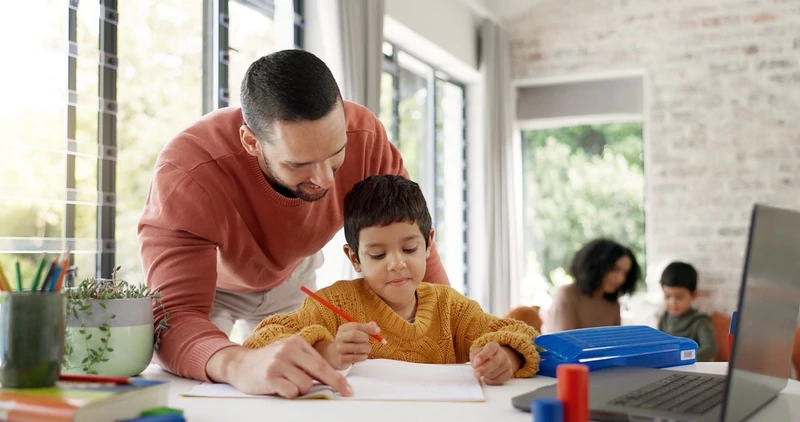
To a child just beginning their math journey, > and < look almost identical, point in opposite directions, and come with names that are easy to mix up.
Once kids understand what these symbols actually mean, not just how they look but what they're saying about numbers, it clicks fast.
Every time your child says, "I have more!" or "That's not fair, they got less!", they're already thinking in greater than and less than. They just don't know it yet.
We love these everyday moments that bring math concepts to life! It’s the best way to help kids make sense of them. Today, we’ll walk you through what the symbols for greater than and less than mean, how to remember which is which, and some simple everyday comparisons you can explore together at home.
What Does Greater Than Mean?
Some numbers are bigger than others, and the greater than symbol is how math shows it. The > symbol means "This number is larger than the one that comes after it."
Think of it this way: 7 > 3 is math's way of saying "7 is greater than 3." The bigger number always comes first, on the left side of the symbol.
But what makes it stick for kids isn't the rule. It's the story.
Meet the Number Alligator
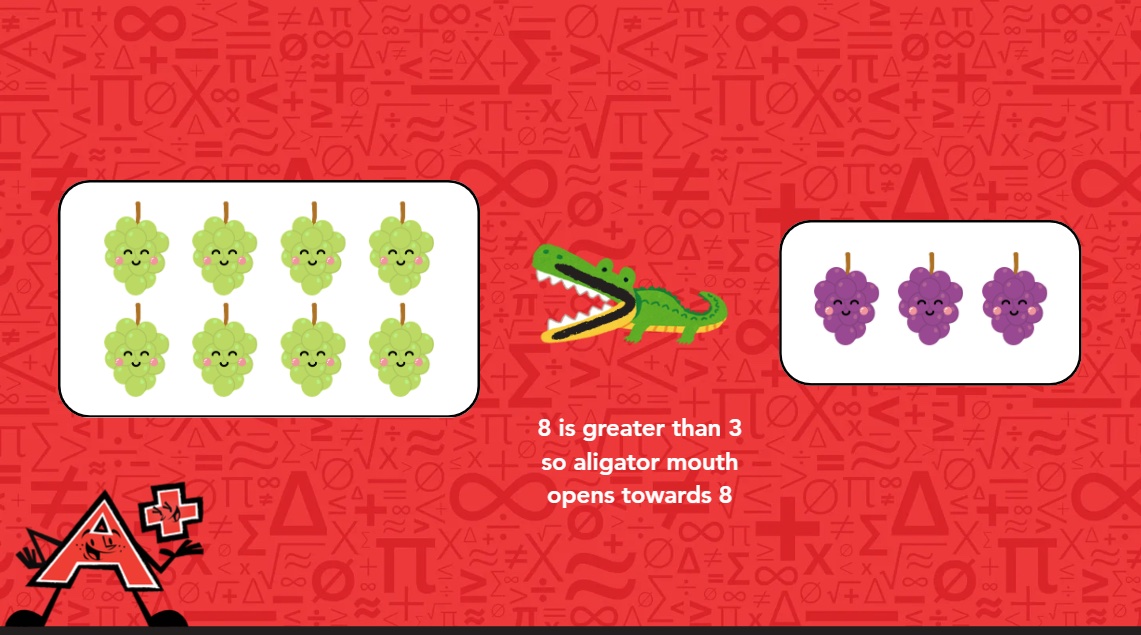
The > symbol is actually an alligator's open mouth. And this alligator is always hungry with its mouth always open toward the bigger number, because that's the snack it wants to eat!
Show your child the symbol and say: "The alligator is greedy. It always eats the bigger number." Then let them be the alligator.
For practice, line up 8 grapes on one side and 3 grapes on the other. Ask your child: "Which pile would the alligator choose?" Once they pick the bigger pile, show them how the > symbol points in the same direction. They just wrote their first math comparison without even realizing it.
📕 You May Also Like: What Is Number Sense & Why It Matters in Early Math Education
What Does Less Than Mean?
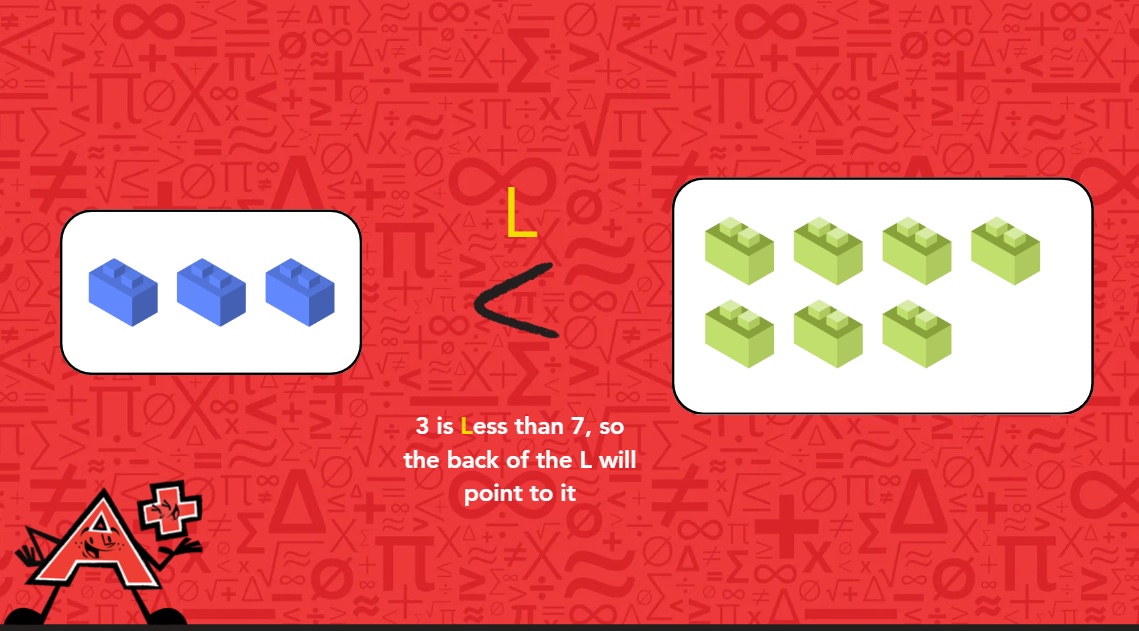
Now flip it around. The < symbol means "This number is smaller than the one that comes after it." So 3 < 8 is math's way of saying "3 is less than 8."
This is the part where kids often get confused, and that's completely normal. And here's where it gets fun: there's a trick that makes this one impossible to forget.
The L Method
The < symbol looks just like the letter L, and L stands for Less than. Every time your child sees <, they can ask themselves: "Does this look like an L?" If yes, it means less than. Simple as that.
Ask your child to trace the < symbol with their finger and say "L for less than" out loud. Then grab two small towers of building bricks, one tall and one short, and have them count each tower.
Help them place the < symbol between the two counts, always with the smaller number on the left. After a few rounds, let them build the towers and place the symbol themselves. The physical act of building and comparing makes the concept stick far faster than a worksheet ever could.
📕 You May Also Like: 7 Traits of a Successful Math Student to Cultivate Early
Greater Than and Less Than in Everyday Life
The best part about greater than and less than is that your child is already using these ideas every single day, and they are just one step away from connecting them to the symbols.
Here are four everyday moments where you can bring > and < to life together.
Maya's Snack Time
Maya has 7 cookies, and her brother has 3. Before you even mention math, ask your child: "Who has more?"
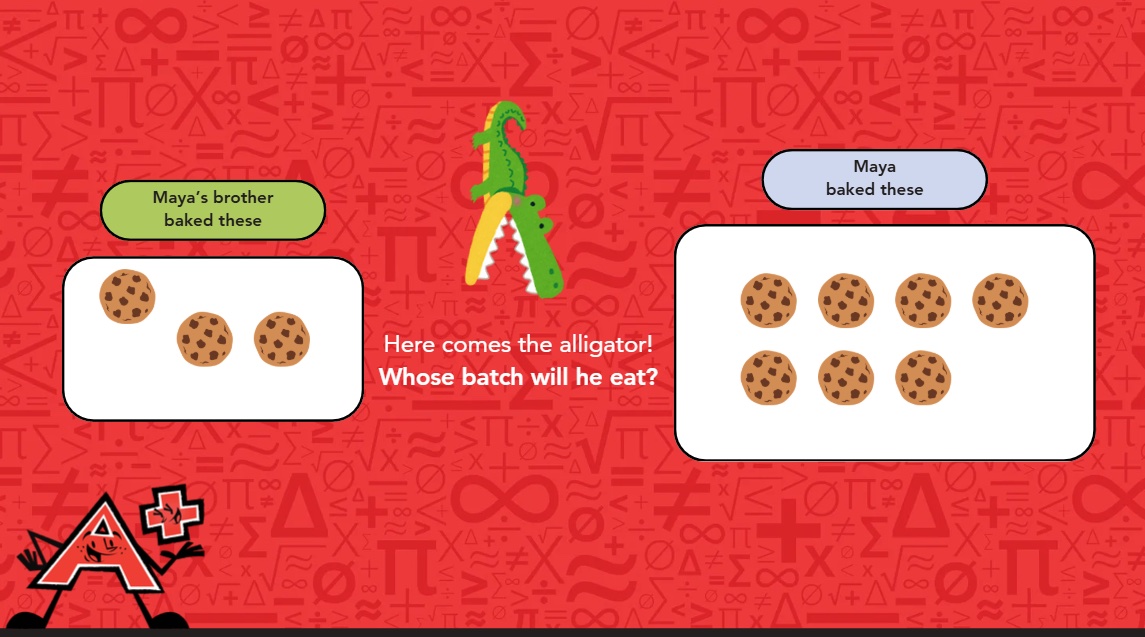
Once they answer, show them how to write it: 7 > 3. The alligator's mouth opens toward Maya's pile because 7 is greater than 3.
Liam's Piggy Bank
Liam saved 4 coins this week. Last week he saved 9. Ask your child: "Which week was slower for saving?"
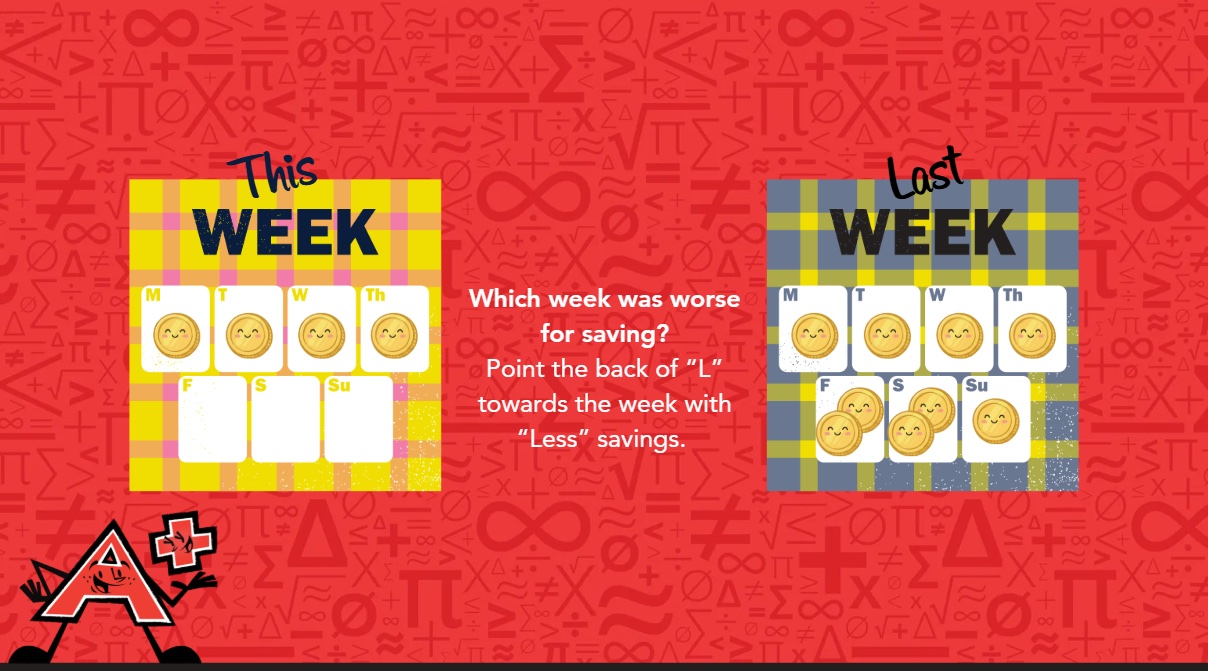
When they pick last week, write it out together: 4 < 9. The L shape points to 4 (the smaller number) because 4 is less than 9.
Zoe's Steps Outside
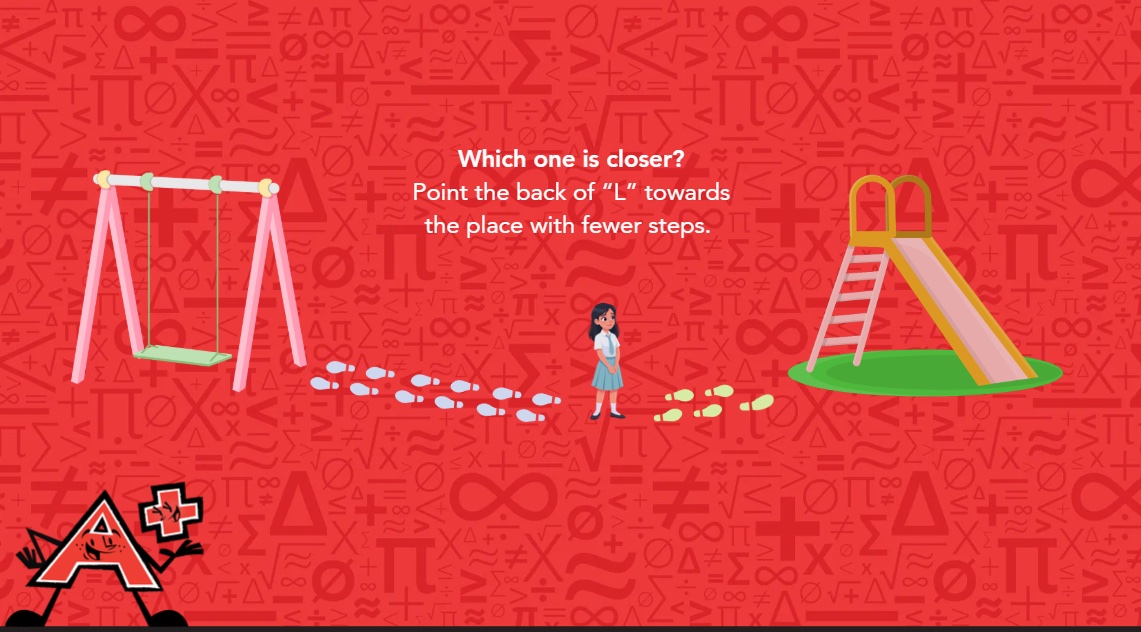
Zoe counted 12 steps to the swings. The slide is only 5 steps away. Ask your child: "Which one is closer?"
Bedtime Books
Dad read 2 books at bedtime. Mom read 6. Ask your child: "Who read more?"
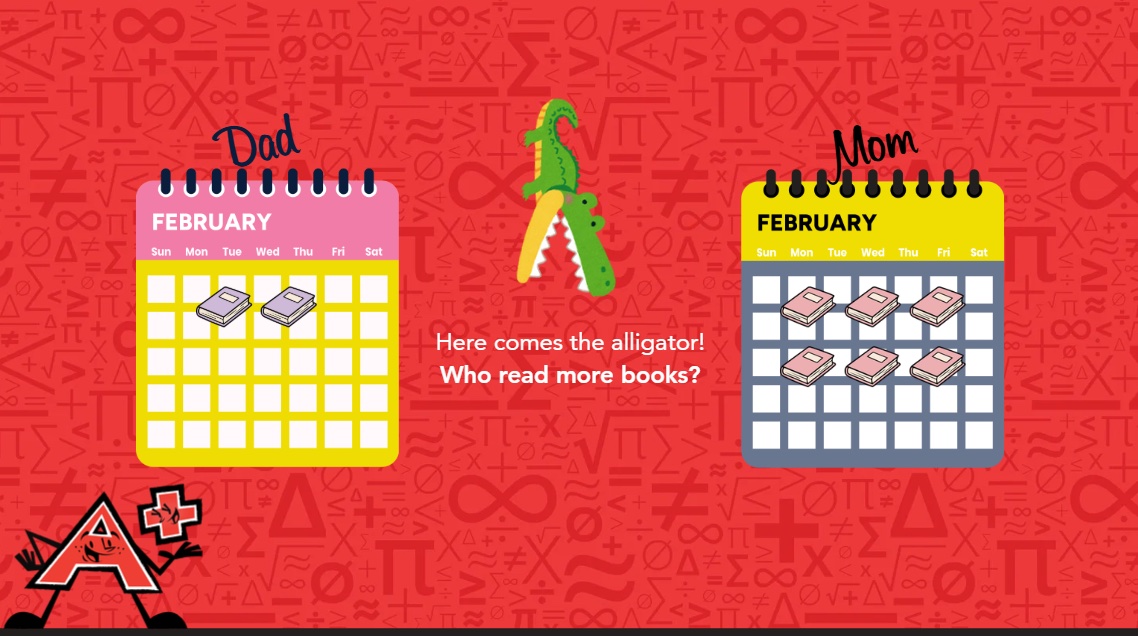
Once they know, write it side by side: 2 < 6. Does the symbol look like an L? Yes, and L means less than. Dad read less.
📕 You May Also Like: How Math Can Inspire Your Child to Think Outside The Box
What Comes Next: Equal To and Beyond
Once your child has a confident feel for > and <, there's one more symbol that completes the picture. The equals sign, =.
If > means "more than" and < means "less than," then = means "exactly the same." Five grapes on each side? Neither is bigger. That's 5 = 5.
Together, these three symbols are just the beginning. As your child moves through elementary school, they'll use them to compare bigger numbers, fractions, and decimals, always building on what they already know.

Mathnasium tutors help young learners build the number sense and confidence they need to thrive in math.
How Mathnasium of Queen Creek Builds Early Math Confidence
Mathnasium is a math-only learning center dedicated to helping K-12 students of all skill levels excel in math.
When young learners come to us, we often notice that math has already started to feel tricky even at an early age. Sometimes it's a concept like greater than and less than that never quite clicked. Sometimes it's a quiet hesitation that, if left unaddressed, can grow into a bigger hurdle down the road.
Whatever the starting point, one of the most important goals of the Mathnasium journey is not only to build their skills, but to transform how they think and feel about math from the very beginning.
This is all part of our proprietary teaching approach: the Mathnasium Method™.
Designed to unlock each student's true math potential, our approach relies on:
-
Personalized learning: Each student begins their Mathnasium journey with a diagnostic assessment. This helps us identify their strengths, potential knowledge gaps, and how they naturally approach math. Using these insights, we design a personalized learning plan tailored to each student's needs, pace, and goals.
-
Teaching for understanding: We use natural, everyday language to explain math concepts the same way we connected > and < to alligators and the letter L. We also use a combination of verbal, visual, mental, tactile, and written techniques to help students truly make sense of what they're learning.
-
Caring, supportive tutors: Our tutors are specially trained in math as well as the technical and emotional aspects of teaching. They know how to encourage a young learner who's hesitant and how to challenge one who's ready to stretch their thinking.
-
Problem-solving and critical thinking skills: During sessions, we give students space for productive struggle, then rejoin them to check and guide their reasoning. We walk them through both the how and the why. Instead of just the answer, they are building the thinking tools they'll carry into every grade ahead.
-
Singular focus on math: We are dedicated to math and math only. This singular focus allows us to go deeper into how students best learn, absorb, and retain math skills at every stage.
-
A confidence-building, fun learning environment: We often hear that our sessions don't feel like lessons at all. That's by design. Game-based activities, hands-on exploration, and consistent encouragement keep students motivated and genuinely enjoying math.
Families see measurable results:
-
94% of parents report an improvement in their child's math skills and understanding
-
93% of parents report their child's improved attitude toward math after attending Mathnasium
-
90% of students saw an improvement in their school grades
We operate over 1,100 centers across the country, bringing top-rated math instruction close to your home.
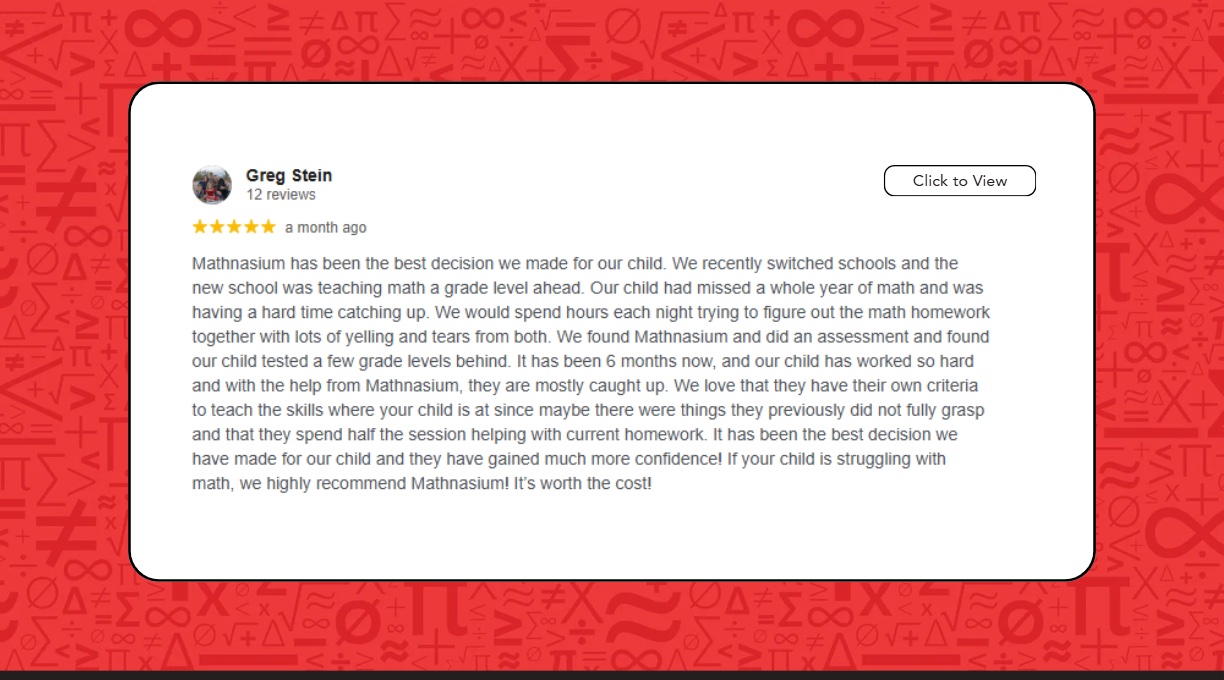
Queen Creek families have their own home base in Mathnasium of Queen Creek, where over 200 five-star Google reviews reflect years of helping local students grow in math and in confidence.
Here’s what one parent had to share about our center.
If your child is ready to catch up, keep up, or get ahead in math, our team is ready to assist!
📅 Schedule a Free Diagnostic Assessment at Mathnasium of Queen Creek
Not located near Queen Creek?
📍 Find a Mathnasium Learning Center Near You


 (480) 279-3122
 (480) 279-3122