

University Irvine
5321 University Dr
, #C
Irvine, CA 92612
Irvine, CA 92612
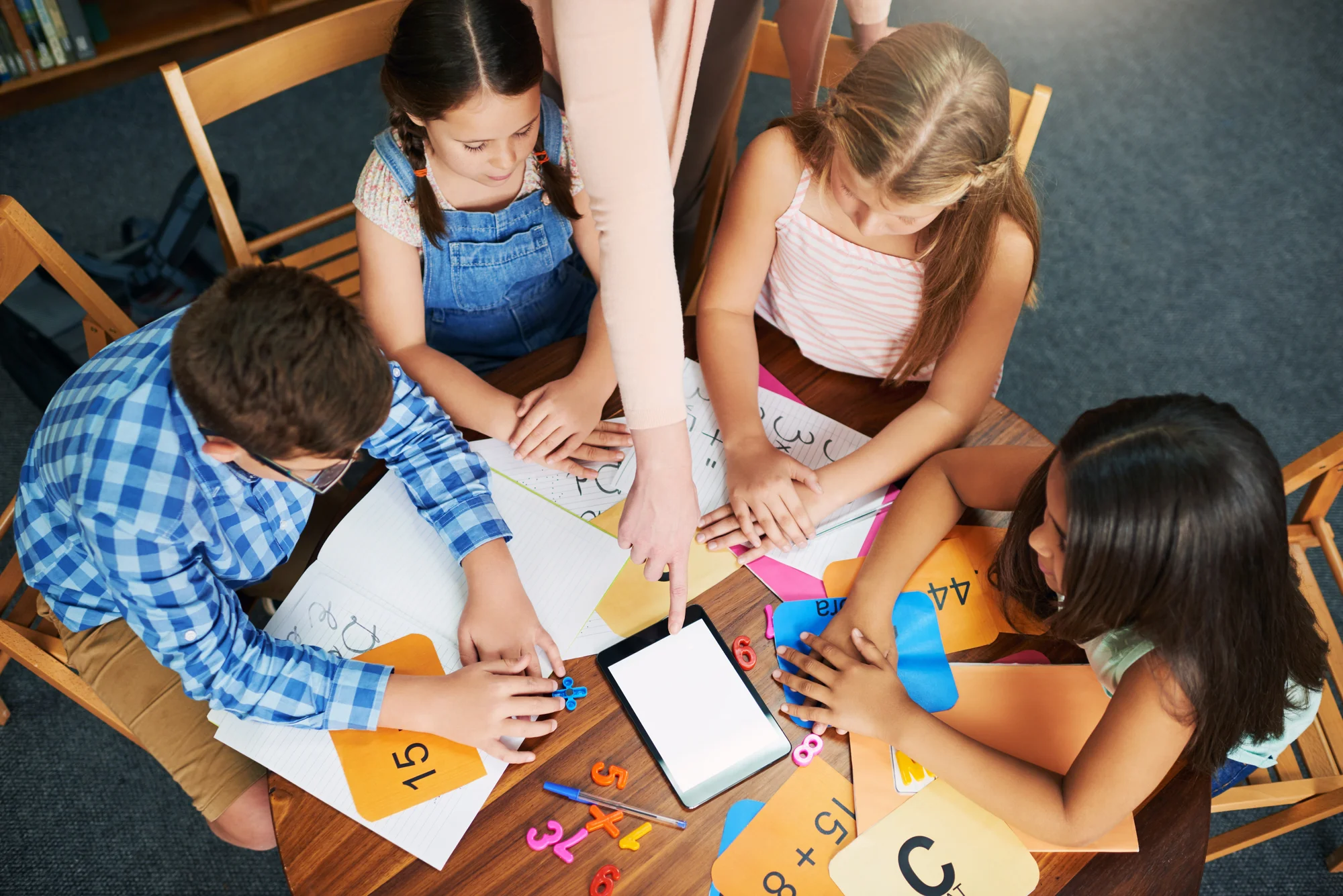
Summer is the longest break in the school year, and it arrives while math is still taking shape from kindergarten through Grade 5. Each new skill builds on the last, which means progress in September depends heavily on what stayed sharp over the summer.
As a math learning center based in California, we follow California Common Core standards, which define exactly what children need before each new grade begins.
This checklist is organized around those standards, grade by grade, so you always know what to focus on and why it matters for what comes next.
Summer is the longest stretch without structured math practice, and in the elementary years, that absence has real consequences. These are the years when children build the skills that carry them through every math class that follows: number sense, place value, multiplication fluency, and fraction knowledge.
Research by Atteberry and McEachin using NWEA data consistently shows that summer break takes a heavy toll on essential math skills, with students losing between 25% and 34% of their school-year progress on average.
Foundational losses hit harder than most parents expect. Losing a grasp of fractions after Grade 4 means starting Grade 5 already behind on the exact concepts the next grade draws on first.
Fall pacing does not slow down for gaps. New material arrives before earlier learning has had time to settle, and that is precisely what targeted summer practice helps prevent.
📕 You May Also Like: How to Beat Summer Slide: 6 Ways to Keep Kids Learning
The summer math checklist runs from kindergarten through grade 5. Since we are based in Irvine, California, we organized it around the skills California Common Core identifies as essential before moving to the next grade. Each section follows the same structure:
The list of skills your child should solidify by the end of that grade
A simple way to practice at home over the summer
Start with your child's current grade, then read the one they are entering in September. That second section opens by explaining exactly which skills from the current grade it builds on most.
Use it as a reference point rather than a test. It shows where a little extra attention over the summer could make September's transition smoother.
In kindergarten, your child builds the earliest math habits that every grade after depends on. Here are the skills to keep sharp over the summer:
Counting to 100 by ones and tens
Recognizing and writing numbers 0 through 20
Adding and subtracting within 10 using objects or drawings
Number recognition with everyday objects and simple addition with snacks or small toys both count as real practice. Keep sessions short and low-pressure. Five minutes at the kitchen table is enough at this age.
📕 You May Also Like: How to Encourage a Love of Numbers in Young Learners
Young learners use counting sequences and number recognition from kindergarten right away in Grade 1. Place value and addition fluency arrive early in the fall, and shaky number order makes that transition harder than it needs to be. Here is what to focus on over the summer:
Adding and subtracting within 20 with growing confidence
Place value for two-digit numbers as tens and ones
Comparing two-digit numbers using greater than, less than, and equal to
Addition and subtraction facts within 20, with facts within 10 becoming automatic
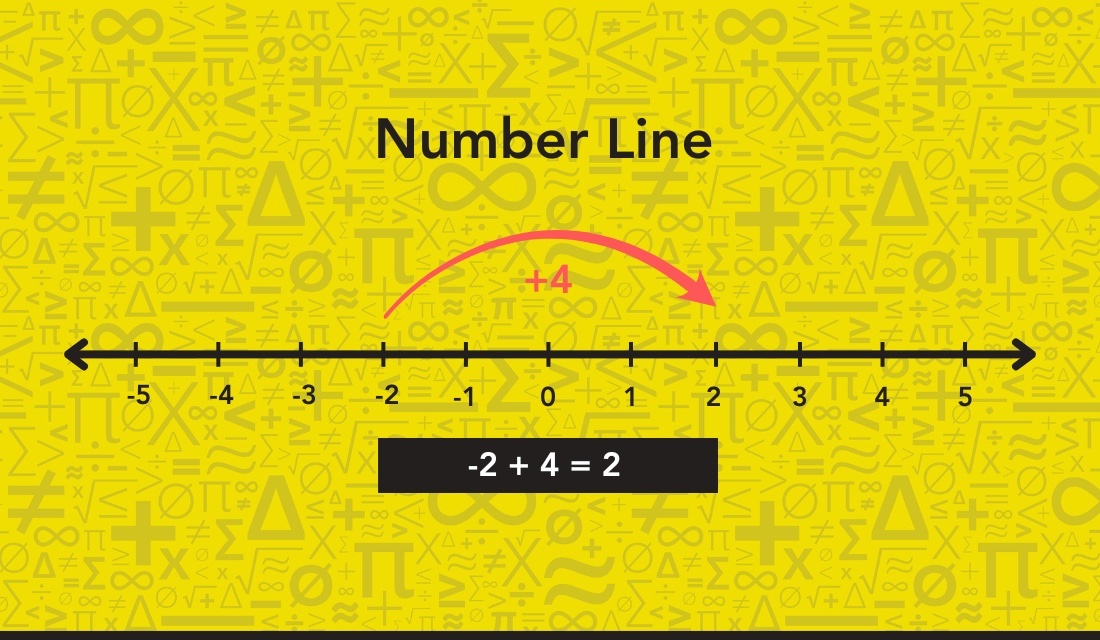
Tools like ten frames (visual grids that help kids “see” numbers) or a number line, which shows how numbers relate by position and distance, can reinforce fluency without feeling like a drill. Short daily sessions of five to ten minutes work better than occasional longer ones.
Fact fluency from Grade 1 carries directly into Grade 2, where addition and subtraction with regrouping arrive early in the year. If your child is still counting on fingers for single-digit facts, they will find that transition significantly harder.
In second grade, arithmetic solidifies, and the first seeds of multiplication are planted. Here is what to practice with your child:
Adding and subtracting within 100 fluently
Grasping equal groups as the foundation of multiplication
Reading a clock to the nearest five minutes
Counting and comparing money amounts
Working with basic measurements and bar graphs
Activities like skip counting, grouping household objects into equal sets, and simple repeated addition help build a solid foundation for multiplication. You can connect these ideas to everyday moments, so practice with your child feels relevant, rather than extra schoolwork.
📕 You May Also Like: 8 Strategies for Parents Practicing Math With Their Children
The equal groups concept from Grade 2 is what Grade 3 builds multiplication and division on directly. In third grade, those operations move to the center of everything. Here is what to focus on with your child:
Multiplication and division facts within 100
The relationship between multiplication and division
Fractions as equal parts of a whole
Placing fractions on a number line
Two-step word problems using all four operations
Facts that feel automatic in third grade will free up your student’s mental space for the harder thinking those same problems require.
Ten minutes of daily fact practice through flashcards, apps, or games is enough to maintain what was built during the year. Consistency matters more than duration at this stage.
Multiplication fluency from Grade 3 is the foundation Grade 4 builds on most directly. Multi-digit multiplication and fraction equivalence both depend on those automatic skills, and in fourth grade specifically, they arrive quickly. Here is where to focus:
Multiplying multi-digit numbers with growing confidence
Dividing with remainders
Generating equivalent fractions
Adding and subtracting fractions with like denominators
Decimal notation and comparison
Concrete representations like folded paper models, food portions, and visual diagrams help make fractions more intuitive for children. When they see how visual work connects to written notation, children get comfortable moving between the two, which is exactly what Grade 5 will ask of them.
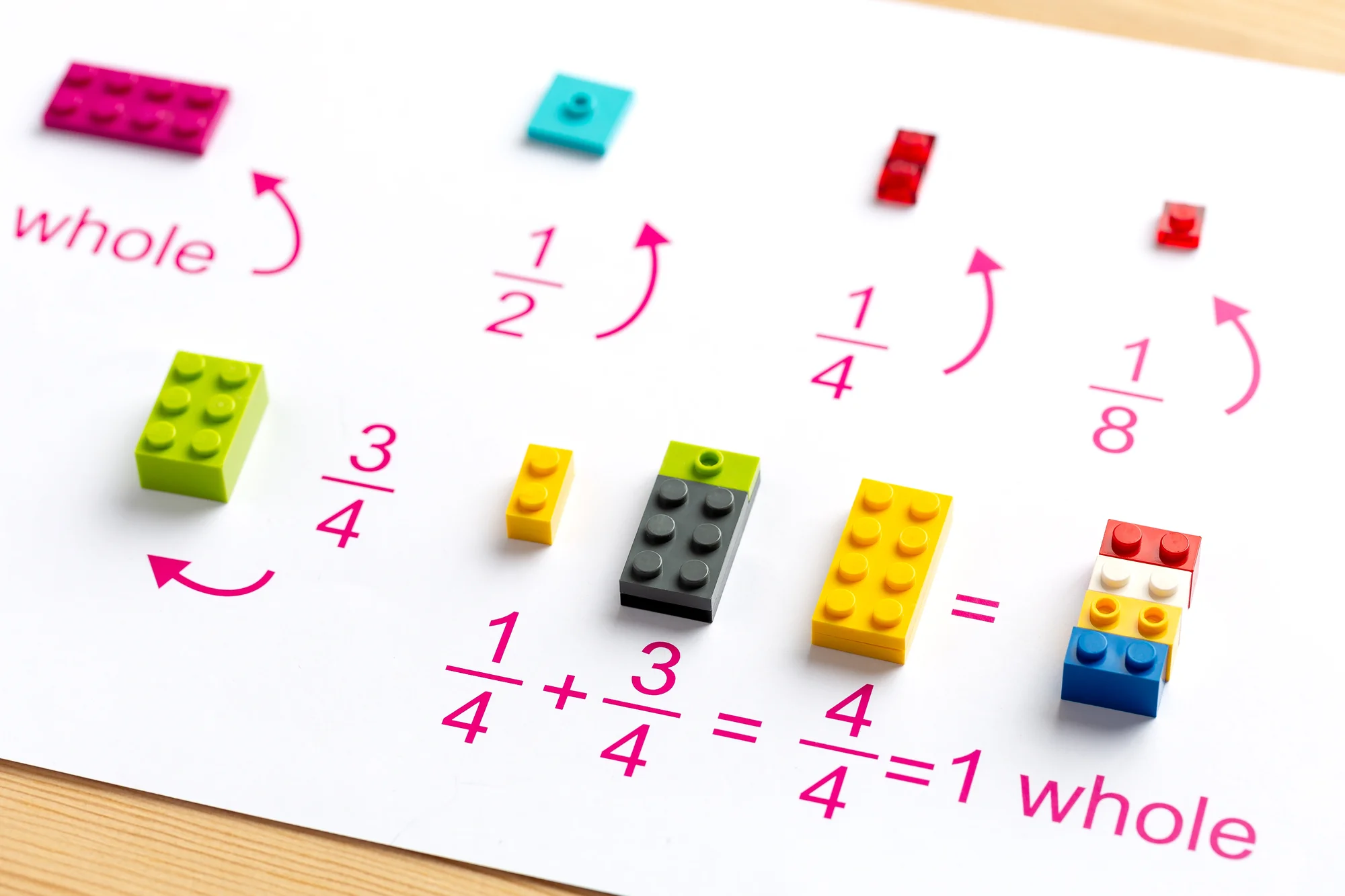
When we add fractions like \(\Large\frac{1}{4}\) and \(\Large\frac{3}{4}\), we are just putting the pieces of the puzzle back together.
Fraction work from Grade 4 is one of the best indicators of how your child will handle what comes next. In fifth grade, fractions extend significantly into multiplication and division.
For our neighbors in Irvine, schools in the Irvine Unified School District move through this content quickly, making the summer after fifth grade the most consequential window in the elementary years.
Here is what to pay attention to:
Multiplying and dividing fractions
Adding and subtracting decimals fluently
Place value through thousandths
Calculating the volume of rectangular prisms
IUSD middle school math begins with a rigorous Grade 6 sequence that assumes full command of Grade 5 fraction and decimal skills. The proportional thinking and pre-algebra concepts that define middle school are built directly on this foundation.
Fluency with fractions and comfort with decimals help children keep pace from the first week of Grade 6.
We use the same skills Grade 6 builds on when we work out a discount or measure ingredients for a recipe. When practice is framed around real decisions, the math feels purposeful rather than like review.
📕 You May Also Like: How Tutors Use Productive Struggle in Math (Without Letting Kids Get Stuck)
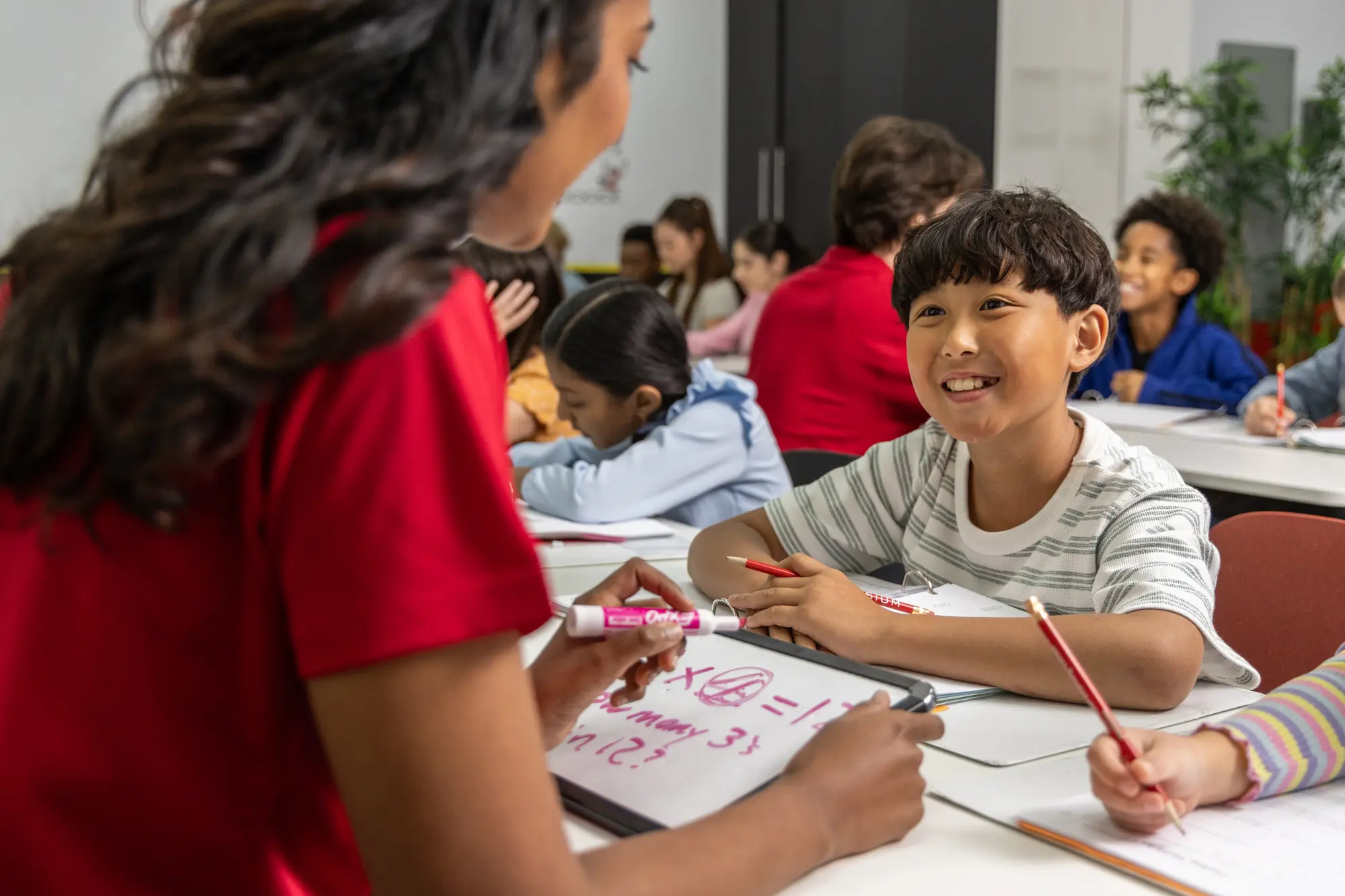
At Mathnasium, specially trained tutors build on what your child already knows and fill the gaps before the next grade begins.
Mathnasium is a math-only learning center empowering students of all skill levels to excel in math.
Whether the goal is keeping skills sharp over summer or closing gaps that built up during the school year, most of our centers offer regular sessions throughout summer, with select locations offering dedicated summer programs.
Whichever program fits your family, it is powered by the Mathnasium Method™, our proprietary teaching approach designed to unlock each student's math potential.
Everything begins with a diagnostic assessment, a relaxed interaction designed to uncover your student's strengths, knowledge gaps, and how they think about math. With those insights, we build a personalized learning plan tailored to their needs and goals.
Our specially trained tutors follow that plan closely, delivering face-to-face math instruction in a warm and dynamic setting.
We use natural language to explain concepts and draw on a mix of verbal, visual, mental, tactile, and written techniques so students can truly make sense of the math they are learning.
During sessions, we give students room to struggle productively before stepping in to check their reasoning. The goal is for them to learn to trust their own thinking over time. When we do step in, we always show both the how and the why behind the answer, building the critical thinking tools students carry into math and beyond.
Fun is embedded in the approach, too. Sessions are often game-based and hands-on, keeping students engaged and enjoying the process. We celebrate every bit of progress, big or small, and that consistent encouragement grows confidence with each session.
The results speak for themselves:
94% of parents report improvement in their child's math skills and understanding
93% of parents report an improved attitude toward math after attending Mathnasium
90% of students saw improvement in their school grades
With over 1,100 learning centers across North America, there is likely a Mathnasium close to you.
Families across Irvine trust Mathnasium of University Irvine, a center with years of experience building confident math thinkers in University Park, Turtle Rock, Alderwood, Bonita Canyon, and the surrounding communities.
If the checklist reveals a grade where your child's skills feel shaky, our team is ready to help before September arrives.
📅 Schedule a Free Assessment at Mathnasium of University Irvine
Mathnasium of University Irvine is a math-only learning center for K-12 students in Irvine, CA. Trusted by over a million parents, Mathnasium uses personalized learning plans and the proprietary Mathnasium Method™ to help students catch up, keep up, and get ahead on their math journey.
Our specially trained tutors deliver face-to-face instruction in a supportive and fun small-group environment, working with students both in center and online to develop a deep understanding of math, build confidence, and improve academic performance.
Schedule Free Assessment
 (949) 296-6284