Math isn't just hiding in textbooks; it’s baked into snack time, bedtime, and even sibling squabbles. From estimating how long they have before dinner to figuring out who got the bigger cookie, kids are constantly engaging in math. They just don’t call it that. And honestly? That’s the magic.
At Mathnasium, we know these “invisible” math moments are some of the most powerful. They shape how kids reason, solve problems, and make decisions before they ever sit down to solve for X.
So before you think your child is “not a math kid,” take a look at these 9 everyday skills they’re already using. You’ll see just how much math is happening right under your nose.
1. Estimating Time and Schedules: The Hidden Math Behind Your Child’s Day
“Five more minutes!”
Whether it’s before bedtime, screen time, or playtime, this familiar phrase is a child’s way of grappling with time—an abstract concept that requires surprisingly sophisticated thinking.
When children estimate how long something will take or plan what they can fit into their afternoon, they’re using math!
According to a National Head Start report, infants and toddlers begin developing math skills through everyday interactions—including concepts like quantity, sequence, and spatial relationships—and that everyday family math talk plays a meaningful role in nurturing this development.
Conversations about “how long” and “what time” strengthen this kind of thinking and set the stage for more formal time reasoning in school.
At Mathnasium, we’ve seen firsthand how students who struggle with time estimation often face challenges in areas like problem-solving and test pacing. That’s why building this skill at home makes such a big difference.
Here’s how you can help:
-
Practice “time talks.” Ask questions like, “How long do you think it will take us to get to school?” or “Do we have enough time for a game before dinner?” Then check the actual time together and reflect.
-
Turn routines into math moments. While brushing teeth or setting a timer for reading, ask your child to guess how long it will take. Compare the estimate to the result.
-
Link time to real-world math. Cooking is a great example: “If we need to bake this for 15 minutes and it’s already 4:20, when should we take it out?”
When children make predictions about time and check those predictions, they’re not just learning how clocks work. They’re building the kind of flexible, real-world math thinking that helps them reason, plan, and feel more confident in everyday decisions.
2. Comparing Quantities and Sizes: The Roots of Logical Thinking
Children love to compare, don’t they! Who has more crackers, whose pile of building blocks is taller, or is their glass of juice the same size as their sibling’s?
Though these look like arguments waiting to happen, they’re also opportunities to build powerful math thinking. Over time, they help children build confidence in using math to describe and make sense of their world.
According to the Education Endowment Foundation, these small, informal experiences, especially when paired with rich conversation, significantly support number sense and early analytical thinking.
You can encourage this type of learning at home by:
-
Inviting comparisons during daily routines: “Which bag feels heavier?” or “Can you find the longest carrot?”
-
Using simple, descriptive math language: “almost the same,” “a little more,” “twice as much”
-
Asking open-ended questions: “How can we tell these are the same?” or “Why do you think that one is bigger?”
At Mathnasium, we build on this natural curiosity by using visual tools and guided questioning to help children connect these early experiences to formal concepts like measurement and problem-solving. When kids understand what they see and feel, they’re much more prepared to apply it in math class.
📕 You May Also Like: How to Use Math Manipulatives Effectively at Home

Simple comparisons, like who has more or which item is bigger, build early number sense and logical thinking.
3. Budgeting Allowance and Making Purchases: Early Money Decisions That Build Math Confidence
Kids start practicing financial decision-making far earlier than we sometimes realize. If they’re counting allowance, saving up for a toy, or choosing between snacks at the store, they’re learning how money works and doing real math in the process.
Each of these choices involves weighing options, comparing prices, and thinking ahead.
These questions help build number sense, reasoning, in addition to addition, subtraction, and even early multiplication as kids estimate how many weeks of saving it takes to reach a goal.
When children start tracking money, they begin learning about trade-offs and priorities.
According to researchers like Ritchie and Bates, early exposure to decision-making and planning supports long-term development of independence and self-regulation. That’s especially true when children are trusted to manage small amounts of money on their own.
You can support this at home by:
-
Talking through money choices aloud. “This one costs $4. You have $6. How much would you have left?”
-
Giving kids real responsibility. Let them bring a few dollars to the store and decide how to spend it.
-
Encouraging savings goals. Track progress visually and celebrate when they reach it.
At Mathnasium, we often see students become more engaged when math connects to something meaningful, like buying something they care about. These small, everyday budgeting moments help them apply addition, subtraction, and planning in a way that feels relevant, not abstract.
When kids understand how to use math to make choices, they start seeing it as a useful tool, not just something they’re graded on.
📕 You May Also Like: Math for Life: Why Math Skills Matter Beyond School
4. Dividing Fair Shares: The First Step Toward Understanding Fractions
These common childhood moments (especially when snacks or toys are involved) are early lessons in division and fractions.
When kids share a cookie between two people or split a handful of blocks with a friend, they’re doing math. They’re exploring the concept of equal parts, noticing when something’s not quite even, and figuring out how to fix it.
This hands-on experience with fair sharing helps them develop a real-world understanding of halves, thirds, and even remainders, long before they see these concepts on a worksheet.
These moments are powerful. They help children visualize what it means to divide a whole and how different parts relate to each other. And when kids begin to notice that sometimes things don’t divide up perfectly, they’re also learning to think flexibly, which is also part of developing number sense as well as comfort with remainders.
Here’s how you can support this skill at home:
-
Invite your child to divide snacks, play materials, or chores fairly. Ask, “What’s the best way to make it even?”
-
Use language like “half,” “equal parts,” or “leftover” to build vocabulary around the idea.
-
Ask reflective questions like, “Was that a fair share? How do you know?”
By turning everyday sharing into math talk, you help children move from fairness to fractions and build a foundation that supports more advanced problem-solving down the line.
5. Recognizing Patterns and Routines: Early Algebra in Disguise
We are wired to notice patterns; they bring structure to our world and help us make sense of it. Early pattern recognition is both comforting and an opportunity to build mathematical skills.
When a child says something to the effect of “I know what comes next,” they’re using the same kind of logic they’ll one day use in algebra. They’re starting to understand that events and ideas follow rules and that those rules can be predicted, tested, and repeated.
In math terms, that’s the foundation of sequences, multiplication, and even equations.
Recognizing patterns also helps children develop reasoning and memory as they begin to see how one thing leads to another, whether in number sequences or a song they love. That awareness makes it easier to grasp concepts like skip counting, calendars, and routines—skills they’ll draw on in school and daily life.
You can help nurture this kind of thinking by:
-
Pointing out patterns in songs, books, nature, and routines.
-
Asking questions like, “What comes next?” or “Do you see a rule?”
-
Creating simple visual or movement patterns together using toys, colors, or claps.
At Mathnasium, we tap into this natural interest by helping kids recognize number patterns and understand why they work. The more they see math as something they can predict and explore, the more confident they become in tackling new challenges.
Pattern thinking is one of the earliest ways children learn that math is not just about answers; it’s about structure, logic, and discovery.
6. Measuring and Comparing in the Kitchen: A Recipe for Math Confidence
The kitchen is one of the richest learning spaces in the house. With each pour, scoop, or ingriedients measurement, they’re exploring math with their hands.
Measuring ⅔ cup of flour or comparing two spoons of sugar introduces key math ideas like volume, estimation, and fractions.
Even before children can read measuring cups or understand units, they’re noticing which container holds more or how many spoonfuls fill a cup. These real-world comparisons create the foundation for later lessons in capacity, ratios, and proportional reasoning.
As the National Head Start report highlighted, children develop early measurement skills by noticing differences in size and volume through everyday play. The kitchen simply makes those concepts tangible.
To bring math into your cooking time:
-
Ask your child to help measure, pour, or divide ingredients.
-
Talk about what happens when you double a recipe or halve it.
-
Use words like “more than,” “less,” “half,” and “equal parts” as you work.
Need more ideas? Check out our guide to teaching math in the kitchen.
We often find that students who’ve had real experiences with measurement have a much easier time grasping abstract concepts like fractions and conversions. Cooking makes math meaningful and tasty.
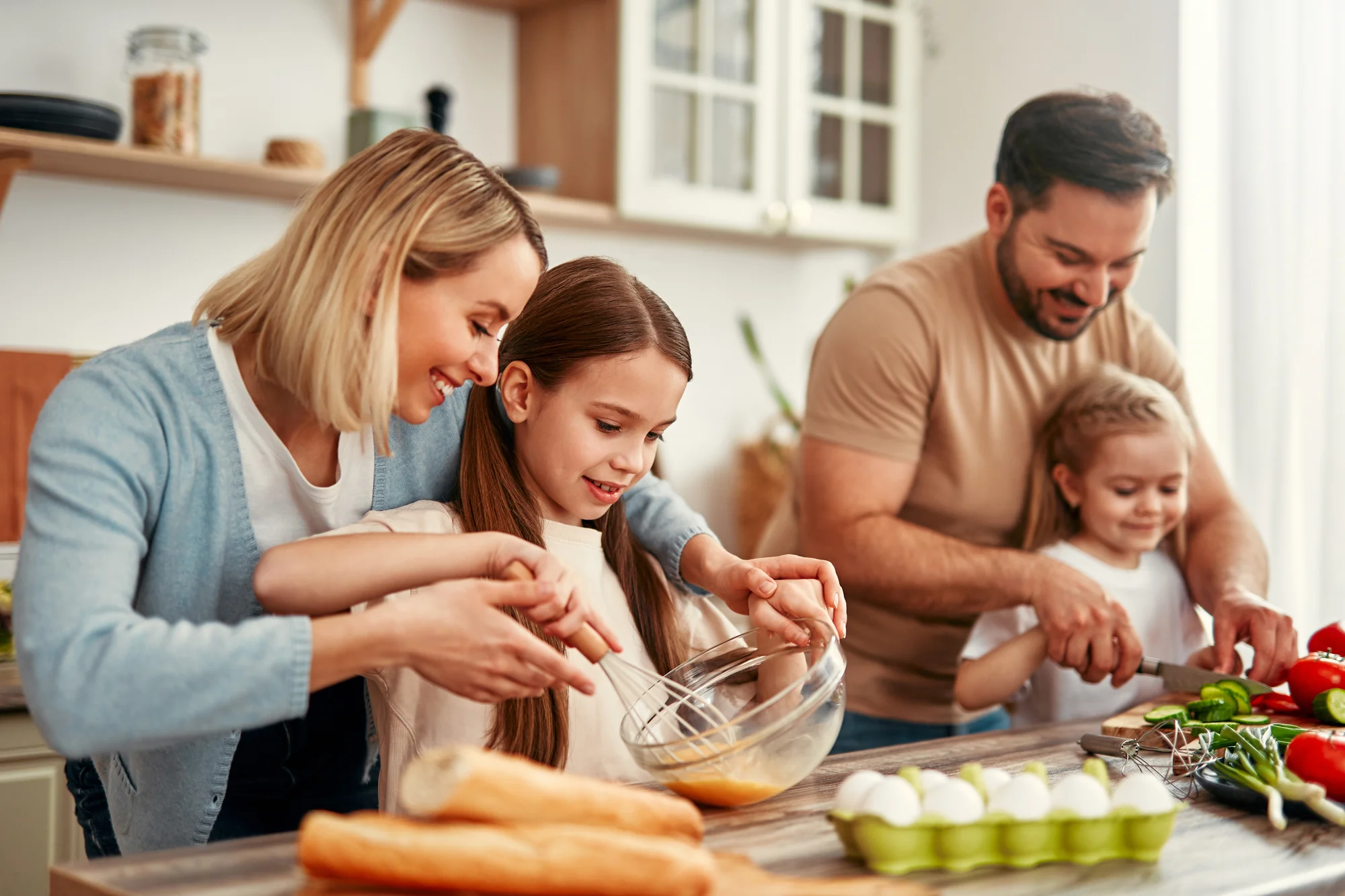
Cooking and baking help children learn measurement, comparison, and problem-solving through hands-on experiences.
7. Tracking Game Scores and Strategy: When Math Makes the Game More Fun
From video games to board games to backyard sports, kids constantly use math to keep score, track progress, and plan their next move. These playful moments are packed with real learning.
Adding up points, figuring out how many moves are left, and predicting outcomes all strengthen mental math, logical reasoning, and flexible problem-solving.
Games also encourage kids to adjust their strategy, make predictions, and think several steps ahead—skills that translate directly into multi-step word problems and pattern recognition in school.
When kids care about winning (or just improving), they naturally engage more deeply with the numbers. This gives math a purpose beyond worksheets.
To support this at home:
-
Ask your child how they’re keeping score and what strategy they’re using.
-
Encourage them to explain their thinking during the game: “Why did you make that move?”
-
Play together and talk through the math involved: how many points are needed to win, what the odds are, etc.
At our centers, we often use game-based learning to strengthen engagement and confidence. Connecting math to something kids already love is a powerful motivator, and it shows them that math is useful, fun, and full of strategy.
8. Reading Clocks and Managing Time: Building Number Sense by the Hour
Learning to tell time on an analog clock is a surprisingly rich math activity. It ties together number recognition, skip counting, fractions, and even geometry, all in one glance.
When children watch the hour and minute hands move, they’re learning to count by fives, understand quarters and halves, and estimate duration.
Analog clocks also require spatial reasoning: kids must interpret angles and relationships between numbers, which is far more cognitively engaging than simply reading a digital display.
Time also becomes meaningful when linked to routines. “We leave in 10 minutes,” or “It’s half past seven,” helps children connect clock reading to real events. These connections strengthen number fluency and build planning skills.
To build this skill at home:
-
Use analog clocks whenever possible, especially during routines.
-
Ask time-based questions like, “If it’s 4:15 now, what time will it be in 20 minutes?”
-
Let your child estimate how long tasks take, then check the clock together.
The Education Endowment Foundation highlights the value of real-life math routines, noting that linking math to daily habits strengthens understanding and retention. At Mathnasium, we use time estimation as a way to build reasoning and develop flexible thinking.
📕 You May Also Like: 9 Ways Analog Clocks Teach Both Time and Fractions
9. Spatial Thinking Through Everyday Navigation: Geometry in Motion
When children navigate a hallway, build with blocks, or describe how to get from the kitchen to the living room, they’re using spatial reasoning—one of the strongest predictors of long-term success in math.
Spatial thinking involves understanding how objects relate to each other in space. It introduces vocabulary like “beside,” “under,” “angle,” “symmetrical,” “closer,” and “farther.” These concepts are directly tied to geometry, measurement, and visual problem-solving.
The National Head Start report emphasizes that young children build early math understanding through open-ended play involving size, shape, and spatial relationships. Every time your child gives directions, builds something, or visualizes how to fit puzzle pieces together, they’re strengthening this skill.
To encourage spatial talk at home:
-
Ask your child to describe how to get from one place to another using directional words.
-
Build things together with blocks or recycled materials and talk through your process.
-
Use questions like, “What shape is that?” or “How many turns do we need to make?”
At Mathnasium, we build on spatial reasoning with activities that involve geometry, shape transformation, and measurement. Helping kids think in space—literally—boosts their ability to solve problems on paper and in life.
📕 You May Also Like: 3 Ways Early Spatial Skills Impact Long-Term Math Success
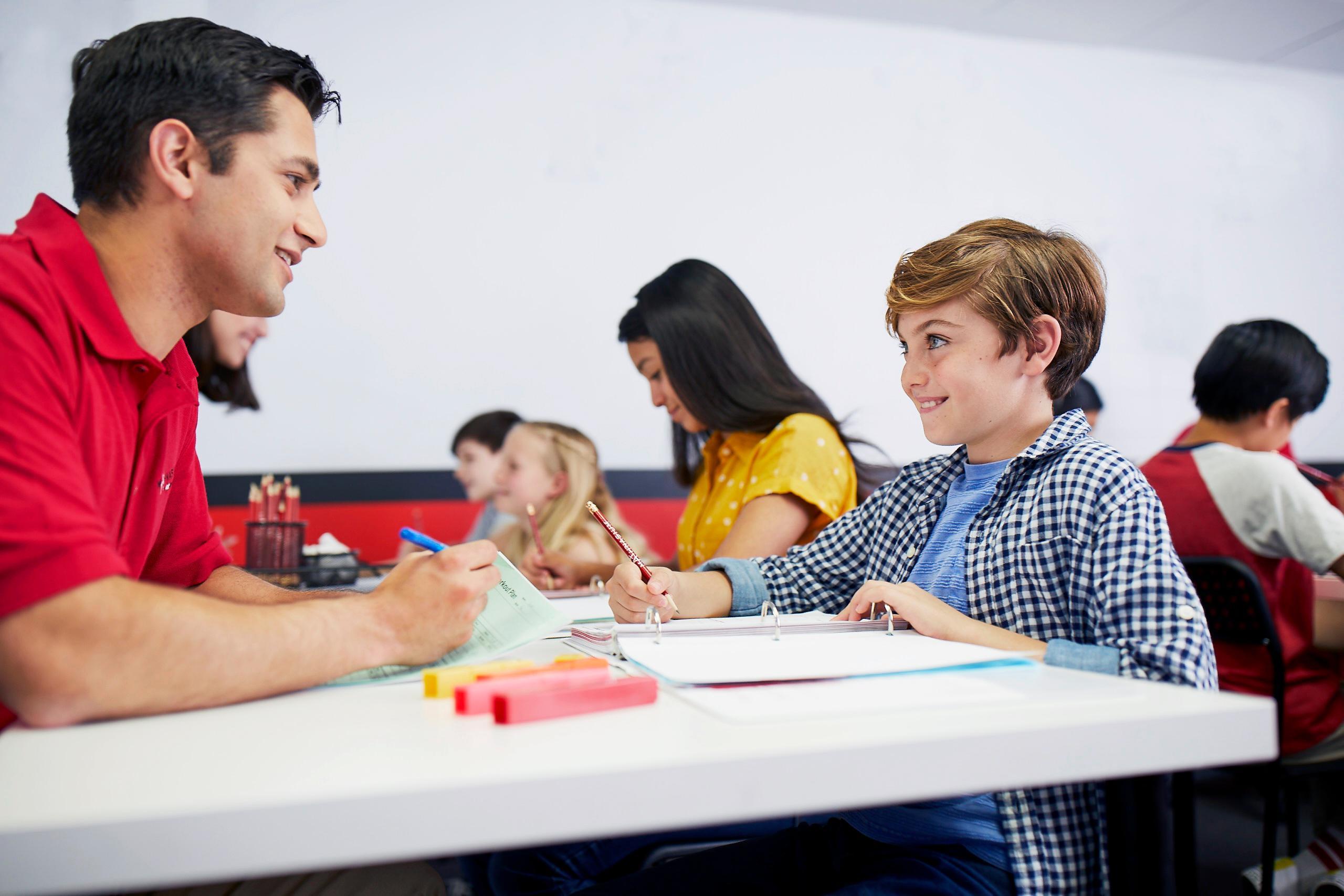
At Mathnasium, we teach math in a way that makes sense to each student.
How Mathnasium Builds These Skills: Turning Everyday Math into Lifelong Confidence
Your child is already using math every single day. What they need now is the understanding that makes those skills stick and grow.
At Mathnasium, we help students build lasting confidence in how they think, solve problems, and understand the world around them. Whether they’re figuring out how long until dinner or sharing toys with friends, we show them how those everyday moments are connected to the math they’ll need for life.
Using the Mathnasium Method™, our specially trained instructors create personalized learning plans that build on your child’s natural curiosity. We meet them where they are, then help them grow, skill by skill, through hands-on activities, thoughtful questions, and real conversations in a caring and fun group environment.
Here’s how we help math click:
-
A diagnostic assessment pinpoints what your child knows, how they think, and where they need support.
-
A personalized plan bridges real-life reasoning (like estimating time or dividing fairly) with formal concepts like fractions, measurement, and problem-solving.
-
Face-to-face instruction builds deep understanding, so students can use math flexibly and confidently.
And families in our West Chester community are noticing the results. Mathnasium of West Chester has earned:
🏆 100+ glowing Google Reviews
🏆 Cincy Magazine’s 2025 Family’s Choice Award for “Tutoring/Learning Center”
🏆 City Beat’s 2025 Best of Cincinnati award for “Best Tutoring Center”
We’re honored to be a trusted part of so many local learning journeys.
Schedule a free assessment and unlock your child’s math potential today!


 (513) 296-2000
 (513) 296-2000