












What is an Integer?
A positive or negative whole number, plus 0. A member of the set {...–3, –2, –1, 0, 1, 2, 3...}. A complete unit or entity.
An integer is a whole number that can be positive, negative, or zero.
Integers do not include fractions or decimals, just whole numbers. Think of them as "counting" numbers and their "opposites," along with zero.
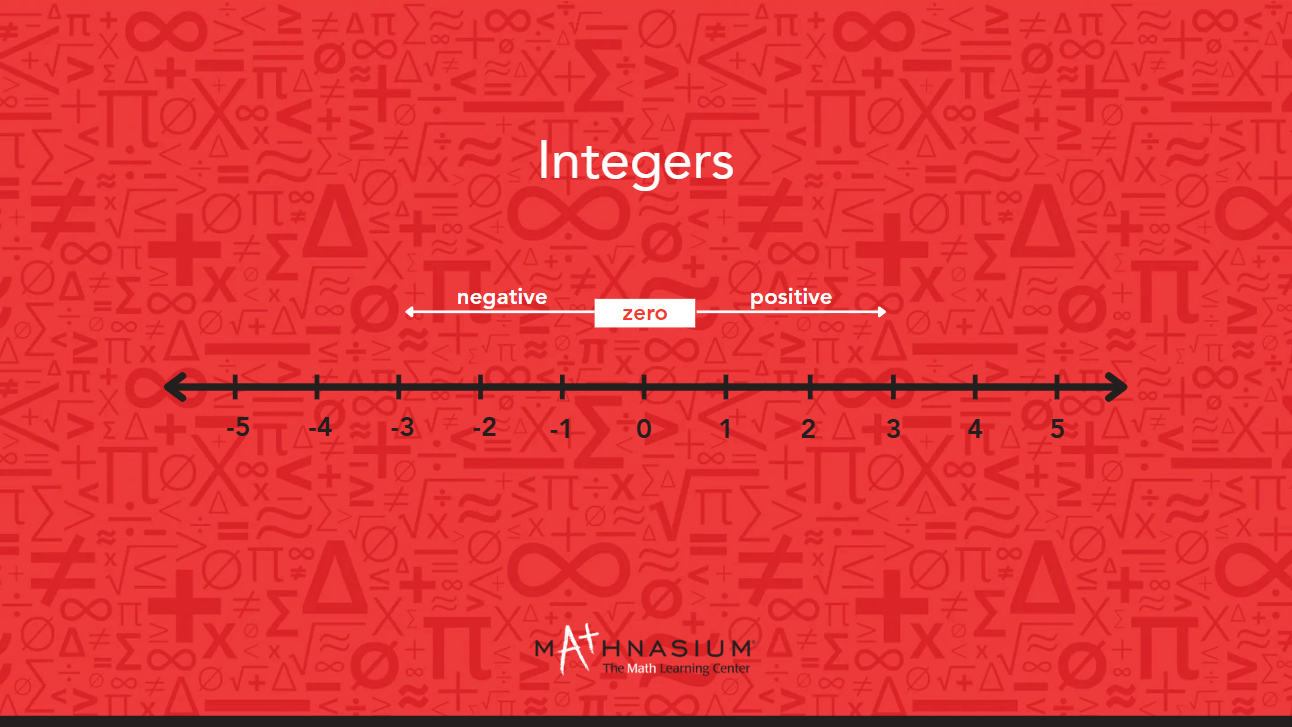
Here are some examples:
- Positive integers: 1, 2, 3, 100
- Negative integers: –1, –2, –3, –100
- Zero: 0
We use integers all the time:
- To track temperature changes (like –5°C or 10°C)
- To keep score in games (gaining or losing points)
- To describe elevations (above or below sea level)
Integers are important because they help us represent quantities that go in both directions, like profits and losses.
When Do Students Learn About Integers?
Students begin learning about integers in upper elementary grades and build on this understanding throughout middle school.
Grades 5–6 – Introduction to Integers
Students start working with negative numbers, use number lines, and explore real-world contexts for integers (like temperature or money).
Grades 7+ – Using Integers in Expressions and Equations
Students perform operations with integers, solve equations, and apply integer rules in more complex math topics.