












What is a Permutation?
An ordered arrangement of a finite number of items in a set
In math, a permutation is an arrangement of items in a specific order. The order matters, which means changing the position of the items creates a different permutation.
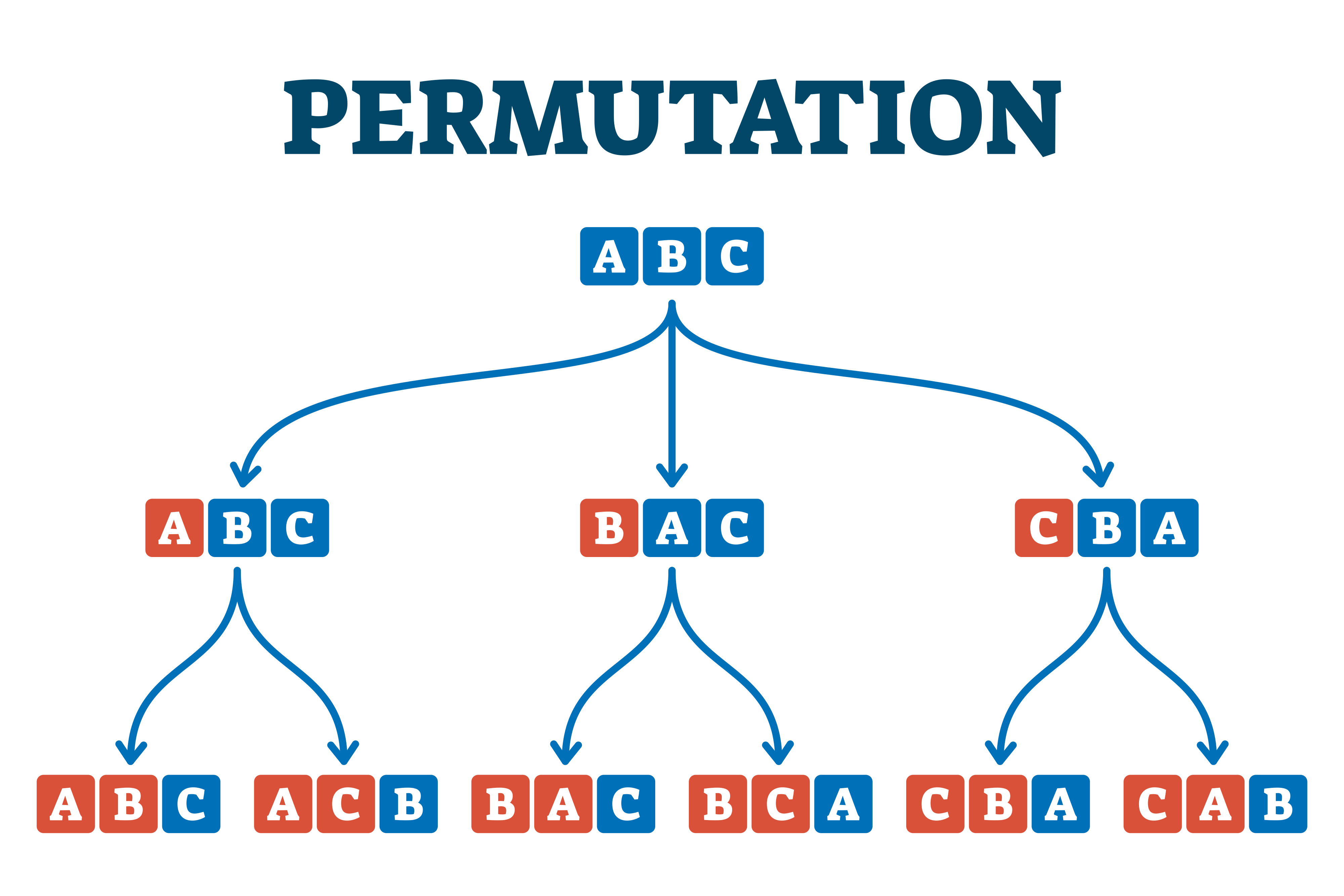
For example, if we have the letters A, B, and C, the possible permutations include:
ABC, ACB, BAC, BCA, CAB, and CBA
Each of these is a different permutation because the order of the letters is different.
Permutations help us solve problems involving:
- Arranging people or objects in different ways
- Creating combinations for locks or passwords
- Solving counting problems in probability and statistics
When Do Students Learn About Permutations?
Students are introduced to the concept of permutations when they begin exploring probability, combinations, and arrangements in upper middle school or high school.
Grades 7–8 – Introduction to Permutations
Students explore basic permutation problems involving small sets of items and use factorial notation to count them.
Grades 9+ – Applying Permutations in Probability
Students apply permutations in probability and statistics problems, especially in more complex scenarios involving constraints or large sets.