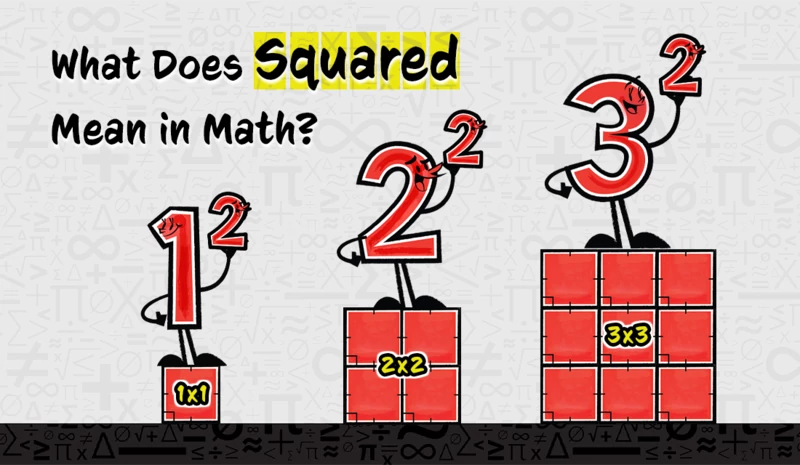












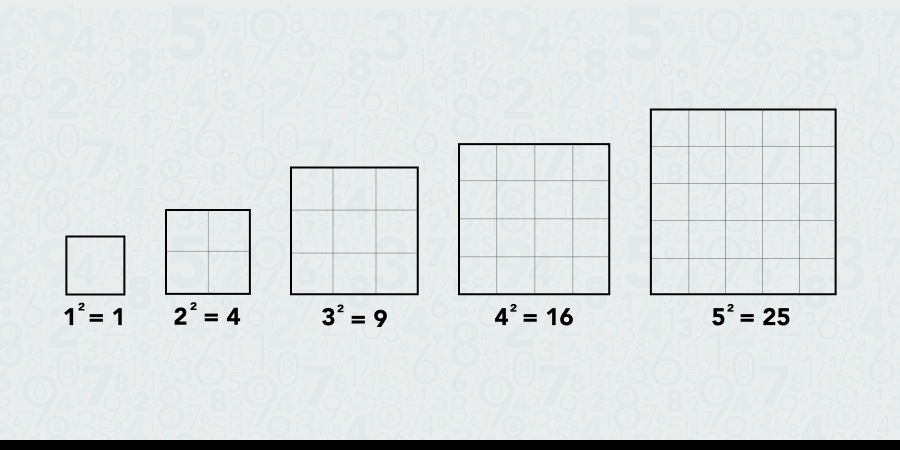
Two equal factors of a number (i.e., 4 is the square root of 16).
In math, a square root is a number that, when multiplied by itself, gives the original number. It answers the question: “What number times itself equals this number?”
For example:
-
4 is the square root of 16, because 4 × 4 = 16
-
9 is the square root of 81, because 9 × 9 = 81
We use the √ symbol to show square roots. So √25 = 5, because 5 × 5 = 25.
Not all square roots are whole numbers. Some are decimals, like √2 ≈ 1.41. These are called irrational numbers because they don’t end or repeat.
Square roots are used in:
-
Geometry (to find side lengths)
-
Algebra (to solve equations)
-
Real-life math problems like area, distance, and design
When Do Students Learn About Square Roots?
Students begin exploring square roots after they’ve learned about exponents and multiplication.
Grades 5–6 – Introduction to Square Roots
Students start with perfect squares and learn how to find their square roots using multiplication and number patterns.
Grades 7+ – Using Square Roots in Algebra and Geometry
Students solve square root equations, explore irrational numbers, and apply square roots in the Pythagorean Theorem and more.