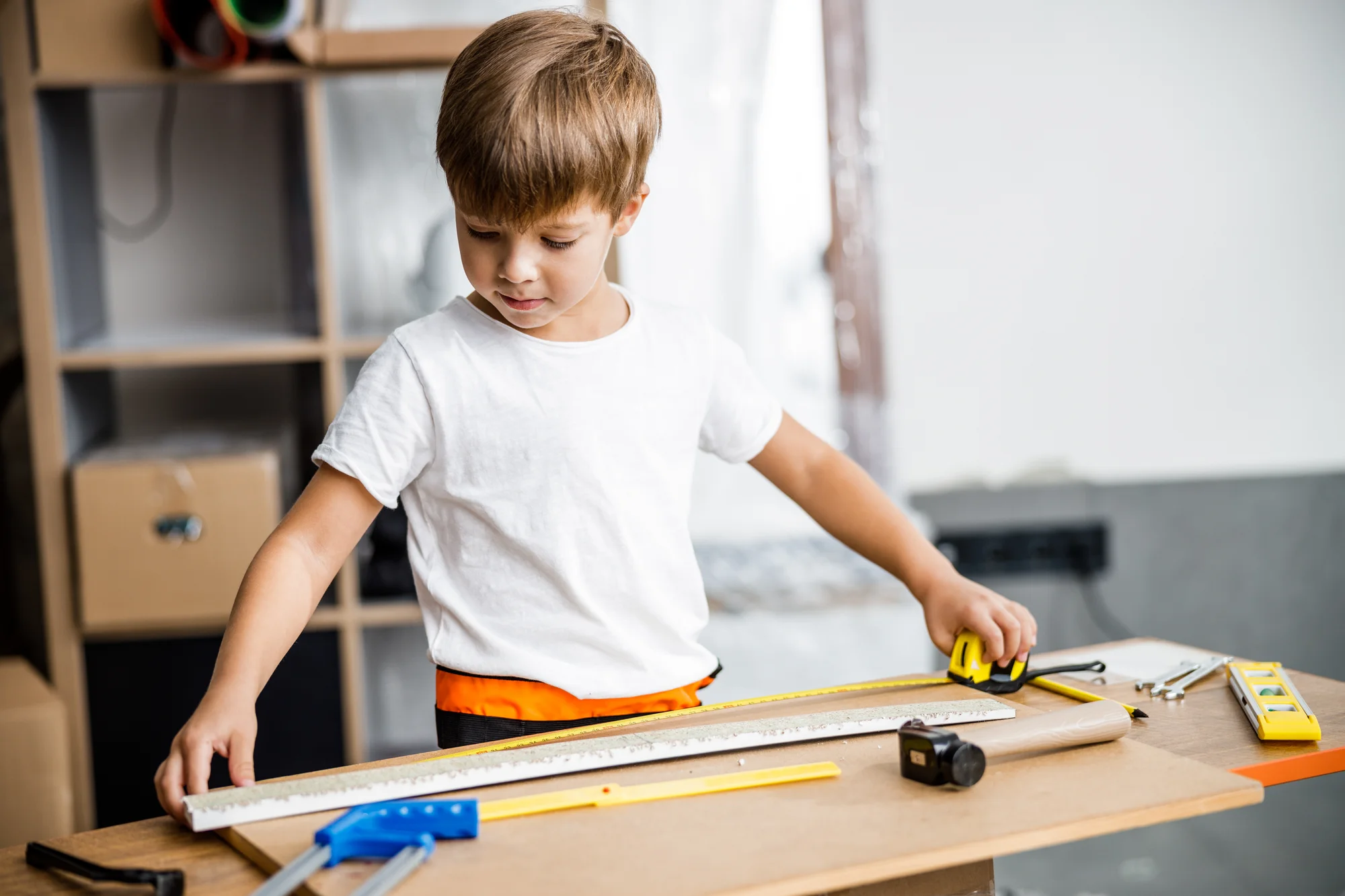
By the end of 2nd grade, children should be able to add and subtract into the hundreds, begin thinking in equal groups, and start making sense of fractions. These are the building blocks that multiplication, division, and algebra will directly rest on, so getting them to stick early makes every math year that follows significantly easier.
We are math education specialists in Richardson, TX, and we've worked with thousands of young learners to help them truly understand math and build a positive relationship with it. What we've learned over the years is that the children who thrive in math aren't necessarily the ones who drill the hardest. They're the ones who associate math with curiosity, small wins, and fun.
Today, we’re sharing the most practical ways to make that happen: at home, in everyday moments, and through games that don't feel like schoolwork.
What 2nd Graders Are Learning in Math
The best way to understand exactly what your child is working on is to look up the official math standards for your state. These spell out precisely what students are expected to know and be able to do by the end of each grade year.
For example, by the end of the year, students in our home state of Texas are expected to work toward the following, per the Texas Essential Knowledge and Skills (TEKS):
-
Place value up to 1,200: reading, writing, and comparing numbers, and understanding what each digit actually represents
-
Addition and subtraction within 1,000: moving beyond counting strategies toward more fluent, reliable methods
-
Introduction to multiplication and division concepts: through equal groups and arrays, building intuition before the formal procedure arrives in 3rd grade
-
Fractions: recognizing halves, fourths, and eighths as equal parts of a whole
-
Measurement: using rulers, measuring length, and telling time to the minute
-
Geometry basics: identifying and describing 2D and 3D shapes
Why does this matter for practice at home?
Because knowing what your young learner is working on helps you reinforce the right things. Your child may struggle with addition and subtraction if they haven’t understood place value. Or, they will feel lost when multiplication is formally introduced next year if they haven’t built an understanding of equal groups.
📕 You May Also Like: Why Your Child’s Math Confidence Drops After 2nd Grade
Fun Math Activities to Do at Home
You might be glad to learn that effective math practice doesn't require a dedicated workspace, special materials, or a set curriculum. Being creative and doing it regularly is all it takes. The activities we listed are organized around everyday situations most families already find themselves in.
1. In the Kitchen
Cooking and baking are very useful math environments for 2nd graders. Measuring ingredients puts fractions into a real context. Halves, quarters, and thirds stop being abstract when your child is leveling off a cup of flour.
You don't need to turn dinner prep into a lesson. Simply narrate what you're doing and invite your child to help with the measuring. That's enough.
📕 You May Also Like: 5 Math Skills You Can Teach in the Kitchen
2. On the Go
Car rides, grocery runs, and errands are underused practice time. A few things that work well with 2nd graders:
-
Counting and grouping: How many red cars can you spot? How many altogether if we add the blue ones?
-
Estimation: About how many items are in our cart? How long do you think it'll take to get there?
-
Price comparisons: Which one costs more? How much more?
None of these require setup. They're just conversations with a little math added in.
3. Around the House
A few simple at-home habits that build math skills without feeling like practice:
-
Number hunts: Ask your child to find numbers around the house (on clocks, food packaging, and remote controls) and tell you what's one more, one less, ten more, or ten less.
-
Measuring things: A ruler and a curious child can cover a great deal of 2nd-grade measurement content. How tall is the bookshelf? How wide is the door?
📕 You May Also Like: Fun Math Games to Play at Home with Your Child
Math Games to Play at Home
Games are one of the most effective practice tools available to parents, and the best ones don't cost much more than a standard deck of cards or a pair of dice.
Here are some games that work especially well for 2nd graders.
1. Card Games
A standard deck of cards is perhaps one of the most versatile math tools you own.
-
War (addition variant): Each player flips two cards and adds them together. The higher sum wins the round. This builds additional fluency fast, and kids stay engaged because every round is different.
-
Make 10 (or Make 20): Spread cards face up and take turns finding pairs that add up to a target number. Adjust the target as your child gets more confident.
2. Dice Games
You might be surprised about the range of practice opportunities a couple of standard dice open up. Here are just a couple:
-
Roll and add: Roll two dice, add the numbers, and keep a running total. First to 50 wins. For a subtraction version, start at 50 and count down.
-
Biggest number: Each player rolls three dice and arranges the digits to make the largest three-digit number possible. This one quietly does a lot of work on place value understanding.
📕 You May Also Like: How to Use Math Manipulatives Effectively at Home
3. Board Games You Likely Already Have
Several classic games that families already own are excellent math practice for this age group.
-
Snakes and Ladders: Counting spaces, tracking position, and number recognition all come naturally with this one.
-
Monopoly Junior: Handling money, making change, and basic addition in a context kids find motivating.
The common thread across all of these is that your child is doing real math without it feeling like a task they've been assigned.
📕 You May Also Like: 5 Math Games That Help Kids Rediscover the Joy of Learning
Why "Fun" Isn't Just a Nice-to-Have
Children’s brains are more receptive to forming and retaining new information when they are engaged and enjoying what they do. This is why play time is so important for developing minds.
Psychologist Peter Gray, whose research on play and learning has been widely cited in educational psychology, argues that play is the primary mode through which children build cognitive skills.
This notion is true in math classrooms, too.
A study by Ahmed et al., tracked students over time and found that positive emotions were linked to better-developed self-regulated learning and higher math achievement. The relationship worked in both directions: doing well in math also generated more positive emotions. In other words, having fun doing math helps your child learn better and faster.
Next time you sit down to play a number game with your child after dinner, you are not cutting corners on their math education. You are doing something that a structured drill alone cannot fully replicate: building a positive association with math at exactly the age when attitudes toward the subject begin to form.
📕 You May Also Like: How to Understand & Support Your Child’s Math Learning Style
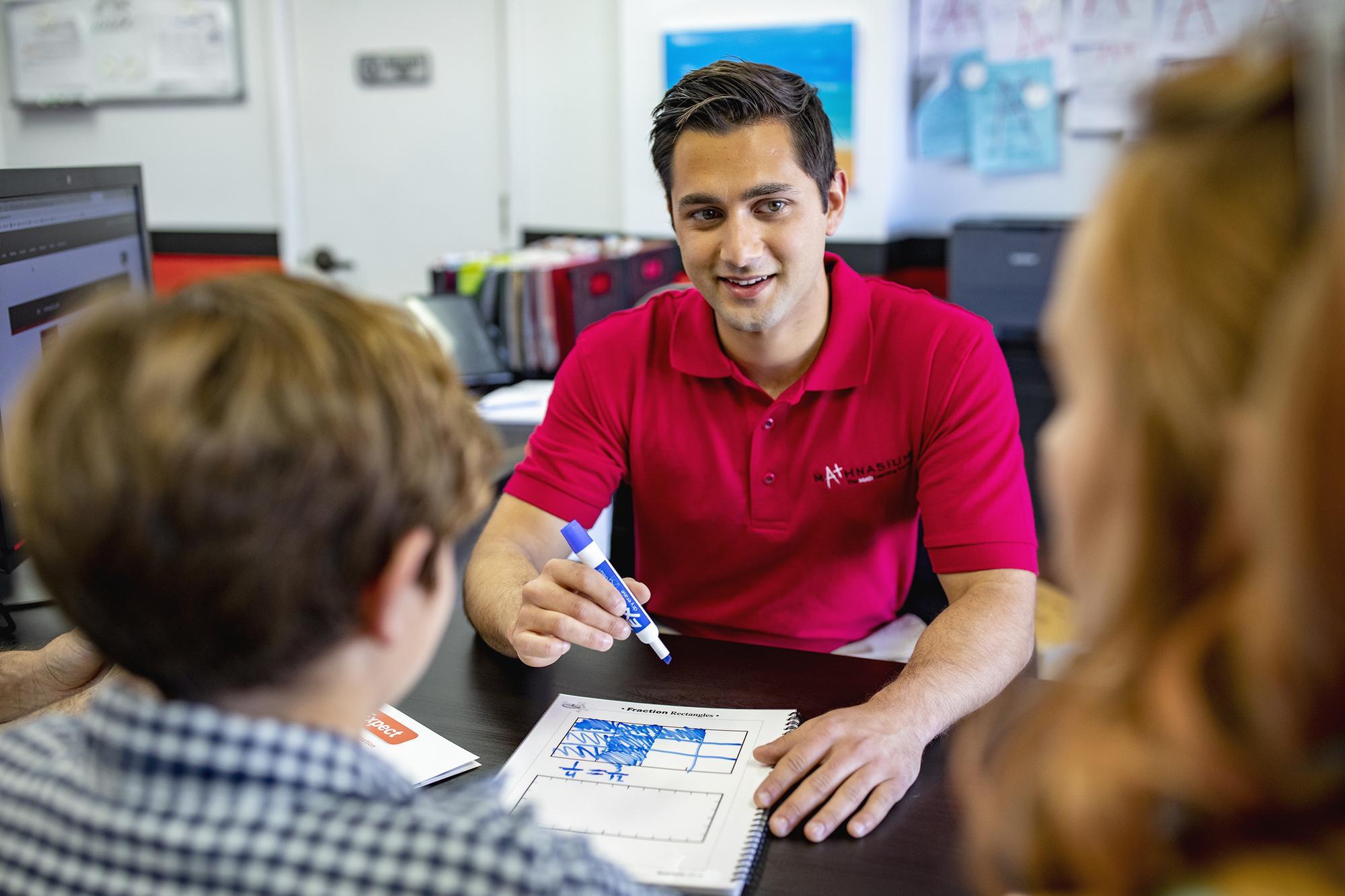
Mathnasium is a math-only learning center for students of all skill levels
How Mathnasium of Richardson Helps 2nd Graders Build Real Math Confidence
Mathnasium is a math-only learning center dedicated to helping K-12 students learn and master math at every level, including the foundational skills that make or break the transition from 2nd to 3rd grade.
Each student's journey at Mathnasium begins with a diagnostic assessment that identifies precisely where their understanding is solid and where the gaps are. For a 2nd grader, that might mean a specific weakness in place value, an incomplete grasp of equal groups, or inconsistent addition fluency. Whatever it is, the assessment finds it. Mathnasium then builds a personalized learning plan targeted to exactly what your child needs.
From that point, our approach is guided by the Mathnasium Method™, a proprietary teaching approach built around core principles.
Our tutors teach face-to-face using natural language and a mix of verbal, visual, and hands-on techniques. They are trained in both the technical and emotional sides of teaching. Every learning plan is unique, built around each student's specific gaps and strengths, backed by a proprietary curriculum refined over more than 20 years, nurturing an environment that keeps math fun.
The results speak for themselves:
-
94% of parents report an improvement in their child's math skills and understanding
-
93% of parents report an improved attitude toward math after attending Mathnasium
-
90% of students saw an improvement in their school grades
For families in and around Richardson, TX, Mathnasium of Richardson West is a trusted local center with years of experience helping students build lasting math skills and confidence from the earliest grades.
See how one local family describes their experience.
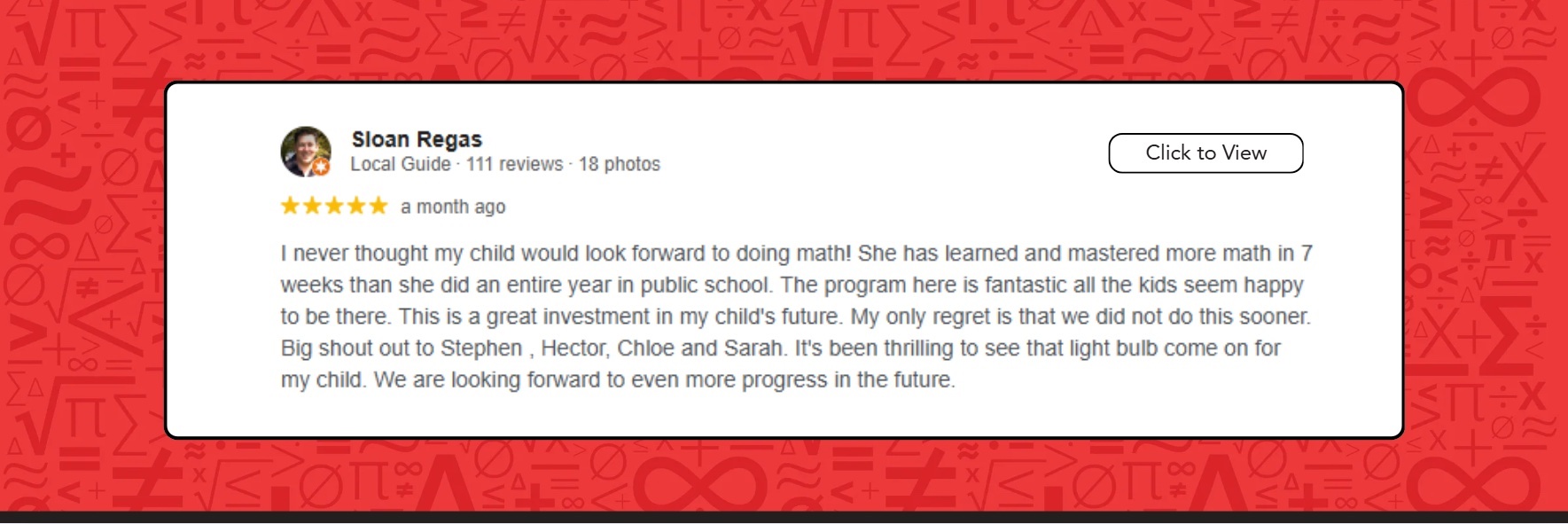
With over 100 five-star Google reviews and multiple Reader's Choice Awards from Living Magazine, our center been recognized for:
Whether your child needs to catch up, keep up, or get ahead, our team is ready to help.
📅 Schedule a Free Diagnostic Assessment at Mathnasium of Richardson
Not located near Richardson?
📍 Find a Mathnasium Learning Center Near You


 (972) 231-6284
 (972) 231-6284