“Mean” and “average” are used frequently in and outside the math classroom. Knowing how they relate to each other is a core part of understanding statistics, but they are very easy to mix up. Many students may even think they are synonymous, and understandably so!
If you can’t tell them apart, here's the short answer: They're very closely related but not always identical.
We put together this complete, student-friendly guide to help you understand the key differences and develop a deeper understanding of both concepts. Expect clear definitions, real examples, and a few practice problems to test yourself along the way. Let's dive in!

What Is an Average?
An average is a single number that represents the "middle" or most typical value in a set of numbers. It gives you a quick way to summarize a whole group of values in one snapshot, which makes it incredibly useful in everyday life, from calculating your grade in a class to figuring out how many points your favorite player scores per game.
To find the average:
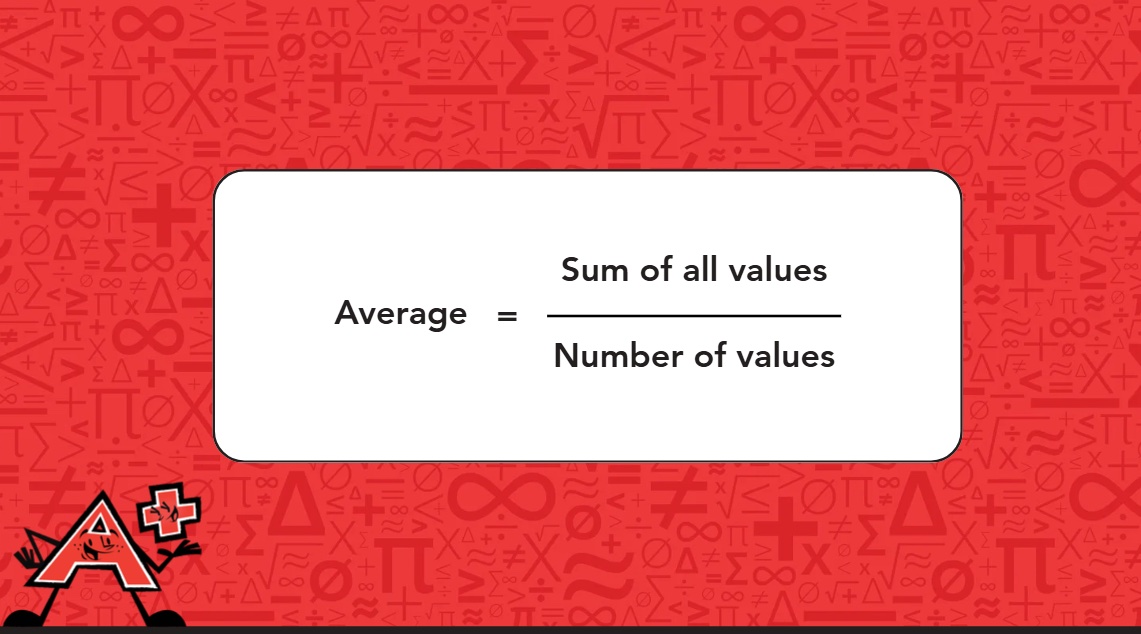
For example, say you scored 78, 85, and 92 on your last three math quizzes.
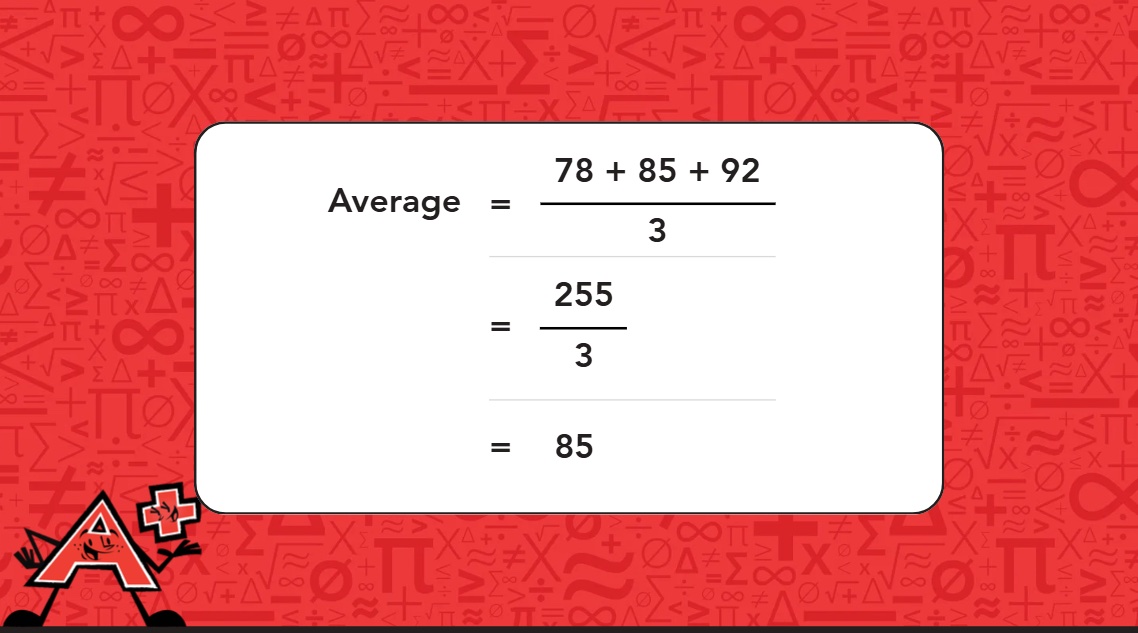
Now try these on your own!
1. You spent the following number of minutes reading each day this week: 20, 35, 25, 40, and 30. What is the average daily reading time?
2. Your basketball team scored the following points in five games: 54, 61, 48, 70, and 57. What is the average score per game?
Scroll to the end to check your answers.
📕 You May Also Like: What Are Mean, Mode, Median & Range in Math?
What Is a Mean?
A mean is the most precise, mathematical way of describing an average. In statistics, when someone says "mean," they're almost always referring to the arithmetic mean, the value you get by adding up all the numbers in a data set and dividing by how many numbers there are.
You'll see this term a lot as you move into more advanced math classes, standardized tests like the SAT® and ACT®, and science courses where data analysis comes into play.
You may also come across other types of means, such as the harmonic mean and geometric mean, but the arithmetic mean is the one you'll use most often in middle and high school math.
To find the mean, we add up the values in our dataset and divide them by the total number of values.:
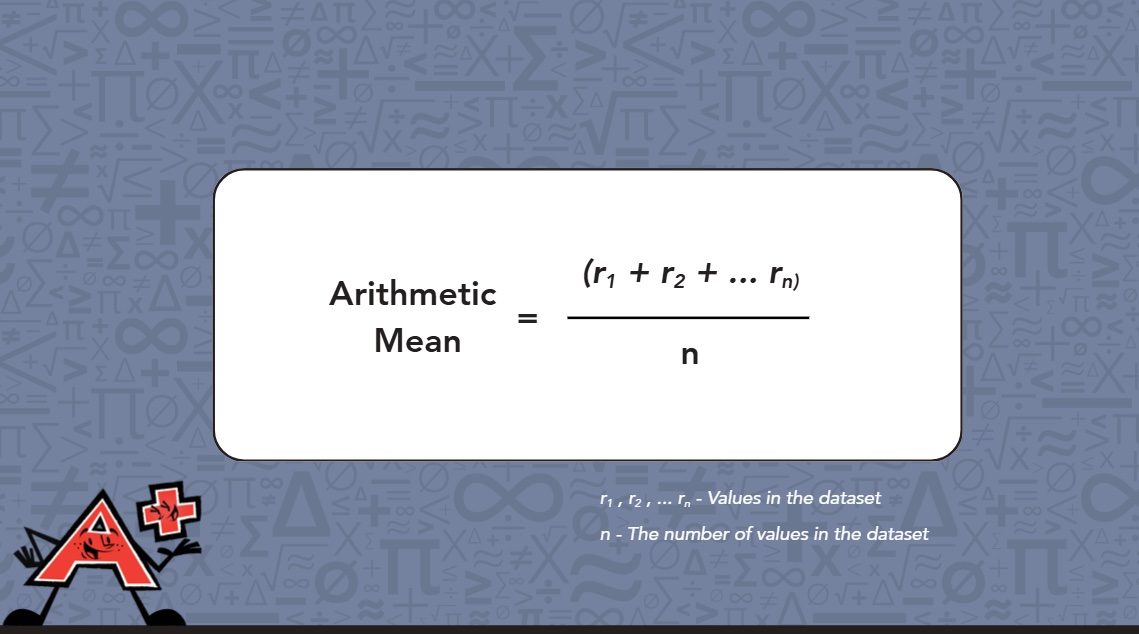
Sound familiar? That's because it's the same calculation as the average, just with a more specific name.
For example, say five students got the following scores on a science test: 70, 82, 90, 88, and 75.
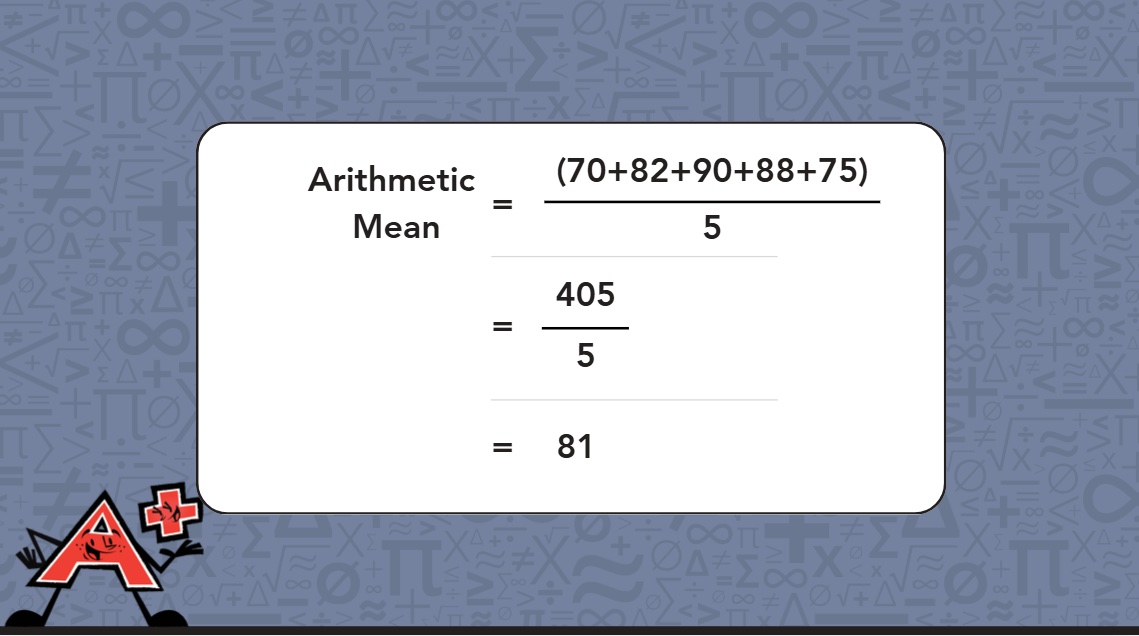
Now try these on your own!
1. The high temperatures (°F) for six days were: 91, 85, 88, 79, 93, and 84. What is the mean temperature?
2. A swimmer's race times (in seconds) over five practices were: 64, 58, 61, 55, and 62. What is the mean race time?
Scroll to the end to check your answers.
📕 You May Also Like: SAT® vs. ACT® – Everything You Need to Know in One Guide
So, What's the Difference Between Mean and Average?
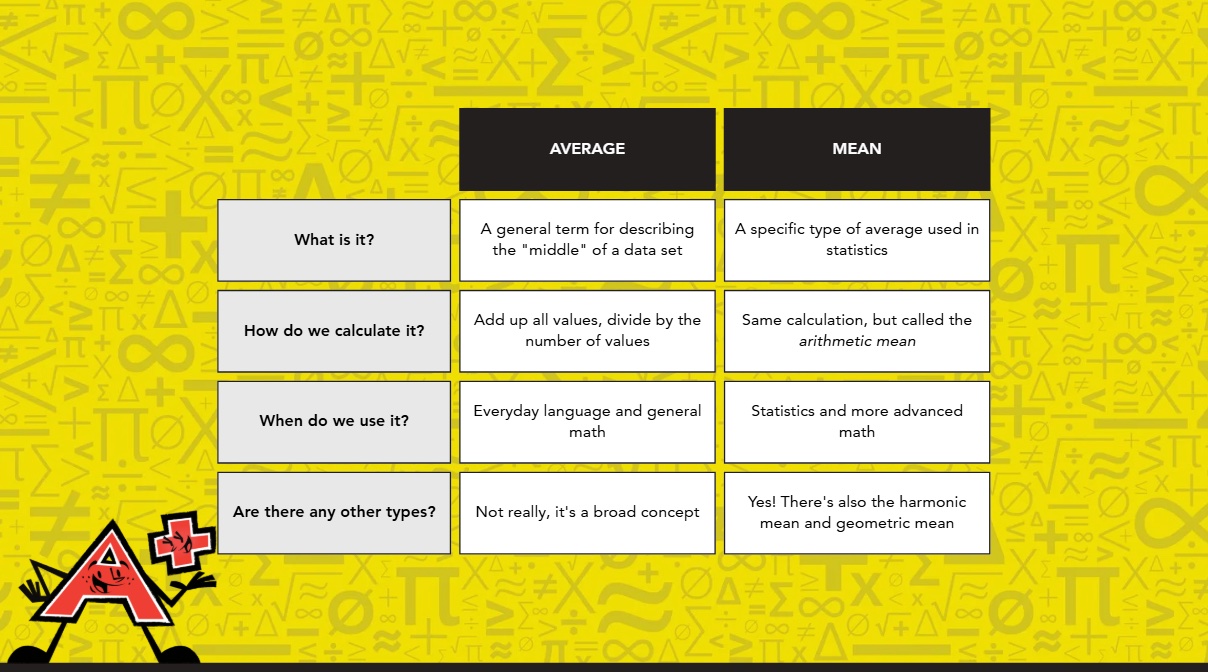
In everyday math, "average" and "mean" are often used to denote the same thing. And most of the time, they are. But if you want to be precise about it, and math is all about precision, there's a small but useful distinction worth knowing.
Average is the broader, everyday term. When someone says "the average score on the test was 82," they usually mean “add up all the scores, divide by the number of students, done.” It's a general way to describe the "middle" of a set of numbers.
Mean is the mathematical version of that same idea, but it's more specific. In statistics, "mean" refers to one particular type of average (the arithmetic mean). And here's where it gets interesting: there are actually other types of means, like the harmonic mean and the geometric mean, each used in different situations.
For most of the math you'll do in school, mean and average are the same thing, and using either term will get you full marks. The difference only starts to matter when you dive deeper into statistics, where other types of means come into play. And when you get there, you'll already have a head start.
📕 You May Also Like: How After-School Support Helps Students Get Ahead in Math
Frequently Asked Questions About Mean vs. Average
Still wrapping your head around it? Here are answers to the questions students ask most about mean and average.
Question 1: Which term should I use: mean or average?
It depends on the context. "Average" works fine in everyday conversation and general math. "Mean" is the more precise term for statistics, science, and advanced math classes. So, when in doubt, follow the language your teacher or textbook uses.
Question 2: Can the mean and average of the same data set ever be different numbers?
No. Using the same formula on the same data set will always give you the same result. The only exception is if someone is referring to a different type of mean, like the geometric or harmonic mean, which uses a different formula altogether.
Question 3: Why do teachers and textbooks use both terms if they mean the same thing?
"Average" is the everyday term most people grow up using, while "mean" is the precise statistical version introduced in more formal math. Using both helps students connect familiar language to technical vocabulary, and that connection is exactly what builds deeper understanding.

At Mathnasium, the Mathnasium Method™ turns curiosity into clarity, one question at a time.
How Mathnasium Helps Students Think Deeper About Math
Mathnasium is a math-only learning center dedicated to helping K–12 students of all skill levels catch up, keep up, and get ahead in math.
Behind every program is the Mathnasium Method™, a proprietary teaching approach that combines personalized learning plans, face-to-face instruction, and proven teaching techniques to help students truly understand math, not just memorize it.
Every student begins their Mathnasium experience with a diagnostic assessment that helps us identify their strengths, knowledge gaps, and learning goals. From there, we build a personalized learning plan tailored to their needs and pace, so progress always feels achievable and confidence grows session by session.
And the results speak for themselves:
-
94% of parents report an improvement in their child's math skills and understanding
-
93% of parents report their child's improved attitude toward math after attending Mathnasium
-
90% of students saw an improvement in their school grades
Mathnasium operates over 1,100 learning centers across the U.S., bringing top-rated math instruction close to you.
For families in or near Frisco, TX, Mathnasium of Frisco East is a trusted local center with years of experience transforming how each student thinks and feels about math. With over 100 stellar Google reviews and multiple Reader’s Choice Awards from Living Magazine, our center has been recognized for:
If your child is looking to catch up, keep up, or get ahead in math, our team is happy to help.
📅 Schedule a Free Diagnostic Assessment at Mathnasium of Frisco East
Not near Frisco?
📍 Find a Mathnasium Learning Center Near You
Pssst! Check Your Answers Here
If you’ve given our exercises a go, check your results below:
Average Practice Problems
1. Average daily reading time: 20, 35, 25, 40, and 30 minutes
-
Add up all the values: 20 + 35 + 25 + 40 + 30 = 150
-
Count how many values there are: 5 days
-
Divide: 150 ÷ 5 = 30 minutes
2. Average basketball team score: 54, 61, 48, 70, and 57 points
-
Add up all the values: 54 + 61 + 48 + 70 + 57 = 290
-
Count how many values there are: 5 games
-
Divide: 290 ÷ 5 = 58 points
Mean Practice Problems
1. Mean temperature: 91, 85, 88, 79, 93, and 84°F
2. Mean swimmer race time: 64, 58, 61, 55, and 62 seconds
-
Add up all the values: 64 + 58 + 61 + 55 + 62 = 300
-
Count how many values there are: 5 practices
-
Divide: 300 ÷ 5 = 60 seconds
How did you do?


 (972) 292-9886
 (972) 292-9886