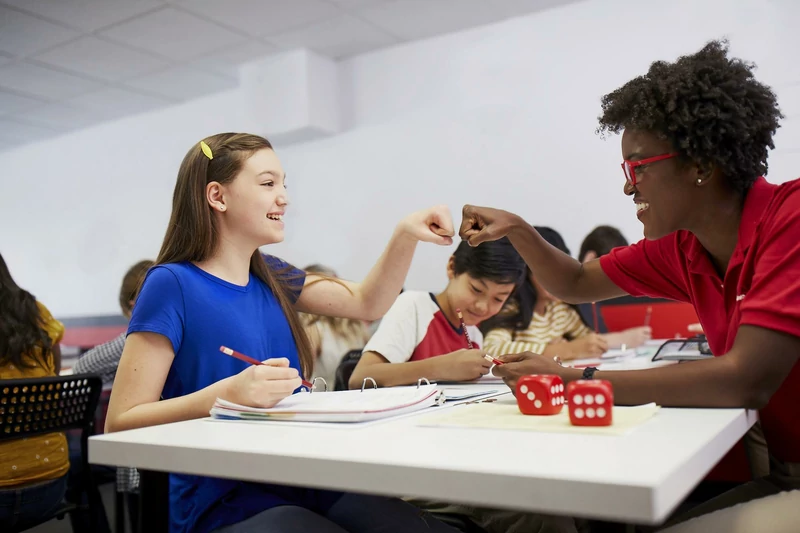
Probability and statistics typically make their formal debut in 6th grade, growing in complexity through 8th grade under Common Core standards.
Unlike the math students have tackled before, this branch is less about finding one right answer and more about interpreting data, predicting outcomes, and reasoning through uncertainty.
That departure from arithmetic and algebra catches a lot of middle schoolers off guard, and parents are often the first to notice their child struggling here more than in other math topics.
At Mathnasium, helping students work through exactly these challenges is something our team does every day.
Here, we're breaking down why probability and statistics struggles happen, sharing practical strategies parents can use at home, and walking you through the Mathnasium approach.
Why Do Middle Schoolers Find Probability and Statistics So Challenging?
If your middle schooler is struggling with probability and statistics, it's worth knowing that the subject presents some genuinely distinct challenges.
There are real cognitive and curricular reasons behind the difficulty.
-
It requires a different kind of thinking. Arithmetic and algebra generally have one correct answer. Probability and statistics ask students to analyze, interpret, and make inferences. That is a cognitive leap many 6th to 8th graders are still developing.
-
Weak fraction and ratio fluency gets in the way. Probability is almost always expressed as a fraction, decimal, or ratio. Students who aren't fully comfortable with those will struggle to read, write, and calculate probabilities even when they grasp the underlying concept. It's one of the more overlooked root causes.
-
Probability feels counterintuitive. Our brains are naturally poor at estimating likelihood. Students often rely on gut feeling or pattern assumptions, like thinking a coin is "due" for heads, rather than on mathematical reasoning.
-
Statistics is vocabulary-heavy and concept-dense. Mean, median, mode, range, distribution, variability, relative frequency: students encounter a wave of new terms all at once, and understanding the relationships between them takes time and repetition.
-
It often comes at the end of the school year. In many curricula, probability and statistics are scheduled when instructional time is tightest. Students get less time with the material and fewer opportunities to revisit it before moving on.
📕 You May Also Like: How to Spot and Overcome Early Algebra Gaps
Tips for Parents to Help Your Middle Schooler at Home
These tips come straight from what our team at Mathnasium has found works best for middle schoolers working through probability and statistics. No advanced math knowledge required on your end.
1. Check Fraction and Ratio Fluency First
This one is worth doing before anything else. Check whether your child can comfortably work with fractions and ratios, because probability is almost entirely expressed through them.
If that foundation is shaky, shoring it up first will make everything that follows much easier to absorb.
A few quick examples of where fraction and ratio fluency show up directly in probability:
-
A bag has 3 red marbles and 7 blue ones. The probability of picking red is \(\Large\frac{3}{10}\), a fraction your child needs to read and interpret confidently.
-
A weather forecast says there's a 1 in 4 chance of rain. Converting that to 25% requires comfort with both fractions and ratios.
-
A spinner is divided into 5 equal sections. If 2 are green, the probability of landing on green is \(\Large\frac{2}{5}\), which can also be expressed as 0.4 or 40%.
📕 You Might Also Like: 6 Ways to Help Your Middle Schooler Understand Proportionality
2. Bring Probability into Everyday Moments
Probability is one of those concepts that shows up constantly once you start looking for it. With a little creativity, these moments can turn into activities your child might actually enjoy:
-
Grab a deck of cards. Ask your child what the probability of drawing a heart is, then draw a few cards and compare the actual results to the prediction. It opens up a natural conversation about theoretical versus experimental probability.
-
Use the weather forecast. When the forecast shows a 40% chance of rain, ask your child what that actually means and whether they'd bring an umbrella. It's a low-stakes way to practice interpreting probability in a real context.
-
Watch a game together. Sports are full of statistics in daily life, like shooting percentages or win rates. Asking your child to explain what those numbers mean puts data analysis skills to work without it feeling like homework.
📕 You Might Also Like: How to Find the Probability of Two Events Happening
3. Use Data Your Child Actually Cares About
Statistics land differently when the numbers mean something to your child. The math is the same regardless of the dataset, but the willingness to engage with it is not.
A few Mathnasium-approved ideas to get started:
-
Track a favorite team's performance. Pull up win rates, points per game, or player stats and work through mean, median, and range using real season data.
-
Run a quick survey. Have your child ask friends or family a simple question, tally the responses, and analyze the results. It makes data collection feel purposeful rather than theoretical.
-
Dig into something they're already following. Video game leaderboards, music streaming numbers, social media trends. If your child is already paying attention to it, there's data worth working with.

Tracking a favorite team's stats is one of the easiest ways to make mean, median, and range feel relevant to your middle schooler.
4. Make Vocabulary a Priority
Probability and statistics are among the most terminology-heavy topics in middle school math: mean, median, mode, range, variability, relative frequency, and more, often introduced within the same unit.
At Mathnasium, we've found that students who take ownership of that vocabulary early are far better equipped to keep up as concepts build on each other.
Here are a few ways to make that happen:
-
Write definitions in their own words. Copying from a textbook rarely leads to genuine understanding. When your child can explain what "variability" or "relative frequency" means in their own language, that's a reliable sign the concept has landed.
-
Test it conversationally. Ask your child to explain a term to you as if you've never heard it before. If they can do that clearly, they own it.
-
Revisit it regularly. A quick review of key terms a few times a week keeps vocabulary fresh and prevents gaps from snowballing as new concepts build on older ones.
5. Ask "Why do you think that?"
In most math topics, a correct answer is a reliable indicator that a student understands the material. Probability and statistics work differently. A student can arrive at the right answer through flawed reasoning or the wrong answer through perfectly sound logic.
What matters in this subject is the thinking behind the conclusion, because that's exactly what data analysis and probabilistic reasoning demand. As your child solves a problem, ask them to walk you through their logic.
There are a few ways to make that a habit:
-
Ask open-ended questions. "Why do you think that?" or "How did you get there?" prompts your child to articulate their reasoning rather than just report a number.
-
Don't jump to correcting. Let your child finish their explanation before stepping in. Sometimes the error reveals itself through the process of explaining it.
-
Treat wrong answers as useful data. In probability and statistics, an incorrect answer often points to a specific gap in reasoning that's worth identifying and addressing directly.
6. Know When to Bring in Structured Support
Home practice goes a long way, but some students need more targeted intervention than a parent can reasonably provide. If your child is showing signs like:
-
Consistently scoring low on probability and statistics assessments despite reviewing the material
-
Avoiding math homework or expressing frustration and anxiety around the subject
-
Struggling to retain concepts from one lesson to the next
-
Hitting the same stumbling blocks repeatedly without making progress
...it may be time to consider outside support.
Mathnasium’s approach to probability and statistics starts with a diagnostic assessment that identifies exactly where the gaps are, whether they trace back to fraction and ratio fluency, conceptual understanding, or vocabulary.
From there, we build a personalized plan that targets those skills precisely, so students aren't just catching up but rebuilding their foundation at a pace that works for them.
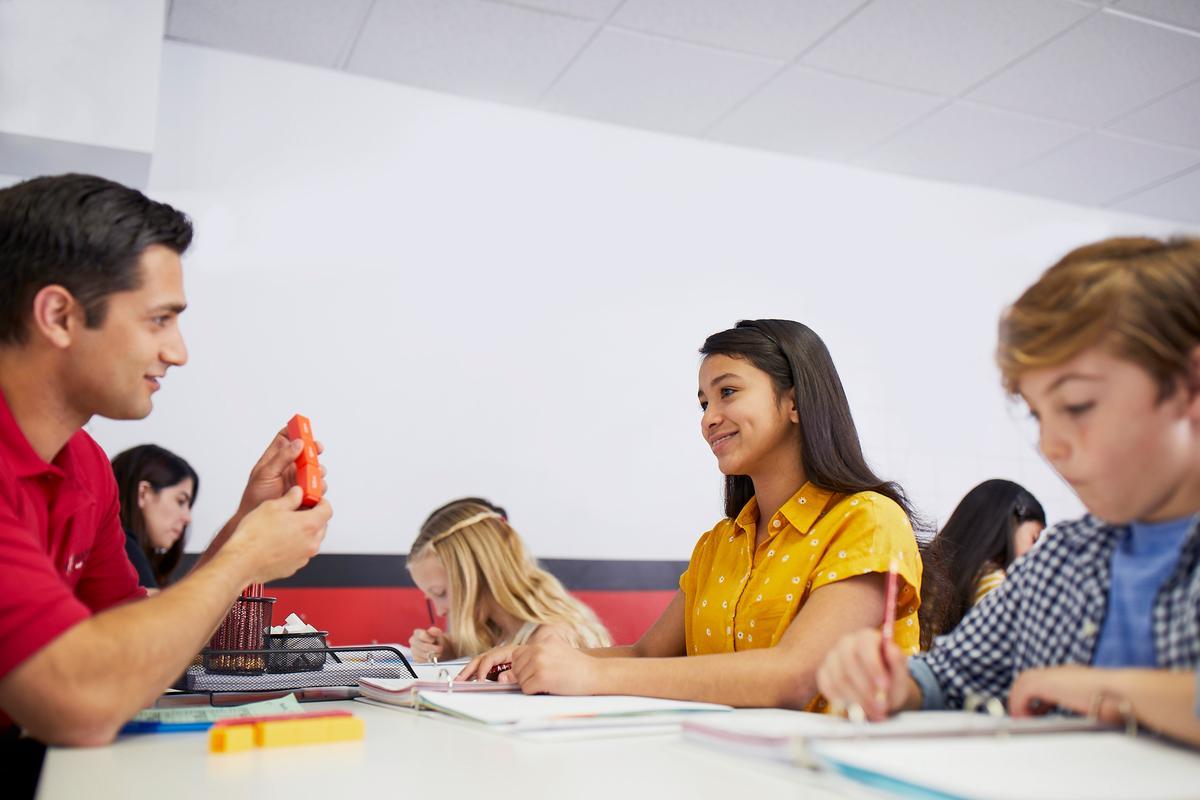
Personalized support at Mathnasium helps middle schoolers build real confidence in probability and statistics, one concept at a time.
How Mathnasium Helps Middle Schoolers Excel in Math
Mathnasium is a math-only learning center dedicated to helping K-12 students of all skill levels, including middle schoolers, excel in math.
Our center offers a dedicated program for middle school, and as part of it, guides students through challenging areas such as probability and statistics.
Rather than a one-size-fits-all program, we rely on our proprietary teaching approach, the Mathnasium Method™.
Designed to help each student make sense of the math concepts they're learning, our approach relies on:
-
Customized learning plans: Each student starts with a diagnostic assessment that uncovers their current skills, learning gaps, and natural problem-solving style. From there, we build a personalized path forward tailored to where they are and where they need to go.
-
Teaching that builds understanding: We break down math concepts using clear, relatable language and multiple teaching techniques, including verbal, visual, hands-on, and written. This lets each student grasp ideas in the way that clicks best for them.
-
Specially trained, caring instructors: Our tutors are trained in both the academic and motivational sides of math education. They know when to guide, when to step back, and how to rebuild confidence in students who've hit a wall.
-
Problem solving and critical thinking: We encourage students to think through problems on their own, then help them analyze their approach and understand the logic behind solutions. This develops critical thinking skills that extend far beyond math class.
-
An engaging, supportive atmosphere: Many of our activities incorporate hands-on exploration and game-based learning. We use encouragement and celebrate every achievement because confidence grows with each success.
Our method brings measurable results:
-
94% of parents report improvement in their child's math skills and understanding
-
93% of parents notice a more positive attitude toward math
-
90% of students see higher grades in school
With over 1,100 learning centers, Mathnasium brings proven math education close to your community.
For families in La Jolla, CA, Mathnasium of La Jolla has helped countless students build confidence and mastery in mathematics. Our community recognizes our impact and has awarded us with:
Whether your middle schooler is looking to catch up, keep up, or get ahead in math, our team is delighted to help!
📅 Schedule a Free Diagnostic Assessment at Mathnasium of La Jolla
Not near La Jolla?
📍 Find a Mathnasium Learning Center Near You


 (858) 291-8186
 (858) 291-8186