A solid grasp of straight angles sets students up for future topics like triangles, polygons, and angle relationships on lines.
With that in mind, our tutors put together this guide for anyone just starting with straight angles or looking to refresh. You'll find clear definitions, step-by-step instructions, real-world examples, and a fun quiz to challenge your knowledge.
Enjoy.

What Is a Straight Angle?
A straight angle is an angle that measures exactly 180°, formed when two rays point in opposite directions from a shared vertex.
Now, you might look at that and think, "That just looks like a straight line," and you'd be right.
When two rays point in completely opposite directions, they form a flat, unbroken line. That's exactly what a straight angle is, a specific, named angle type that happens to look like a line.

When we learn about straight angles, we learn them alongside the rest of the angle family. We can't fully understand one without knowing the others:
-
Acute: an angle that measures less than 90°
-
Right: an angle that measures exactly 90°
-
Obtuse: an angle that measures between 90° and 180°
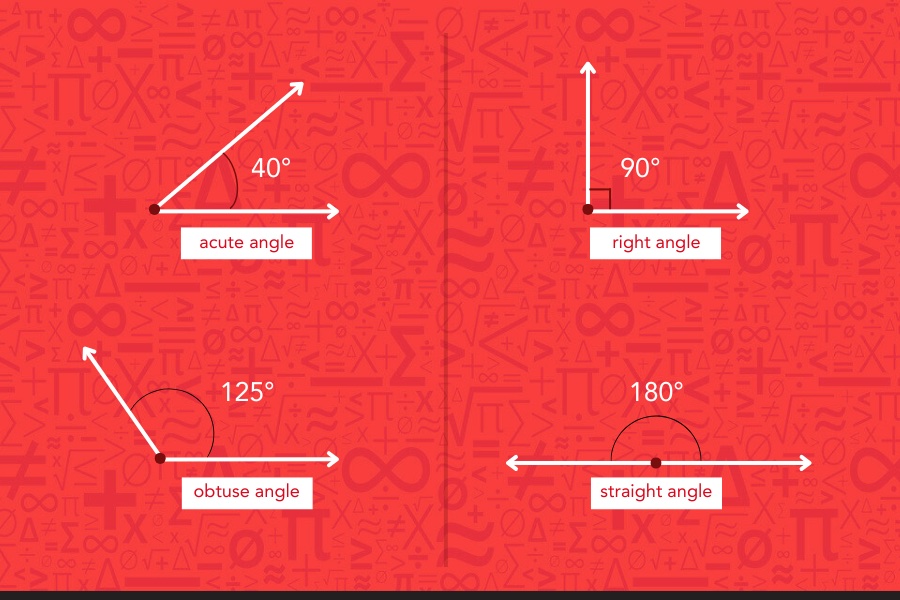
As the diagram shows us, each angle has a distinct look.
-
The acute angle is sharp and narrow.
-
The right angle forms a clean, square corner.
-
The obtuse angle opens wider, spreading past that corner without going flat.
-
And the straight angle, our focus today, stretches all the way out into a perfectly flat line.
📕 You May Also Like: Types of Angles: How to Identify Straight, Right, Acute, and Obtuse Angles?
Properties of a Straight Angle
We can use this checklist to identify a straight angle every time:
-
It measures exactly 180°, no more, no less
-
Its two rays point in exactly opposite directions from a shared vertex
-
It looks like a straight line, flat and unbroken from end to end
-
It represents exactly half of a full rotation, since a full rotation is 360° and a straight angle takes up precisely half of that
If all four apply, it's a straight angle.
📕 You May Also Like: What Does Perpendicular Mean? A Complete Overview
How to Draw a Straight Angle
All we need to draw a straight angle is a pencil, a ruler, and a protractor.
You got them? Great, let's go step by step.
1. First, we draw a point on the page. This will be our vertex, the starting point of the angle.

2. We place the center of the protractor on the vertex and align the baseline along the direction of our starting ray.

3. Now we mark a point at 0° on one side and a point at 180° on the other.
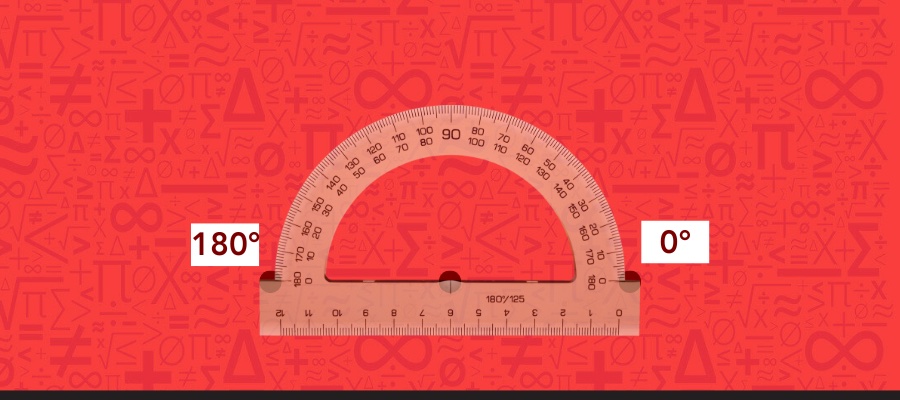
4. We use the ruler to draw a straight line through the vertex, connecting both marked points.

5. Finally, we mark the 180-degree arc to show it is a straight angle.

Now that was straightforward, literally!
What Is a Straight Angle Pair?
A straight angle pair, more formally known as supplementary angles, is a pair of angles that add up to exactly 180°.
Why is this important?
In math problems, a straight angle rarely stands alone. More often, we see it split into two angles sitting side by side, sharing a common ray.
How those two parts relate to each other is one of the most commonly tested ideas connected to straight angles in grades 5 through 7.
Here's how it works. If one angle measures 140°, its supplementary partner makes up the rest:
180 - 140 = 40°

Now your turn. If one angle in a straight angle pair measures 90°, what does the other measure?
📕 You May Also Like: What Are Supplementary Angles? A Kid-Friendly Guide
Where Can We See Straight Angles in Real Life?
Straight angles are all around us.
The horizon. On a clear day, where the sky meets the sea or a flat landscape, the line stretching from one side to the other forms a perfect 180-degree angle.

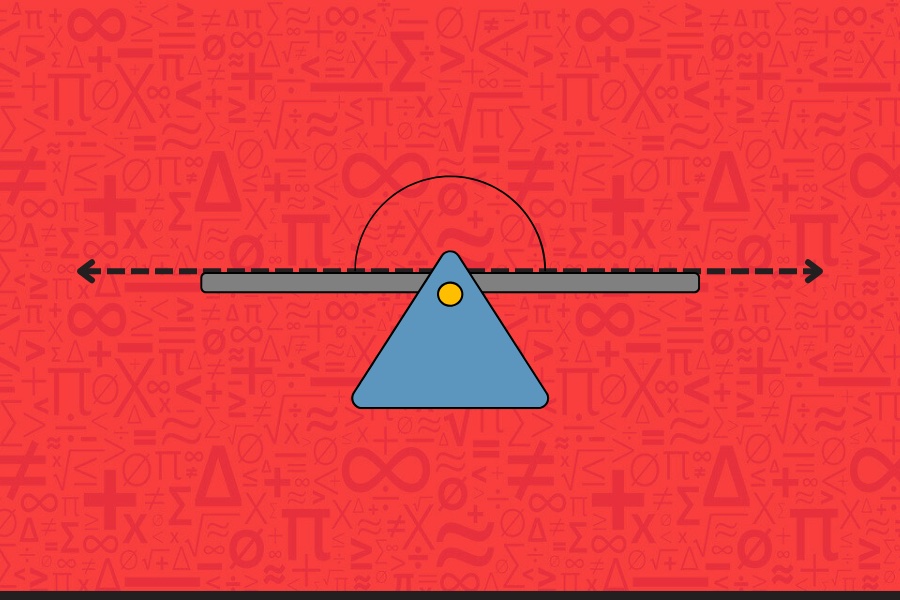
A balanced see-saw. When a see-saw sits perfectly horizontal, the plank forms a straight angle with the vertical support beneath it.
An open book lying flat. When we open a book completely flat, the two pages spread out from the spine to form a straight angle of 180 degrees.

Quiz: How Well Do You Know Straight Angles?
Let's see how much you've picked up. Choose the best answer for each question and check your results at the bottom of the guide.
Question 1: How many degrees does a straight angle measure?
a) 90°
b) 270°
c) 45°
d) 180°
Question 2: A straight angle is formed when two rays point in which direction from the same vertex?
a) The same direction
b) Perpendicular directions
c) Exactly opposite directions
d) Any direction
Question 3: Which of the following best describes what a straight angle looks like?
a) A sharp corner
b) A perfectly straight line
c) An open fan shape
d) A right angle
Question 4: One angle in a straight angle pair measures 120°. What does the other measure?
a) 140°
b) 40°
c) 60°
d) 90°
Question 5: A straight angle represents what fraction of a full rotation?
a) One quarter
b) One third
c) One half
d) Three quarters
Question 6: Which of the following is a real-life example of a straight angle?
a) The corner of a square
b) A clock showing 3 o'clock
c) A ramp going uphill
d) A person stretching both arms out flat to their sides

Mathnasium uses personalized learning plans and interactive teaching techniques to help students master any math concept, straight angles included.
How Mathnasium Helps Students Master Any Math Concept
Mathnasium is a math-only learning center empowering students of all skill levels to learn and master math.
When students turn to us for math support, whether that means building foundational geometry skills like classifying shapes and understanding angle relationships or mastering specific concepts like straight angles, we teach for a deep, lasting understanding of math concepts.
To develop that level of understanding, we use a proprietary teaching approach called the Mathnasium Method™.
It starts with a diagnostic assessment, a low-pressure interaction that helps us identify each student's strengths and areas for growth. Using these insights, we design a learning plan customized to their needs.
With the plan in place, our specially trained tutors follow it closely, delivering face-to-face math instruction in an engaging and confidence-building environment.
When we teach concepts like straight angles, we use simple, everyday language and a combination of verbal, visual, mental, tactile, and written techniques so students can truly make sense of them.
If a student gets stuck, we break the concept down into manageable bits, guiding them through both the how and the why. Over time, this builds the problem-solving skills and critical thinking they can use in math and beyond.
Fun is an important part of the Mathnasium Method™. Our activities are often game-based, and students earn rewards along the way, which keeps them engaged and truly enjoying the process. We track their progress and celebrate every win, big or small, so confidence grows with every session.
The results families see are measurable:
-
94% of parents report an improvement in their child's math skills and understanding
-
93% of parents report an improved attitude toward math after attending Mathnasium
-
90% of students saw an improvement in their school grades
With over 1,100 learning centers across the U.S., Mathnasium brings our proven approach close to you.
Families in and near Manhattan Beach, CA, trust Mathnasium of Manhattan Beach, a local center with years of experience building confident math thinkers.
Whether your student needs to catch up, keep up, or get ahead, our team is ready to help.
📅 Schedule a Free Diagnostic Assessment at Mathnasium of Manhattan Beach
Not near Manhattan Beach?
📍 Find Mathnasium Learning Centers Near You


 (949) 688-6284