Up to about sixth grade, subtracting was very straightforward: you have five cookies, you eat two, so you now have three cookies. But we can’t have negative cookies, and the idea that two negatives somehow make a positive tends to confuse students at first.
Working with students on this and similar challenges every day, we've found that teaching the rules is only a temporary solution. The concept remains abstract and difficult to connect with.
What really works is addressing the underlying confusion that makes the rules feel impossible in the first place. Here are 4 key areas we focus on when teaching students to subtract negative numbers at Mathnasium. Try this at home!
1. The Two Jobs of the Minus Sign
One big reason children get confused with expressions like 5 − (−2) is that the minus sign (−) is actually doing two completely different jobs in the same problem.
Let's look closely at 5 − (−2):
-
The first minus sign is the action. It means "subtract." It's telling us what to do.
-
The second minus sign is part of the number itself. It's telling us that 2 is a negative number (a number that’s less than zero).
To clear up the confusion, it’s good to make a verbal distinction. So, instead of saying “Five minus minus two,” try “Five subtracted by negative two.”
You can also make this distinction seem more intuitive by:
-
Pointing to the first minus sign and saying, "This guy here is the boss. He's saying what we're going to do. In this case, he's saying, “Subtract!”
-
Then, pointing to the second minus sign and saying, "This one is just the number's name tag. It means that the number is negative."
When children learn to see the two minuses as having different jobs (one as the action and one as part of the number), it’s a lot easier to follow along.
You can even practice saying it together a few times:
"Five... subtract... negative two."
Then ask: "So what are we starting with? And what are we taking away?"
📕 You May Also Like: Subtracting Integers – A Kid-Friendly Guide
2. Understanding How Subtraction Can Make Numbers Bigger
From the very beginning of learning math, subtraction has meant one thing: making numbers smaller. That's the rule.
So when your child sees a problem where subtraction makes the number bigger, their brain hits a wall. It doesn't fit. Something must be wrong.
But subtraction doesn't always mean "less." It depends on what you're subtracting. When you're subtracting something negative, you actually end up with more.
The easiest way to explain this is with a simple story your child can picture. We like to use the debt analogy. It goes like this:
Imagine you owe your friend $5. This is like you have -5, as you have to pay them back.
Now, what happens if your friend says, "You know what? Forget about it. You don't owe me that money anymore." They're taking away your debt. They're subtracting that -5 from your situation.
So, you started off with negative five dollars, your friend then took away that debt, and now you’re back to 0. We can write this as:
-5 - (-5) = 0
The friend didn't give you another $5; they removed the $5 debt. But removing something negative has the same effect as adding something positive.
If the concept still isn't sticking, the number line will make it crystal clear.
3. Understanding How to Use a Number Line
If your child is still struggling to clearly picture how subtracting negatives works, you can try using a number line.
This is just a simple, labelled line that can more clearly illustrate the relationship between positive and negative numbers and how they interact.
Let’s make one ourselves.
Grab a long piece of paper, some sidewalk chalk, or even masking tape for the floor. Draw a line with numbers marked on it: ...-3, -2, -1, 0, 1, 2, 3, 4, 5, 6, 7...
Make sure zero is clearly marked in the middle. Positive numbers go in one direction. Negative numbers go in the opposite direction.
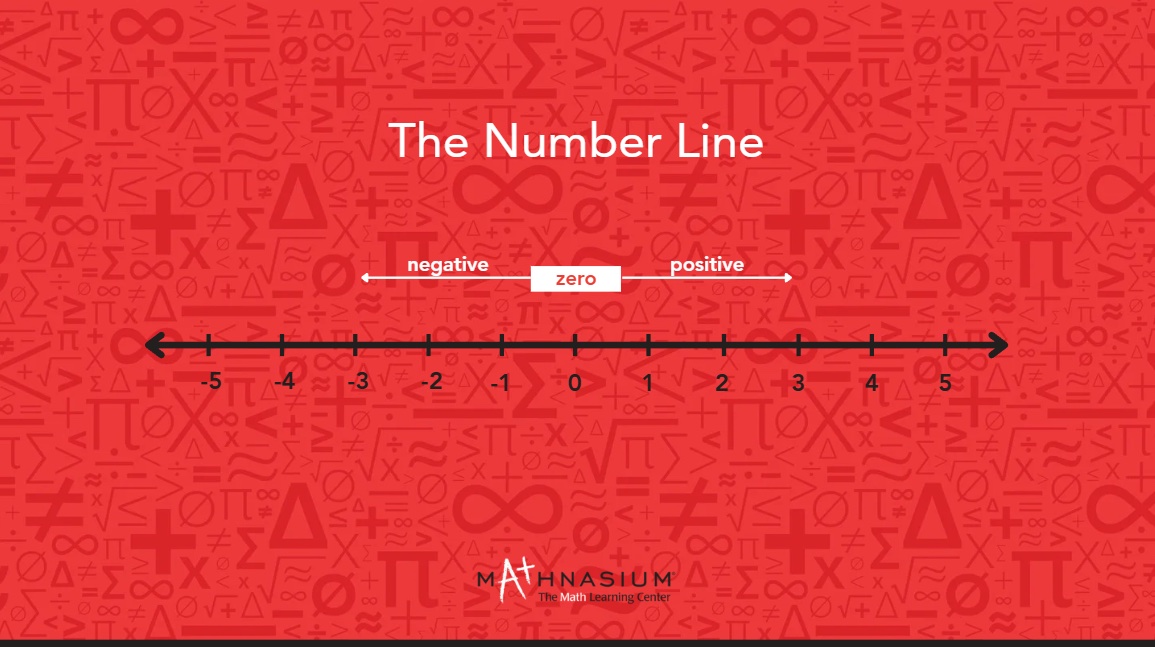
Start doing simple subtraction problems and have your child stand at different points on the line to lock in the answer. Straight away, make it a rule that whenever you subtract, you turn around and walk in the opposite direction.
Let's see how this works:
We’ll start simple: have your child stand at 5 on the number line. Ask them to solve "5 - 2."
Standing at 5, they should see the minus and turn around, then take two steps. Since this is standard subtraction, it should be fairly intuitive.
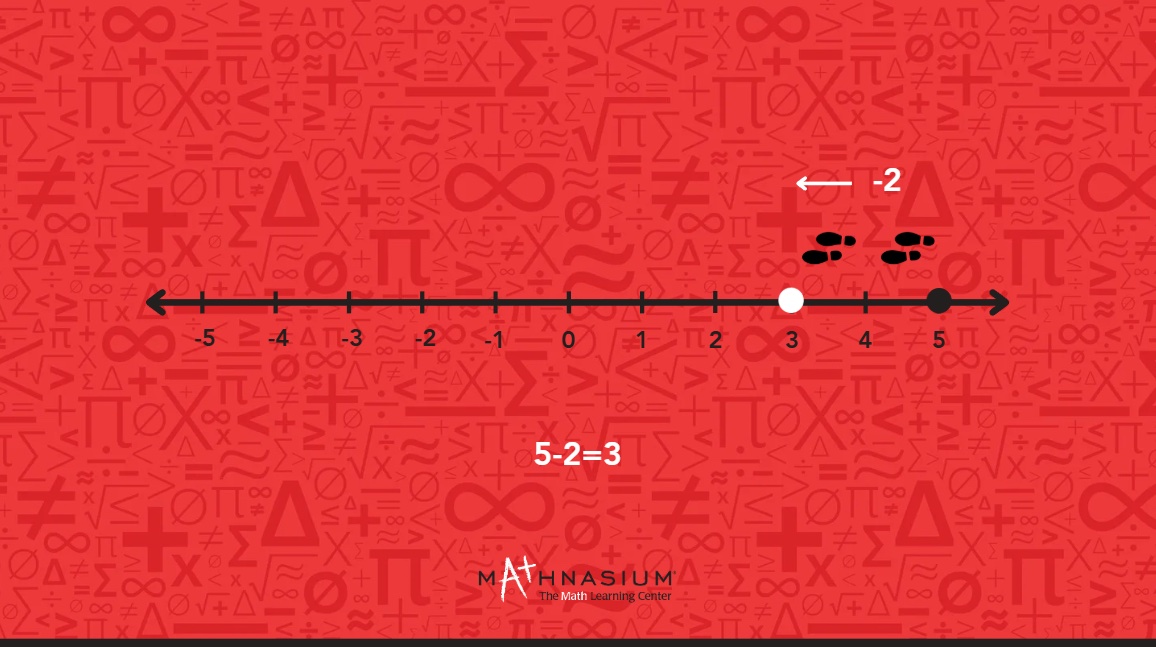
Do this a few times with regular subtraction problems they already know: 8 - 3, 6 - 4, 7 - 2. Let them get comfortable with the idea that the minus sign means "turn around and walk."
Once they’re comfortable, let’s add the twist: negative numbers.
Have them stand at position 1. Now say, "Let's solve 1 - (-2)."
Walk them through it step by step:
-
"You're at 1. The first minus sign says to turn around." (They turn to face the negative numbers.)
-
"But wait. You're subtracting a negative 2. That negative sign means you turn around again." (They turn back to face the positive numbers.)
-
"Now walk 2 steps forward." (They move from 1 to 3)
That's why 1 - (-2) = 3.
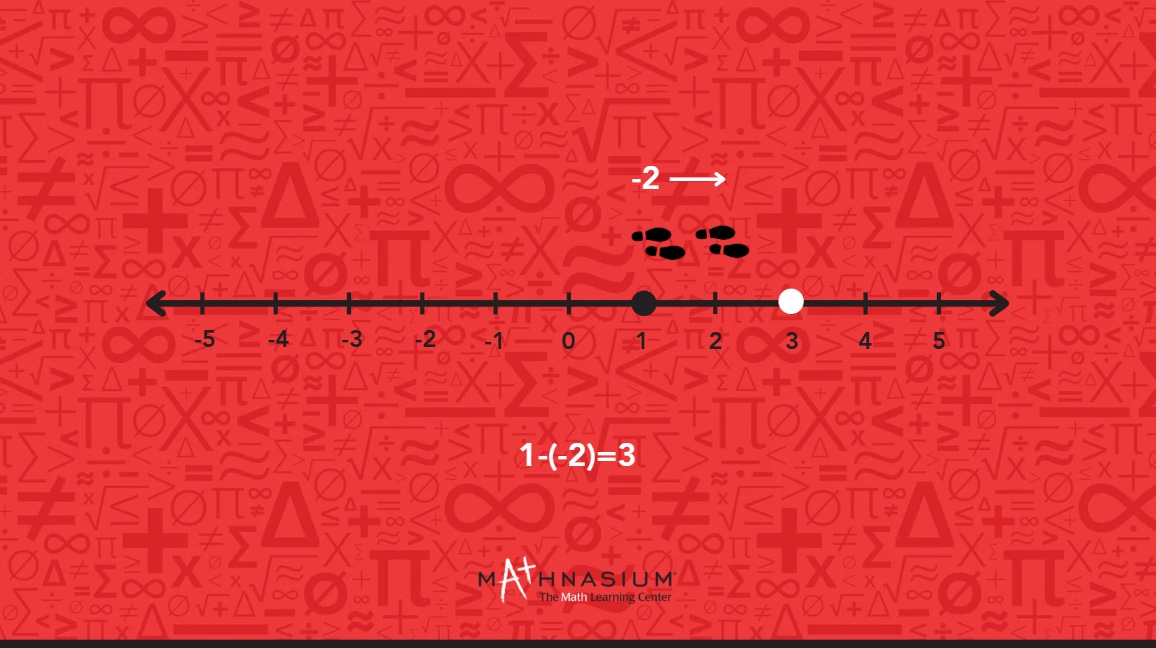
Let your child physically walk through several problems like this: both simple ones like 3 - 2 and trickier ones like 3 - (-2). They'll start to see the pattern.
And once they understand how two negatives make a positive, you can move on to the final explanation.
4. Why Do We Turn Subtraction Into Addition?
After your child fully understands what is happening with direction and motion, it’s finally safe to introduce a shortcut.
All they have to do is remember:
In other words:
-
A plus and a plus equal a plus: 5 + 2 = 7
-
A minus and a minus equal a plus: 5 - (-2) = 7
-
But, a plus and a minus equal a minus: 5 + (-2) = 3
Just remember, it’s best to introduce this shortcut only after the child actually understands why subtracting negatives works the way it does. It’s here to make calculations a bit easier and faster, but it doesn’t replace understanding.
Therefore, focus more on building up their math foundation as opposed to just getting the correct answer.
 Mathnasium tutors know how to explain abstract concepts in a way that is both intuitive and approachable.
How Mathnasium Helps Kids Master Negative Numbers
Mathnasium is a math-only learning center dedicated to helping K-12 students of all skill levels build true understanding and confidence in math.
We've worked with countless students who struggle with negative numbers and integer rules. It's one of the most common stumbling blocks in elementary and middle school math. Our approach doesn't rely on memorization or shortcuts that fade after the test. Instead, we focus on helping students see why the math works the way it does.
Behind each of our programs is a proprietary teaching approach called the Mathnasium Method™. This method is built around understanding and not just rote drills. We support math mastery through:
-
Personalized learning: Each student begins with a diagnostic assessment that helps us identify their current skills, knowledge gaps, and how they naturally think through math. For negative numbers, this means we pinpoint exactly where the confusion lies, whether it's the dual role of the minus sign, the concept of direction on a number line, or the logic behind why subtracting negatives increases the quantity. We use those insights to build a custom learning plan tailored to their needs.
-
Teaching for understanding: We explain math in clear, everyday language using a mix of verbal, visual, mental, tactile, and written techniques. For negative numbers, that might mean using the debt analogy to show why removing a negative is like erasing debt or walking on a physical number line to experience the "turn around" concept. This allows students to approach each concept in the way that makes the most sense to them.
-
Caring, responsive tutors: Our tutors are specially trained in both the technical and emotional aspects of teaching. They know when to guide, when to challenge, and how to help students regain trust in their thinking. With topics like negative numbers, where students often feel the rules contradict everything they've learned, our tutors meet them with patience, address each point of confusion step by step, and celebrate every breakthrough. Math anxiety is real, and we meet students where they are with encouragement.
-
Independent problem-solving and critical thinking: We give students space to work through challenges on their own, then rejoin them to check their reasoning. Instead of just giving them the answer, we help them understand the how and why. For instance, we might ask, "What happens when you turn around twice on the number line?" or "Why does removing debt put you in a better position?" This develops problem-solving skills and critical thinking tools they can use in math and in life.
-
A supportive, fun environment: Many of our activities are hands-on or game-based. We use reward systems and consistent encouragement to keep students engaged. We celebrate progress because confidence grows with every win.
The result? Real, measurable progress.
-
94% of parents report improvement in their child's math skills and understanding
-
93% of parents notice a more positive attitude toward math
-
90% of students see higher grades in school
Mathnasium operates over 1,100 learning centers across the U.S., bringing our proven approach close to your community.
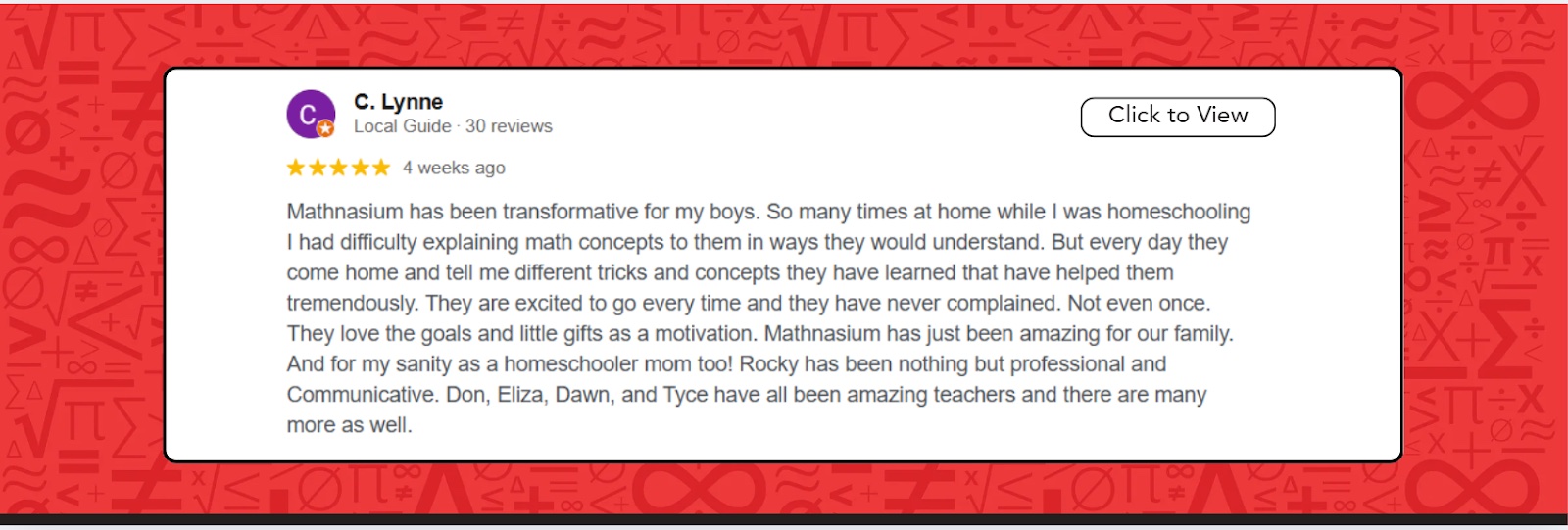
For families in or near Queen Creek, Arizona, Mathnasium of Queen Creek is a trusted local center with years of experience transforming how students think and feel about math. With over 200 five-star Google reviews, families trust us to help their children succeed.
If your child is ready to master negative numbers, integer rules, and build a strong foundation in math, our team is here to help.
📅 Schedule a Free Diagnostic Assessment at Mathnasium of Queen Creek
Not located near Queen Creek?
📍 Find a Mathnasium Learning Center Near You


 (480) 279-3122
 (480) 279-3122