If your child shuts down over a math worksheet, dreads test season, or announces at dinner that they hate math and always will, what they may be experiencing has a name.
Math anxiety is a well-documented phenomenon that affects children at every ability level, and it is more common than most parents expect.
Mathnasium’s education specialists will walk you through what math anxiety really is, how to spot the signs, and what you can do if your child is experiencing it.
What Exactly Is Math Anxiety?
The first thing to understand is that math anxiety is not the same as disliking math or finding it hard.
It is a specific emotional and physical response that interferes with your child's ability to access what they actually know. The knowledge is there. The anxiety is what blocks access to it.
This is more widespread than most parents realize.
According to educational research, approximately 93% of Americans have experienced some form of math anxiety. A separate study found that around 17% of the population deals with it at a high level.
There is another piece of this that parents find eye-opening. Math anxiety directly impairs working memory, the cognitive resource children rely on most when solving problems.
In its grip, a student is effectively working with reduced capacity, which means their test scores and classroom performance can significantly underrepresent what they are actually capable of.
We've worked with thousands of students here in Redondo Beach, and we cannot begin to explain the change in their attitude and performance as soon as the pressure is off.
The anxiety peaks around testing season, so now, heading toward SBAC and finals, the change in the air is palpable. So, let's look into why this happens.
📕 You May Also Like: 5 Strategies to Conquer Math Test Anxiety (Expert Tips)
Why Math Anxiety Develops in Children
Math anxiety builds over time in response to a combination of factors, including:
-
Repeated experiences of struggle without resolution: If math feels hard and adequate support is not there, your child begins to associate math with failure. Each unsuccessful experience reinforces the belief that math is something they simply cannot do, until avoiding it feels safer than trying.
-
Timed assessments and performance pressure: Timed multiplication drills and standardized formats reward retrieval speed and leave little room for hesitation. For children processing more slowly or already feeling anxious, these are anxiety triggers rather than neutral assessments.
-
Parental math anxiety. Research shows that parents who express discomfort around math, even casually, can pass those attitudes on. Saying "I was never good at math either" with a sympathetic shrug may feel supportive, but can validate your child's developing belief that math is not for them.
-
High-expectation environments can quietly intensify math anxiety. When academic achievement is culturally valued and college preparation starts early, children become acutely aware of how their performance compares to their peers. Every test feels higher stakes, and every error can feel like a public failure rather than a normal part of learning. In communities like South Bay, where that culture of achievement runs deep, this dynamic is something our tutors see regularly.
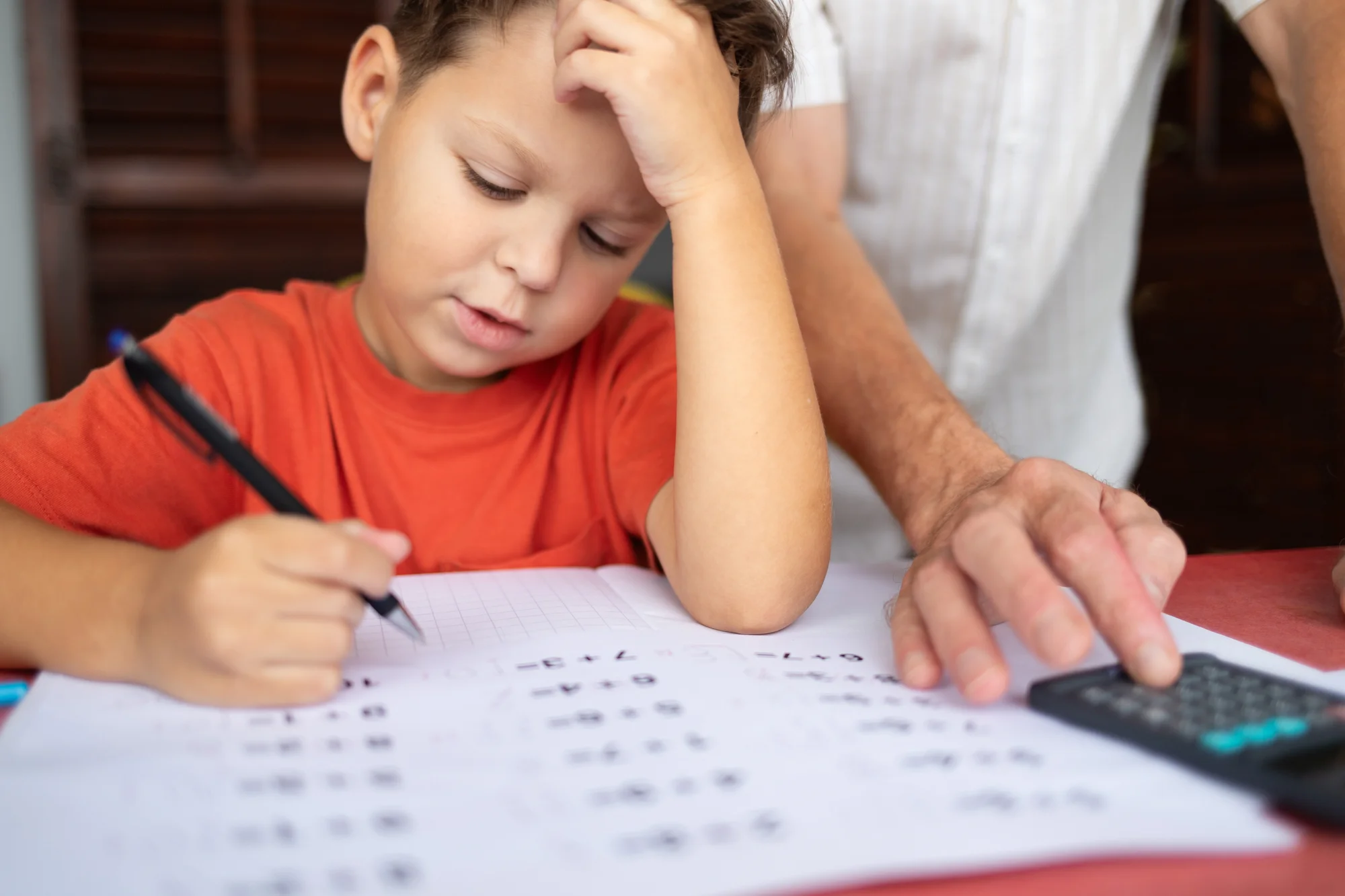
A parent's attitude toward math, even in casual moments at the homework table, can shape how your child sees themselves in relation to it.
Signs of Math Anxiety to Watch For
Math anxiety looks different from child to child. Some signs are loud, and others are easy to miss. Here is what to watch for, roughly in the order they tend to appear.
-
Negative self-talk about math: "I'm just bad at math," "I'll never get this," or "Math is pointless," said with conviction rather than passing frustration. This is often the earliest sign, a belief forming before the behavior catches up.
-
Avoidance and stalling: Every pencil needs sharpening. Every eraser needs to be found. Your child will do almost anything before touching a math worksheet. This is anxiety being managed through delay, not laziness.
-
Physical complaints before math tests or homework: Stomachaches, headaches, or requests to stay home on test days that do not appear around any other subject. The body is responding to something the child may not yet have words for.
-
Emotional outbursts or tears during math: Crying, anger, or even shutting down entirely in response to a math problem that seems disproportionate to the difficulty. The emotional load has exceeded what your child can manage in that moment.
-
Performance gaps between practice and assessment: Your child understands the material at home but performs significantly worse under test conditions. That gap is the working memory impairment that math anxiety produces, and certainly not a reflection of what they know.
📕 You May Also Like: How Peer Comparison Affects Confidence in Math
How to Help Your Child With Math Anxiety at Home
Math anxiety does not resolve overnight, but the way you approach math at home makes a difference.
The strategies we recommend are practical, immediately usable, and grounded in how anxiety actually responds.
1. Model a calm attitude toward math
Children absorb their parents' relationship with math early and deeply.
If math time at home feels tense or is accompanied by frustrated sighs and comments like "I was never good at this either," your child registers that as confirmation that math is something to dread.
Approaching a tricky fraction problem with "Let's figure this out together" sends a very different message. You do not need to know the answer right away. The attitude matters more.
2. Praise effort and thinking, not ability
Carol Dweck's research on mindset shows that praising effort and strategy produces more resilient learners than praising ability.
For a child with math anxiety, hearing "You're so smart" actually raises the stakes of every subsequent performance and makes errors feel like evidence of lost ability.
Try "I noticed you kept trying even when it got hard" or "I like how you broke that equation down into smaller parts."
Specific, effort-focused praise builds the kind of confidence that holds up when the material gets difficult.
📕 You May Also Like: How to Nurture Confident Math Thinkers, Not Just Answer-Getters
3. Make practice sessions calm and confidence-building
Ten to twenty minutes of calm, focused practice is more effective than longer sessions under deadline pressure.
Use visual supports like counters, drawings, and number lines to make abstract concepts feel concrete, particularly for younger children.
End every session on something your child can do successfully. That final moment of competence is the emotional note they carry into the next session.
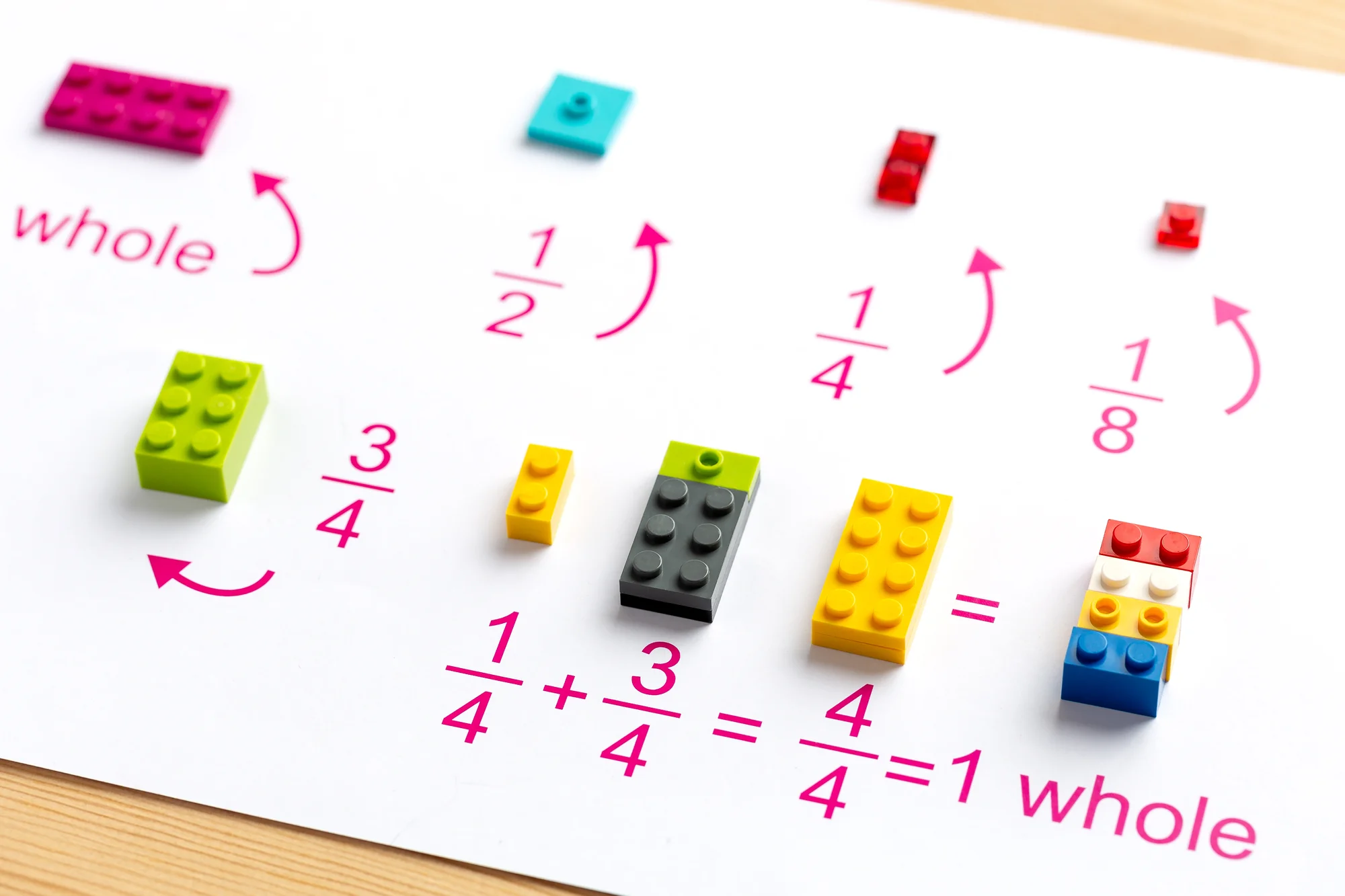
Visual supports and hands-on tools make math concepts feel concrete, taking the pressure out of practice sessions.
4. Bring math into everyday moments
The most effective antidote to math anxiety is positive math experiences that do not feel like math at all.
Here in Redondo Beach, there are plenty of opportunities to integrate math practice into your daily routine. These, of course, can be translated to wherever you are, so don't be afraid to get creative!
-
Estimate how many steps it takes to walk from the Redondo Beach Pier to the end of the Esplanade, and then count to check
-
Calculate the total cost of fish tacos and a drink at one of the pier restaurants, and figure out the change
-
Track the tide times posted at the beach and work out how many hours there are between high and low tide
-
Read the distances on the bike path markers along the Esplanade and calculate how far your family has ridden
These moments rebuild your child's relationship with mathematical thinking without the performance pressure that triggers anxiety, and over time, they start to update how your child sees themselves in relation to math.
5. Consider Personalized, Structured Support
Home strategies lay important groundwork. There will be cases, though, where the anxiety is more entrenched, the gaps run deeper, or the consistency and expertise a parent can offer at home reaches its natural limit.
A landmark brain imaging study found that eight weeks of intensive one-on-one math tutoring significantly reduced math anxiety in elementary school children, with the most anxious children showing the greatest improvement.
Brain scans revealed that overactive fear responses normalized after tutoring, independent of math skill gains. The anxiety itself responded to the right kind of support.
Structured, personalized tutoring from a trained math specialist gives your child the low-pressure, high-attention environment that anxiety responds to best. At Mathnasium, that is exactly what we are built to provide.

At Mathnasium, a diagnostic assessment informs a personalized learning plan delivered by specially trained tutors in a supportive, engaging setting.
How Mathnasium Turns Anxiety Into Confidence
Mathnasium is a math-only learning center that empowers students of all skill levels to excel in math.
We have helped thousands of students move from math anxiety to genuine confidence, and at the heart of that progress is our proprietary teaching approach, the Mathnasium Method™.
Here’s how it works.
Each student begins with a diagnostic assessment, a relaxed, engaging interaction designed to pinpoint strengths and knowledge gaps. It is also the first opportunity to spot signs of anxiety and understand where they are coming from.
From those insights, we build a learning plan customized to each student's needs. Our specially trained tutors follow it closely, delivering face-to-face instruction in a supportive setting where your child feels comfortable making mistakes.
We teach math for understanding, using everyday language alongside a mix of verbal, visual, mental, tactile, and written techniques. Seeing a concept from multiple angles is often what makes it click, and for anxious students, that moment of clarity is also a moment of confidence.
Our tutors are trained in both math and the emotional aspects of teaching. They know how to support a student who is stuck and how to challenge one who is ready to move forward.
Sessions are often game-based and hands-on, with rewards built in and every bit of progress celebrated. Confidence grows session by session, and that momentum is what turns math anxiety around over time.
The Mathnasium Method™ brings measurable results:
-
94% of parents report an improvement in their child's math skills and understanding
-
93% of parents report an improved attitude towards math after attending Mathnasium
-
90% of students saw an improvement in their school grades
With over 1,100 centers across North America, Mathnasium brings top-rated math instruction close to your home.
For families based in or near Redondo Beach, CA, Mathnasium of Redondo Beach is the go-to local center with years of experience transforming not only skills but also how students think and feel about math.
If you would like to see your child grow into a confident math thinker, our team is ready to help make that happen.
📅 Schedule a Free Diagnostic Assessment at Mathnasium of Redondo Beach
Not near Redondo Beach?
📍 Find a Mathnasium Learning Center Near You


 (424) 247-7304