Winter is full of opportunities to explore math in everyday life. Kids are surrounded by data just waiting to be collected and graphed, from measuring snowfall and counting marshmallows to asking family members about their favorite holiday treats.
Today we’re sharing fun, winter-themed graphing activities that turn real-world moments into meaningful math practice.
From simple bar graphs to hands-on projects, these ideas are designed to build confidence, spark curiosity, and help your child see how math connects to the world around them.
Why Graphing Matters in Elementary Math
Graphing is one of the most practical and engaging ways children learn to organize and interpret information. Elementary school introduces students to this important skill as early as first grade, and it continues to evolve throughout their math journey.
But why is graphing so valuable?
At its core, graphing helps children visually represent numbers, patterns, and comparisons. More than just coloring bars or plotting points, it’s a foundation for data literacy.
Students learn how to gather, sort, and understand real-world information when they graph snowfall totals or ask their families about their favorite holiday activities.
These early experiences nurture critical thinking. Kids begin asking questions like:
-
What does this graph show me?
-
Which category has the most or the least?
-
What trend can I see over time?
Graphing also encourages children to communicate their findings clearly. It gives them the tools to make arguments based on evidence, and in doing so, it exercises logical reasoning. These are the skills they’ll use across all subjects, not just mathematics.
Most importantly, graphing helps math feel tangible. When students chart something they care about, like how many marshmallows go into their cocoa or how many inches of snow fell, they begin to see math not as a set of abstract rules, but as a way to explore and understand the world around them.
A Quick Reminder: What Types of Graphs Do We Explore in Elementary School?
As students begin working with data in elementary school, they’re introduced to different types of graphs, each helping them see and understand numbers in new ways.
While there are many ways to represent data, here are some of the most common graph types your child may use in school and at home.
1. Bar Graphs
Bar graphs are often a child’s first introduction to data visualization.
They’re great for comparing categories, like how many inches of snow fell each day or which winter activity was most popular in a class survey. Each bar shows a different category, and the height represents the quantity.
📕 You May Also Like: What Is a Bar Model in Math?
2. Picture Graphs (Pictographs)
These graphs use images instead of bars or lines to show data. For example, one snowflake image could represent two inches of snowfall.
Picture graphs are especially helpful for younger learners who are still developing number sense.
3. Line Graphs (or Line Plots)
Line graphs help students see change over time.
When your child tracks daily temperatures or snowfall across several days, plotting the numbers as a line graph can reveal patterns like warming trends or storm cycles.
📕 You May Also Like: What Is a Slope in Math?
4. Bonus Graph Options: Pie Charts and Venn Diagrams
While not always introduced until later grades, pie charts and Venn diagrams offer fun ways to look at parts of a whole or compare sets.
They’re great for students who want to explore more advanced graphing challenges, like showing how class preferences for winter snacks break down or which activities overlap indoors and outdoors.

The best way to learn is through play! This winter, take advantage of the time together to explore the world around you through math.
Winter-Themed Data Collection Ideas
Once kids understand the basics of graphing, the next step is collecting data, ideally something they care about. Winter offers plenty of fun, relatable ways for children to gather real-world information, whether at home, in the classroom, or outside in the snow.
Here are a few easy and engaging ideas to get you started:
1. Snowfall Tracking Project
Have your child measure snowfall each day for a week (or use local weather reports if it’s more convenient). They can record the data in a table and turn it into a bar graph or line graph.
-
Many children enjoy looking at how weekday snowfall compares to weekend snowfall, so adding this comparison can enrich the activity.
-
Some kids also like tracking temperature changes alongside snowfall amounts, which gives them the chance to explore how weather patterns connect.
📕 You May Also Like: How Do We Measure Rainfall?
2. Holiday Treat Poll
Let your child ask friends or family members about their favorite winter treats, such as cookies, hot cocoa, candy canes, or pie. Record responses and create a bar or picture graph.
-
Younger learners often find it helpful to assign a simple symbol or drawing to each treat as they tally responses.
-
Older or more advanced children may enjoy turning the results into a pie chart to show how preferences divide across the group.
3. Winter Clothing Count
Whether it’s at school, a family gathering, or just a walk in the neighborhood, kids can tally how many people wear scarves, hats, mittens, or boots.
-
Drawing small images of each clothing item can make picture graphs more engaging and easier for younger children to interpret.
-
Repeating the clothing count on different days allows your child to compare results and notice how weather conditions influence what people wear.
4. At-Home Holiday Data
There is plenty of math waiting to be discovered right at home. Children can explore data by tracking everyday winter activities such as:
-
Counting how many marshmallows go into a cup of cocoa
-
Tallying how many ornaments are on the tree
-
Tracking which winter books are read most often
-
Measuring how long it takes to get dressed for the cold
These small observations provide simple data sets kids can turn into graphs.
📕 You May Also Like: How to Build a Growth Mindset During Holidays (Math Edition)
5. Make It a Family Activity
Invite siblings or parents to help gather and discuss data. When children see adults participating, they learn that math is a natural and useful tool for understanding the world. Keeping a shared data notebook or “winter math journal” can help everyone stay organized and reflect on what they discover together.
📕 You May Also Like: 8 Simple Ways to Make Math Fun at Home
DIY Graphing Projects at Home
You don’t need any special equipment to turn your home into a mini math lab. With a few basic supplies and a little curiosity, your child can create meaningful graphs that reflect their own observations and ideas.
Materials to Get Started
Most graphing projects can be done with simple materials you likely already have on hand:
-
Graph paper or plain paper and a ruler
-
Colored pencils or markers
-
A notebook or binder for recording data
-
Printed templates or free graphing worksheets (optional but helpful)
Creating a designated “math space” or keeping these materials in one place can help make math time feel special and intentional.
Step-by-Step Setup
Start by helping your child choose a question or topic they’re excited about. For example, “How many cups of cocoa did we drink this week?” or “Which winter socks did I wear most often?” Encourage them to track this data consistently over a few days.
Once they’ve collected enough data, guide them through organizing it into a table. From there, they can create a visual representation, whether it’s a bar graph, picture graph, or line plot. Use color to make different categories stand out, and add labels to help explain what the graph shows.
Adapting for Different Ages
For early learners, keep graphs simple and visual. Drawing pictures instead of writing numbers, or using stickers in place of bars, can help them focus on the concept without getting overwhelmed by details.
Older children may enjoy designing their own graph paper or experimenting with more advanced data, like combining multiple data sets into one graph or adding percentages and titles.
Encouraging Ownership and Creativity
Let children decorate their graphs, name their projects, or even present their findings to the family. When kids feel a sense of ownership, they’re more likely to stay engaged and develop confidence in their math skills.
Whether it’s a five-minute project or a week-long chart, these home-based graphing activities make math feel accessible, purposeful, and fun.
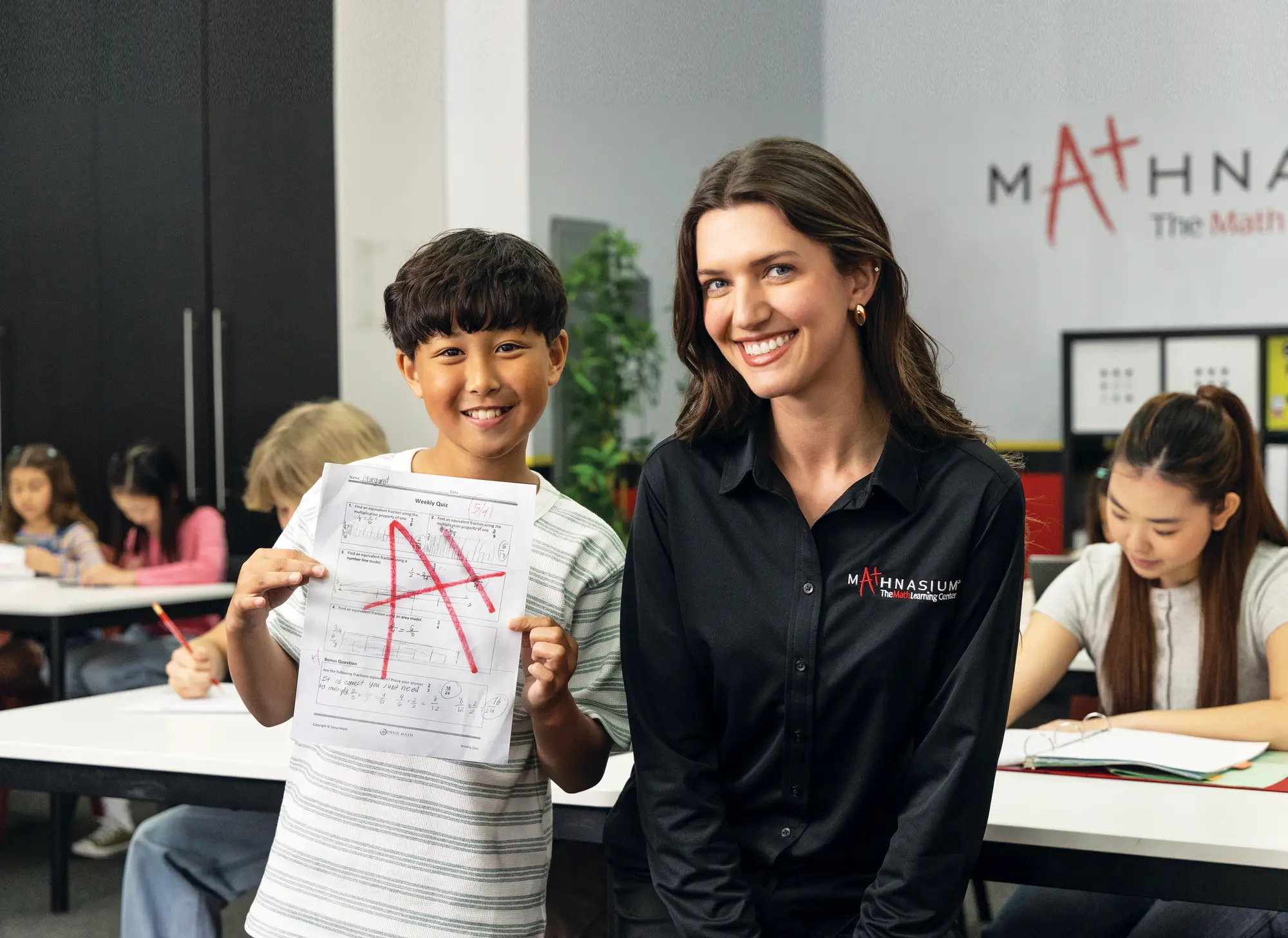
Mathnasium transforms how students think and feel about math.
How Mathnasium Builds Confidence Through Graphing and Beyond
At Mathnasium, we teach math in a way that makes sense to each student.
When students work with our specially trained tutors, they learn to truly understand math concepts by exploring how they connect to everyday life, including projects like the winter graphing activities you’ve seen here.
Graphing is one of the many ways we help students develop strong number sense, critical thinking, and problem-solving skills.
Through our proprietary teaching approach, the Mathnasium Method™, students follow personalized learning plans based on diagnostic assessments. These plans build on what students already know and introduce new topics in a carefully sequenced way, helping them grow their knowledge level by level.
We use hands-on, interactive teaching techniques—mental, visual, verbal, tactile, and written—so that students don’t just complete math problems; they understand why the answers work.
Whether your child is creating a bar graph of snowfall totals or comparing favorite winter treats, they’re learning to analyze, interpret, and communicate using numbers.
And it works.
-
94% of parents report an improvement in their child’s math skills and understanding
-
90% of students see better grades in school
-
93% of parents say their child’s attitude toward math has improved
Mathnasium operates more than 1,000 learning centers across the country, bringing top-rated tutors into local communities. For families in Westminster, Mathnasium of South Westminster is a trusted center with years of experience transforming how children think and feel about math.
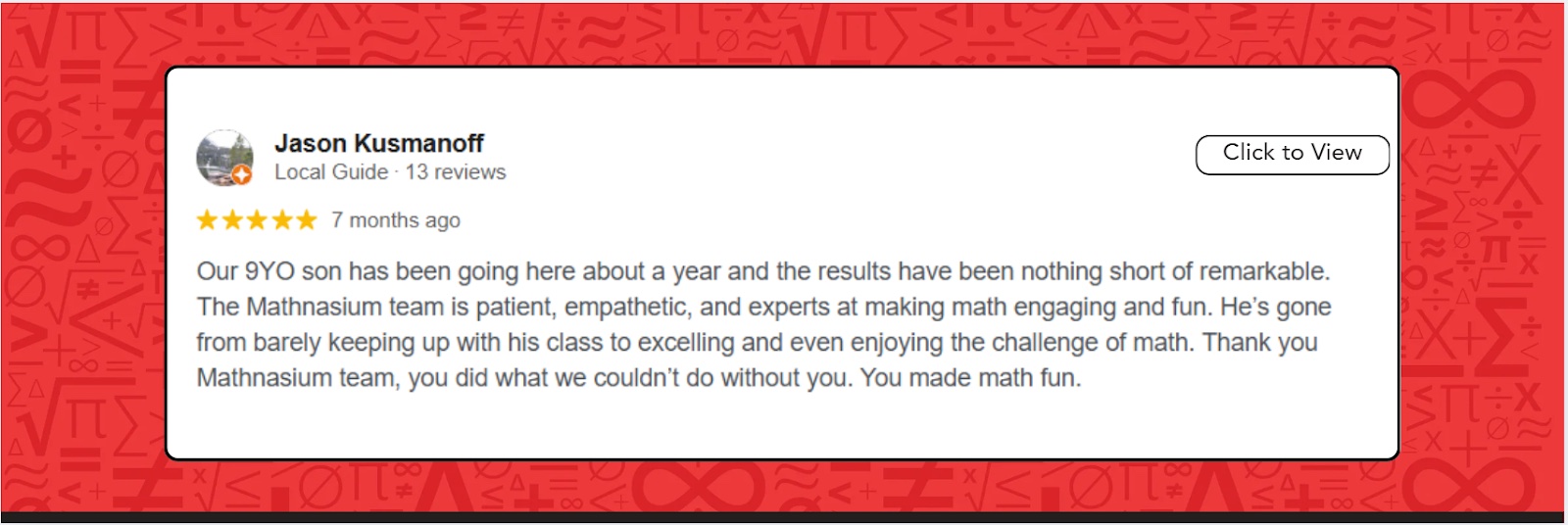
Here’s how one parent described their child’s experience at Mathnasium:
Whether your child needs help catching up, wants to stay on track, or is ready to move ahead, Mathnasium can support their journey. And if they’re excited about graphing, we’ll build on that interest with meaningful activities that go beyond seasonal fun.
To get started, schedule a free assessment at Mathnasium of South Westminster or your nearest learning center. Our team is here to help your child unlock their full math potential all year long.


 (720) 524-4533
 (720) 524-4533