










What is a Circle?
A circle is the set of points in a plane that are all the same distance (equidistant) from a given fixed point, called the center.
We can also define a circle as a perfectly round shape where every point along its edge is the same distance from the center.
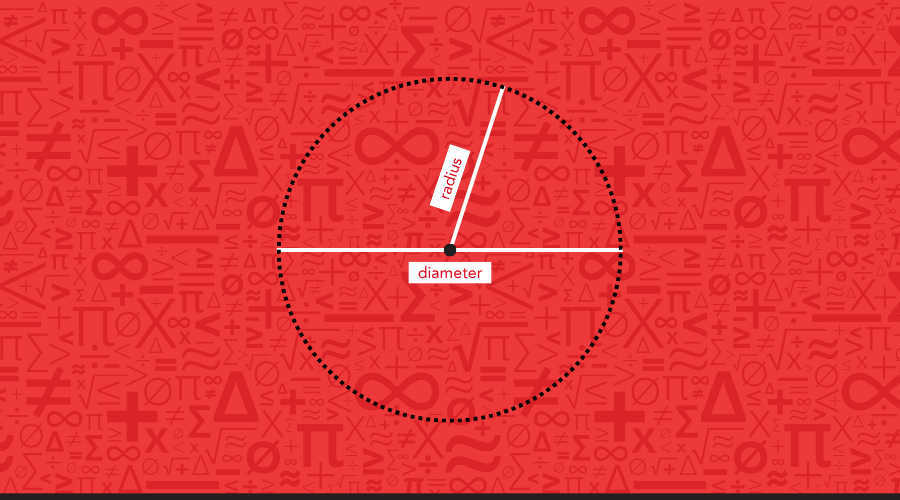
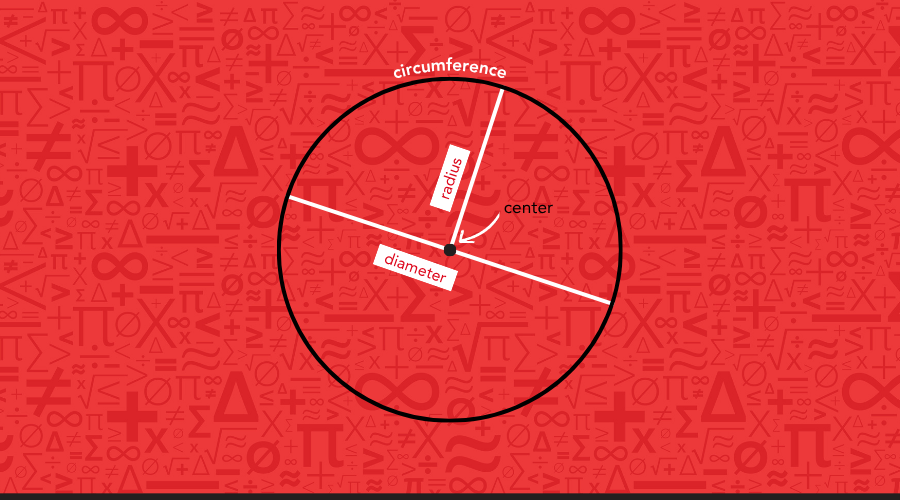
This distance from the center to a point on the circle is called the radius, and the full distance across the circle (through the center) is called the diameter.
Circles are all around us: in wheels, clocks, coins, and pizza! Understanding circles helps students explore shapes, measurement, and symmetry.
Important terms related to circles:
- Center: The fixed point in the middle of a circle
- Radius: The distance from the center to any point on the circle
- Diameter: The full length across a circle, passing through the center (twice the radius)
- Circumference: The distance around a circle
When Do Students Learn About Circles?
Students begin learning about circles in early elementary grades and expand their understanding as they progress.
Grades 1–2 – Recognizing Circles
Students identify circles among other shapes and learn simple vocabulary like round and center.
Grades 3–5 – Learning Circle Properties
Students explore radius, diameter, and basic measurement concepts. They may also be introduced to the idea of π (pi) and how it relates to circumference or area.
Grades 6+ – Working with Circles in Geometry
Students apply formulas for area and circumference and work with circle-related theorems in more complex geometry problems.