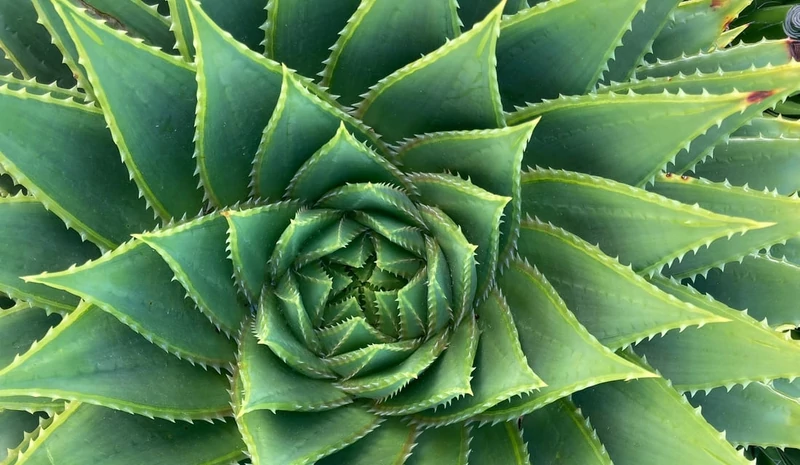






An algebraically generated complex geometric shape having the property of being endlessly self-similar under magnification.
A fractal is a special kind of shape that looks the same at different scales. That means if you zoom in on a part of a fractal, you’ll see a smaller copy of the whole pattern. This is called self-similarity.
Fractals are often created using repeated mathematical rules, making them both complex and beautiful. Even though they can look irregular or jagged, they follow specific patterns that repeat over and over again.
Fractals show up in nature and technology, such as:
-
The branching of trees or lightning bolts
-
Snowflakes and mountain shapes
-
Computer graphics and art
Fractals help us understand patterns in chaotic or irregular systems. They also appear in advanced math, art, and science.
When Do Students Learn About Fractals?
Students may encounter basic fractal ideas while studying patterns or geometry and explore them more deeply in higher-level math or enrichment activities.
Grades 6–8 – Introduction to Fractals and Patterns
Students may explore simple fractals like the Sierpinski triangle or Koch snowflake through pattern activities and recursive drawing.
Grades 9+ – Fractals in Advanced Math
Students explore the algebra behind fractals, iteration, and connections to chaos theory and real-world modeling.