











A quantity which is operating on a given number.
In math, an operator is a symbol or rule that tells us to perform a specific action on a number or expression. It “operates” on values to produce a result.
Common operators include:
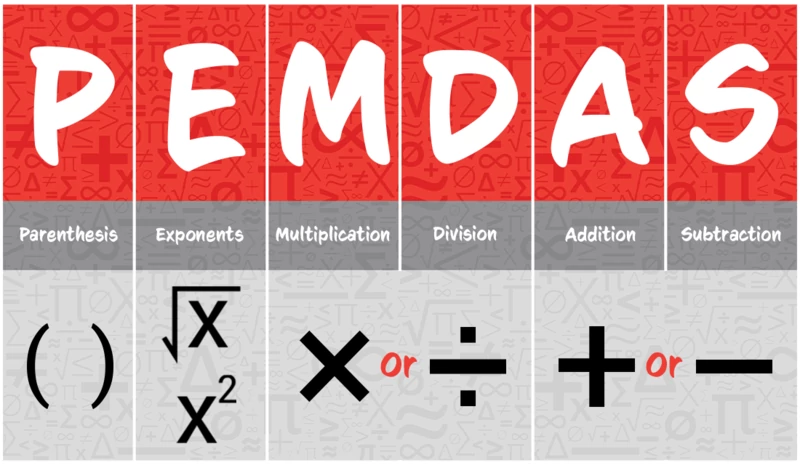
- + (addition)
- – (subtraction)
- × (multiplication)
- ÷ (division)
For example:
- In 3 + 4, the plus sign (+) is the operator. It tells us to add 3 and 4.
- In 5 × 2, the multiplication sign (×) is the operator. It tells us to multiply 5 by 2.
In more advanced math, operators can also include:
- Exponents (like ² in 4²)
- Square root symbols (√)
- Function notation (like f(x)), which uses rules that act like operators to produce an output
Operators help structure math expressions and tell us exactly what to do with the numbers involved.
When Do Students Learn About Operators?
Students begin using operators as soon as they start working with arithmetic.
Grades K–2 – Introduction to Basic Operators
Students learn the symbols for addition and subtraction and begin solving simple equations.
Grades 3+ – Expanding Operator Use
Students work with multiplication, division, exponents, and more complex expressions.