







What is Symmetry?
The property of “being exactly the same” on both sides of a dividing line or plane or about a center or an axis
In math, symmetry means that one part of a figure is a mirror image of another part. If you fold a shape along a line and both sides match perfectly, the shape is symmetrical.
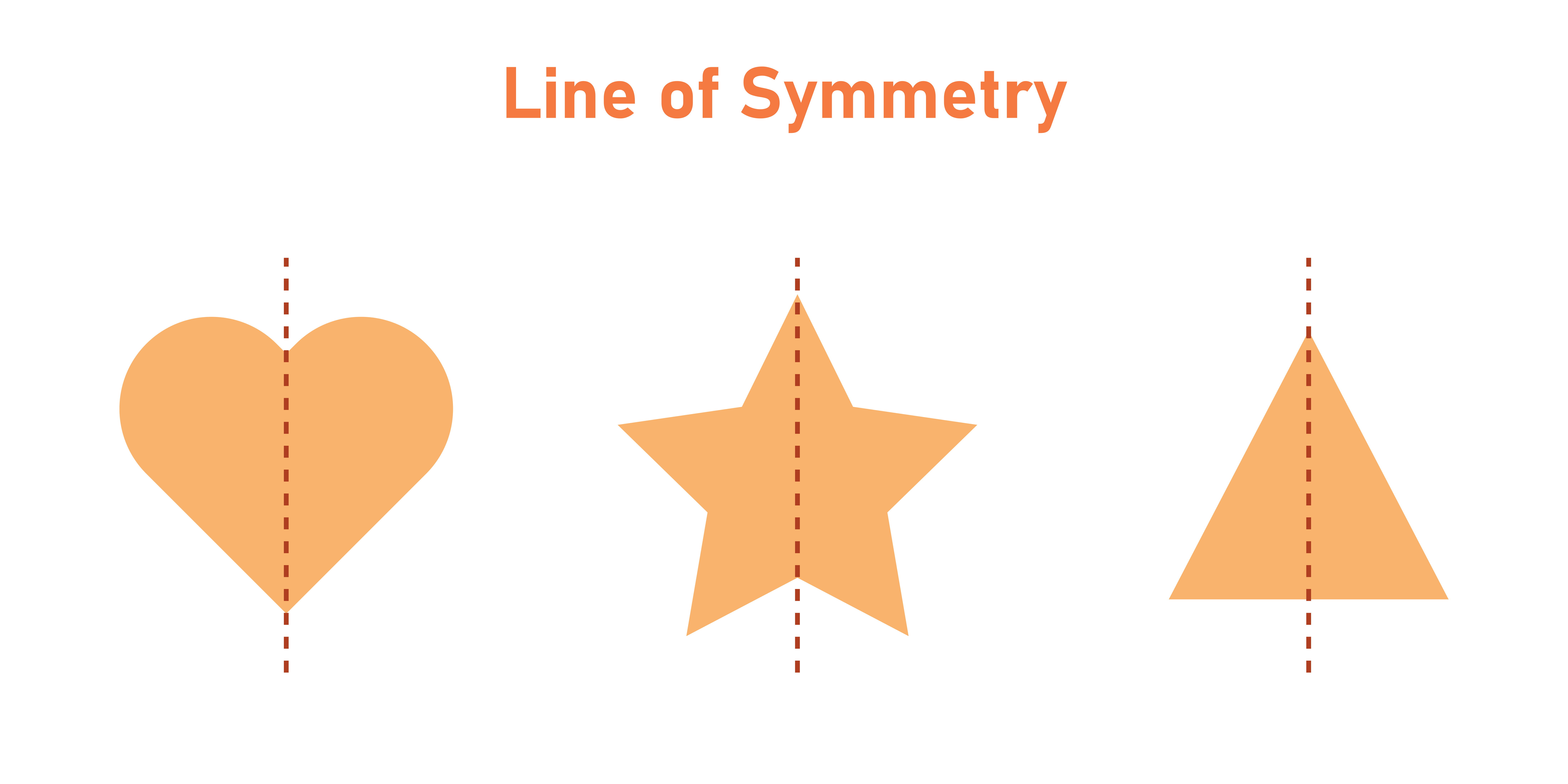
There are different types of symmetry:
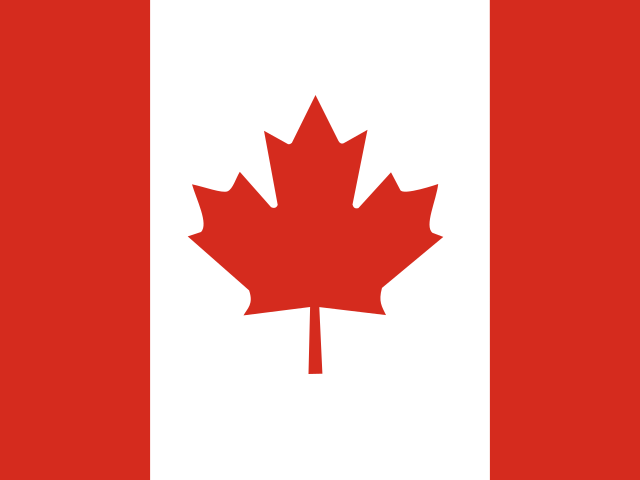
- Line symmetry (or reflection symmetry): One half of the figure reflects the other half across a line (like a butterfly's wings).
- Rotational symmetry: A shape looks the same after being rotated (turned) less than a full circle (like a star).
- Point symmetry: Every part has a matching part at an equal distance from a central point, but in the opposite direction (like the letter Z).
Symmetry helps us understand patterns, balance, and structure in both math and nature. You'll see symmetry in art, architecture, snowflakes, and even in animals and plants!
When Do Students Learn About Symmetry?
Students are introduced to symmetry as part of their early exploration of shapes and spatial reasoning.
Grades 1–2 – Recognizing Symmetry
Students begin identifying lines of symmetry in basic shapes and real-world objects.
Grades 3–5 – Exploring Symmetrical Properties
Students learn to draw lines of symmetry, recognize rotational symmetry, and work with symmetrical figures in geometry.
Grades 6+ – Applying Symmetry in Geometry
Students explore symmetry in more complex shapes and use symmetry concepts in coordinate geometry and transformations.