According to Ohio's Learning Standards for Mathematics, children start working with patterns as early as kindergarten, with growing and shrinking patterns introduced formally in grade 2.
More than just another early math topic, they are one of the first times children are asked to think in terms of rules and predict what comes next, building the foundations for skip counting, multiplication, and algebraic reasoning in later grades.
Today, our tutors guide you through what growing and shrinking patterns are, where they fit in your child's early math journey, with a few easy activities you can try together at home, with no special materials required.

Let's Remind Ourselves: What Are Patterns in Math?
A pattern in math is any sequence that follows a predictable rule. Take 1, 3, 5, 7, 9, 11 — a sequence of odd numbers, each one two more than the last.
Our children encounter patterns everywhere, in the way days of the week repeat, in the rhythm of counting by twos, or in the alternating colors of a tiled floor.
In early math, patterns help us recognize that numbers and shapes behave in consistent, describable ways.
That ability to spot a rule and use it to predict what comes next is one of the earliest forms of mathematical reasoning.
What Are Growing and Shrinking Patterns?
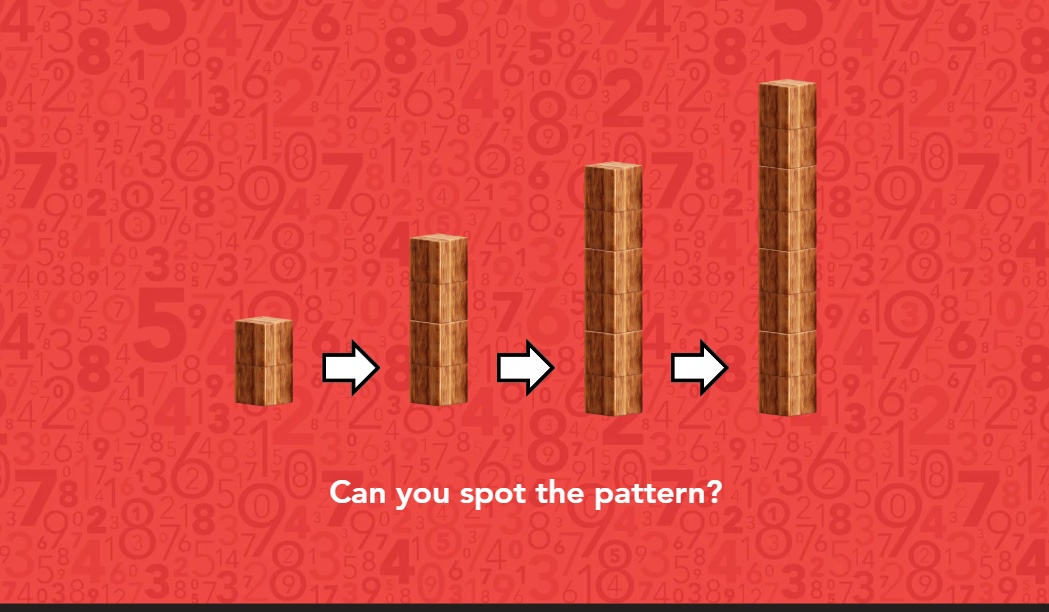
A growing pattern (also called an increasing pattern) is a sequence that increases by the same amount at each step.
For example, 2, 4, 6, 8. Each number is 2 more than the one before it, and that rule holds every time.
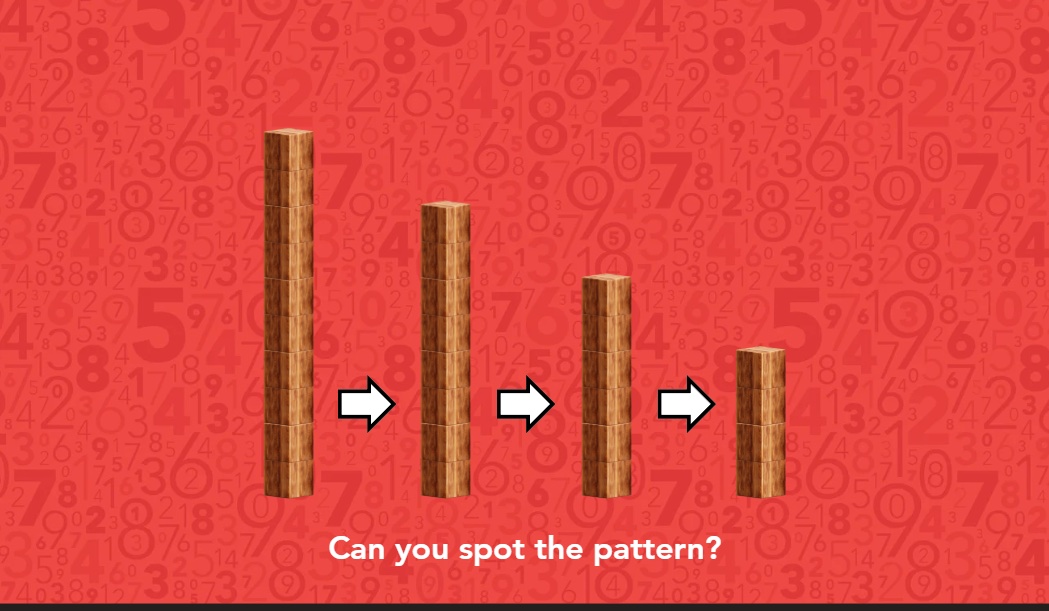
A shrinking pattern works in the opposite direction. It is a sequence that decreases by the same amount.
For example, start with 10, remove 2, then 2 more, then 2 more: 10, 8, 6, 4. Each number is two less than the one before it, following the same rule throughout.
The deeper learning happens when children can find and name the rule that holds a sequence together. If children can predict what comes next and explain why, they are doing something more meaningful than completing a worksheet.
📕 You May Also Like: How Playing with Patterns Boosts Your Child’s Math Skills
How Growing and Shrinking Patterns Connect to Later Math Skills
In our experience, growing and shrinking pattern work does more heavy lifting than it gets credit for. It supports:
-
Skip counting and multiplication. Counting by 2s, 5s, or 10s is a growing pattern. Recognizing and extending that rule early makes multiplication tables a natural next step rather than a memorization exercise.
-
Division. Shrinking patterns mirror what division does, taking a quantity and reducing it by a consistent amount. Early comfort with shrinking sequences builds an intuitive head start when division is introduced.
-
Algebra. At its core, algebra is about describing how numbers change according to a rule. That is precisely what pattern work introduces, years before the word 'algebra' ever appears in a textbook.
This is evident in research as well.
A synthesis of early math studies found that children's understanding of patterns at age 5 is linked to their math achievement at age 11.
Studies of early math textbooks also show that growing patterns are included in kindergarten and first-grade materials precisely because they build the rule-based thinking that carries forward.
📕 You May Also Like: How to Encourage Your Child to Ask Questions in Math
Simple Exercises to Practice at Home
And now for some Mathnasium-style challenges. These activities will only take ten to fifteen minutes, and you need no special materials.
The goal? Help your child find the rule, predict what comes next, and experience that satisfying moment of 'I knew it!', because that is exactly where confidence starts.
1. Hands-On: Block Tower
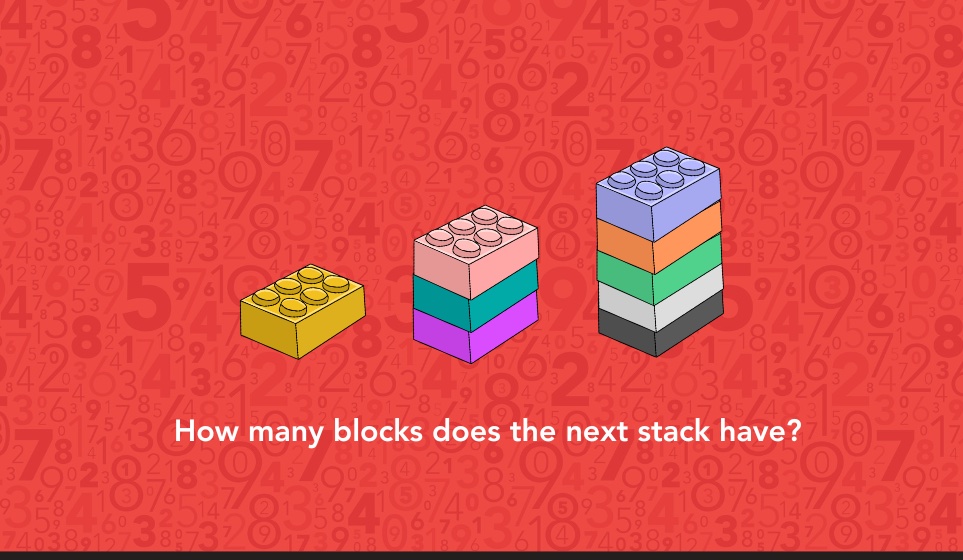
Grab a set of blocks or Unifix cubes and build a staircase together: 1 block in the first step, then 3, then 5, then 7, adding 2 more each time. As you build, ask your child to count aloud and describe what is happening at each step.
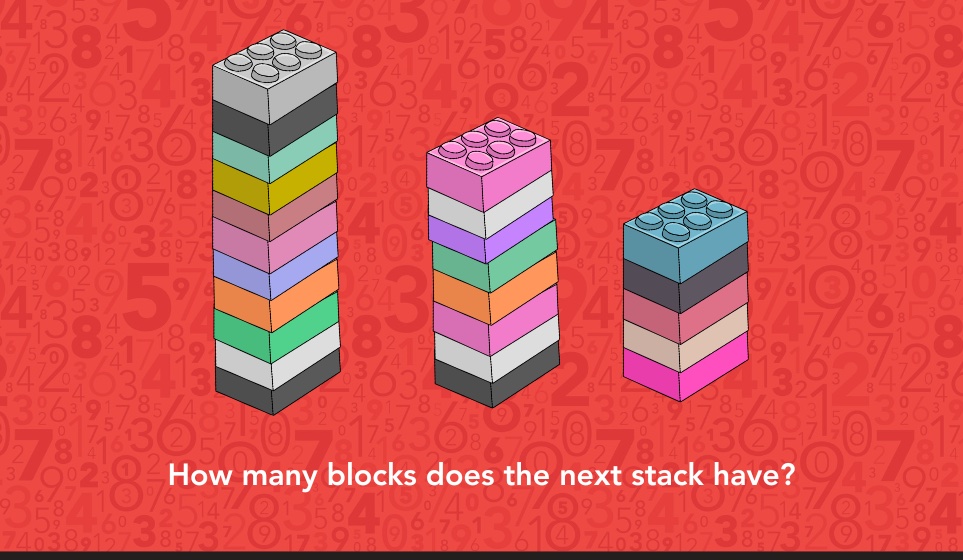
Once the growing stack is built, try the reverse. Start with a stack of 11 blocks and remove 3 each time: 11, 8, 5, 2. Before each step, ask your child to predict how many blocks will be left, and why.
2. Drawing: Shape Chain
Draw a chain of shape groups on paper together. Start with 1 circle in the first group, then draw 5 in the second, 9 in the third, and 13 in the fourth, adding 4 circles to each new group.
After the chain is drawn, ask your child to predict and draw the next group before you reveal it.

Then start fresh with a shrinking chain. Begin with a group of 15 circles and remove 3 at each step: 15, 12, 9, 6, 3.
Before each group, ask your child to predict how many circles will be in it, and explain the rule they are following.

3. Drawing: Number Line Jumps
Draw a number line from 0 to 20 on a piece of paper. Starting at 0, jump forward by 3s, marking each landing spot: 0, 3, 6, 9... Before each jump, ask your child to predict where you will land next.
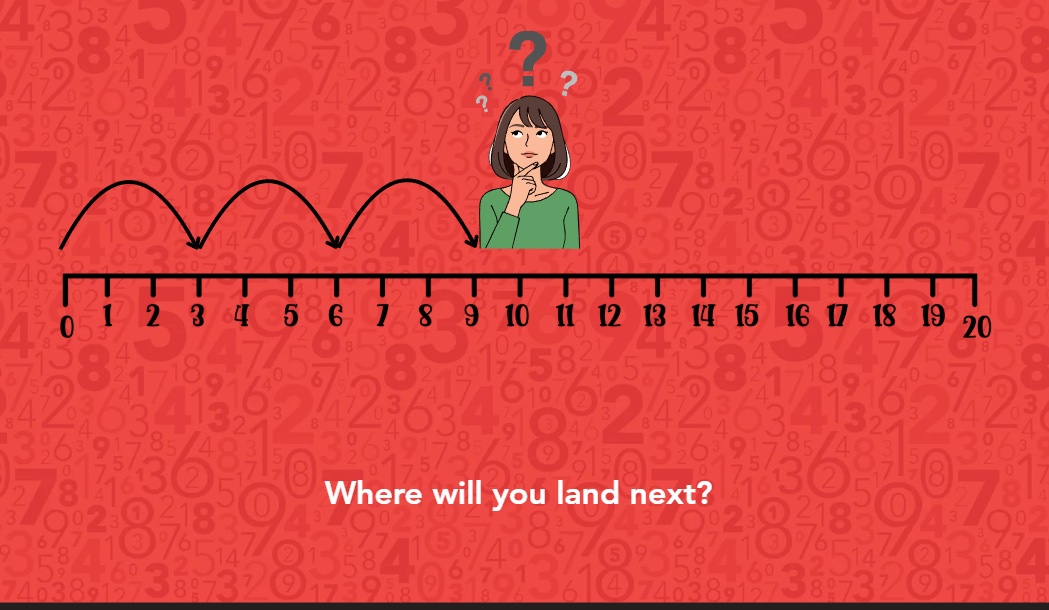
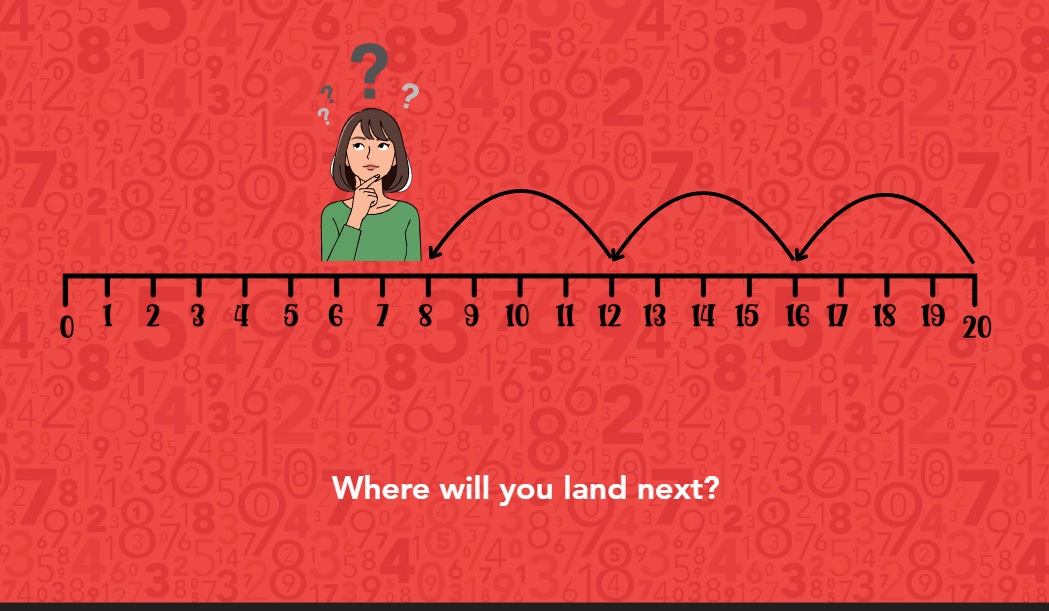
Then start again for the shrinking version. Begin at 20 and jump backwards by 4s: 20, 16, 12, 8,... Again, ask your child to call out each landing before you mark it.
And if they can explain why before you mark it, even better.
4. Drawing: Fill the Table
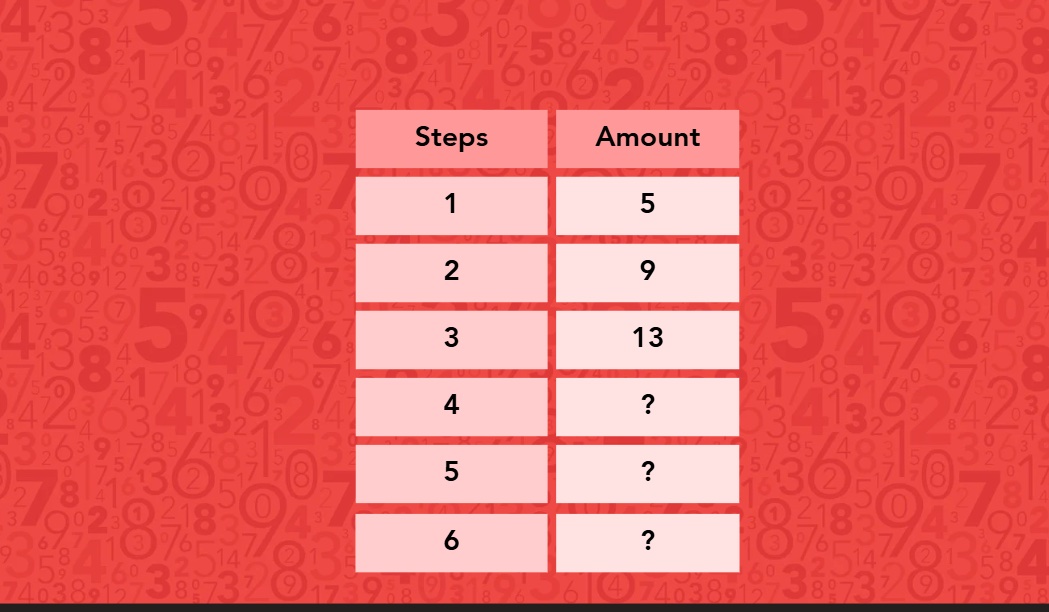
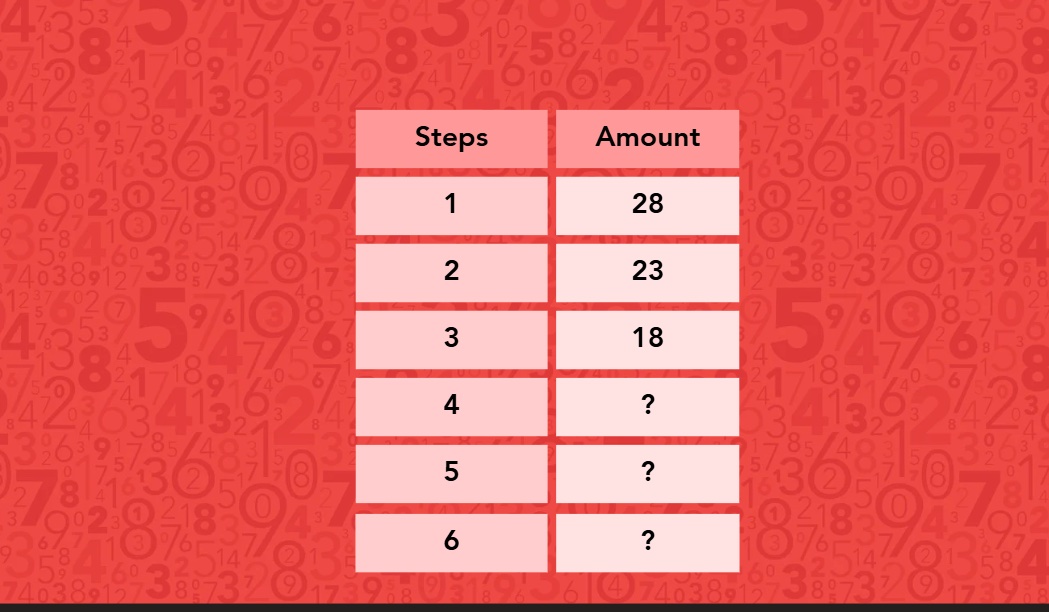
Draw two simple tables on a piece of paper, each with a "Step" column and an "Amount" column.
For the growing table, fill in the first three steps together: Step 1 is 5, Step 2 is 9, Step 3 is 13. Leave Steps 4, 5, and 6 blank and ask your child to complete them.
Then, start fresh with the shrinking table. Step 1 is 28, Step 2 is 23, Step 3 is 18. Leave the remaining steps blank for your child to fill in.
In both cases, after the table is complete, ask your child to write the rule at the bottom.
That last step is the most important one. If your child can write "+4" or "−5" and explain what it means, they are already thinking algebraically, long before algebra appears on the syllabus.

At Mathnasium of Blue Ash, specially trained tutors help early learners move from completing patterns to understanding the rules that drive them.
How Mathnasium Helps Early Learners Build Solid Math Foundations
Mathnasium is a math-only learning center helping K-12 students of all skill levels catch up, keep up, and get ahead in math.
Growing and shrinking patterns are foundational topics that look straightforward on the surface but carry a lot of weight underneath.
When a child understands the rule driving a sequence, rather than just completing it, they are building the kind of mathematical thinking that will serve them well beyond early elementary school.
At Mathnasium, we support that kind of understanding through the Mathnasium Method™, our proprietary teaching approach designed to help students at every level develop a deep and lasting grasp of math. For early learners, our approach relies on:
-
A diagnostic assessment that identifies exactly where each child is in their math journey, including what foundational skills are strong and where knowledge gaps exist
-
A personalized learning plan built from those insights, introducing concepts gradually and at a pace that fits each child
-
Face-to-face instruction in a caring and fun group environment, using hands-on, visual, verbal, and written techniques that make math meaningful and engaging
-
Specially trained tutors who know how to meet young learners where they are and build confidence alongside skills
And the results speak for themselves:
-
94% of parents report an improvement in their child's math skills and understanding
-
93% of parents report a more positive attitude toward math after attending Mathnasium
-
90% of students saw an improvement in their school grades
With more than 1,100 learning centers, Mathnasium brings top-rated math instruction close to home.
For families in and around Blue Ash, OH, Mathnasium of Blue Ash is a trusted local center with experience helping students transform how they think and feel about math. Our center has been recognized for the quality of instruction we bring to the community:
Whether a student is catching up, keeping up, or getting ahead, our team is committed to helping them experience what it feels like to find the rule, trust their reasoning, and enjoy the math that follows.
📅 Schedule a Free Diagnostic Assessment at Mathnasium of Blue Ash
Not near Blue Ash?
📍 Find a Mathnasium Learning Center Near You


 (513) 984-1212
 (513) 984-1212