There’s no one-size-fits-all approach to learning math. That’s one of the values Mathnasium is built on. Each student walks through our doors with a different background and different goals. That’s why we personalize the learning experience.
Our focus is on helping students reach those goals while also transforming how they think and feel about math. This often means showing them that math isn’t as rigid as it seems. It means changing how they respond to mistakes, how they approach unfamiliar problems, and how they choose which strategy to use.
In other words, we guide them to grow into flexible math thinkers. In fact, you can support that same growth at home.
That’s why today our instructors are breaking down what flexible math thinking is and sharing the strategies that help students learn to see math problems in multiple ways.
What Is Flexible Thinking in Math?
Flexible thinking in math terms is simply a student’s ability to approach problems from different angles and to adjust when their first strategy doesn’t work.
When students first join us for tutoring, many of them are used to solving math concepts in one specific way. They’ve memorized steps, followed rules, and learned to stick with what they were shown. That can work for a while. But when problems start looking different, or the method slips from memory, they get stuck.
Say a student is given this problem: 18 × 5
A rigid thinker might say, “I need to line this up and multiply it on paper.”
A flexible thinker might break 18 into 10 and 8, then multiply each part:
(10 × 5) + (8 × 5) = 90
Or they might double 18 to get 36, then multiply by 2.5. They look for structure, not just steps.
Flexible thinking often looks like this:
-
Seeing more than one way to solve a problem
-
Using number sense instead of relying only on memorized steps
-
Changing strategies when the first approach doesn’t lead anywhere
-
Explaining why a method works, not just how to apply it
-
Spotting patterns and connections across different types of problems
-
Learning from mistakes without losing momentum

When students learn to see problems from different angles, they stop relying on one method and start thinking their way through.
5 Ways to Support Flexible Math Thinking at Home
Students don’t naturally think flexibly from the start. Most are used to finding one method and sticking with it. But with the right kind of support, that begins to change.
At Mathnasium, we see it all the time: students who used to hesitate or second-guess themselves begin to try new strategies, explain their thinking, and eventually solve problems with more confidence.
Here are several strategies our instructors use to help students build that kind of thinking and that you can use, too.
1. Show That There’s More Than One Way
Rather than trying to teach your child every strategy out there, use a couple of simple prompts that help them start to think differently.
Try asking:
Questions like these switch the focus from remembering steps to making sense of the problem.
To help them start noticing that variety, try using examples like:
➤ 48 + 27
➤ 14 × 5
-
Split: (10 × 5) + (4 × 5)
-
Double and halve: 28 × 2.5
-
Think relationally: 7 × 10 = 70
➤ What is \(\Large\frac{1}{3}\) of 24?
2. Encourage Your Child to Explain Their Thinking
At Mathnasium, one of the questions students hear often is: “Can you tell me how you got that?”
It’s not just about checking whether the answer is right. As students explain their thinking out loud, they start to hear their own logic. That process helps them catch mistakes, build clarity, and become more confident in their reasoning.
This form of verbal reflection or thinking about your thinking is what educators call metacognition. It’s a core part of learning how to problem-solve, not just follow procedures.
One study found that third-grade students who were taught to explain their word problem solutions aloud solved problems faster and felt more confident in their answers.
You can try this at home with something as simple as a whiteboard. Ask your child to walk you through a problem and explain it like they’re teaching it to you.
Try it with something like this: "A triangle has an area of 36 square units and a base of 9. What’s the height?"
Then prompt them with questions like:
Even if the explanation isn’t perfect, it’s the talking that builds the thinking.

Explaining math out loud helps students organize their thinking and catch their own mistakes as they go.
3. Normalize Mistakes as Thinking Tools
We like to say that mistakes aren’t just part of math but one of its best teachers.
Students who learn to embrace mistakes as information, not failure, tend to think more critically and perceive themselves as capable problem-solvers. They become more willing to try a new strategy, revisit their logic, or ask, “What didn’t work here, and why?”
Psychologist Carol Dweck’s work on growth mindset shows that students who are encouraged to revise their approach, rather than aim for perfection, develop stronger problem-solving skills and persistence.
The key, however, isn’t just believing they can improve but practicing what improvement looks like: trying again with a new strategy.
Say your child is working on a fraction like \(\Large\frac{1}{2}\)+\(\Large\frac{1}{4}\).
They add across and get \(\Large\frac{2}{6}\).
Instead of jumping in to correct it, try something like, “Actually, adding across like that is a really common mix-up. It just means we’re treating it like whole numbers, which helps us spot what to practice.”
Even a simple, “I see where you were going with that,” can take the sting out of being wrong and keep your child thinking.
📕 You May Also Like: Adding and Subtracting Fractions with Unlike Denominators
4. Use Visual Models to Make Ideas Click
At Mathnasium, we often get those a-ha moments from students when we use number lines, area models, or bar models to show them a concept that once felt confusing.
When they can “see” the math behind a problem, it becomes something they can reason through, not just something they were told to remember.
A meta-analysis found that visual representations like diagrams and structured models help learners grasp complex concepts and build stronger reasoning skills.
At home, you can bring math to life with simple visuals:
-
Fractions: Use paper strips or bar models to show part-whole relationships
-
Multiplication and division: Build arrays with coins, counters, or graph paper
-
Base ten problems: Use blocks, straws, or place value charts to show regrouping
-
Negative numbers: Use a number line to model adding and subtracting below zero
-
Area and perimeter: Sketch rectangles on grid paper to explore side lengths and units
These tools give students multiple ways in and help make abstract ideas concrete.
📕 You May Also Like: How to Teach Math to Visual Learners with Pictures & Manipulatives
5. Connect Math to Real Life
If your child has ever asked, “When am I going to use this?” that means they’re trying to make sense of what they’re learning.
When math feels disconnected from everyday life, students are more likely to treat it like something to memorize and forget.
But when they see how it shows up in the real world, like when measuring ingredients, estimating time, or comparing prices, they start to view math as something they already use, not just something they’re told to learn.
A 2024 study found that weaving real-life problems into math instruction boosts both performance and interest, particularly when students can connect the concepts to everyday situations.
Even small moments at home can help bring that relevance into focus:
-
To practice percentages and mental math, try calculating discounts and tax while shopping.
-
For a hands-on way to explore fractions, doubling or halving a recipe is a ideal fit.
-
If your child needs to build a sense of time, you can estimate how long a task will take—then compare it to the actual time.
-
To strengthen budgeting and number reasoning, plan a small purchase together and track savings or spending.
-
For a visual approach to geometry, measure angles or find shapes around the house and sketch them
📕 You May Also Like: Math for Life: Why Math Skills Matter Beyond School
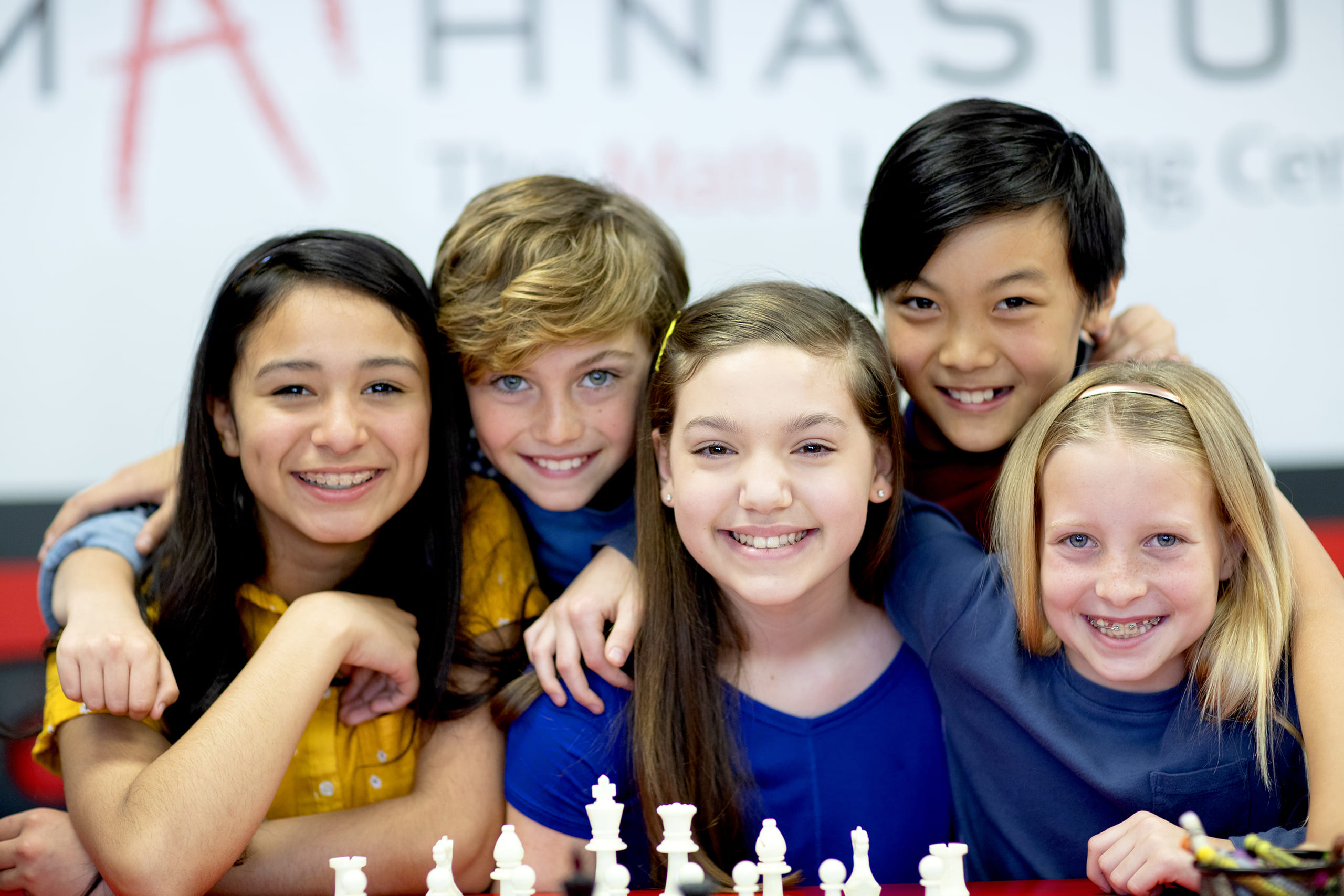
At Mathnasium, we believe flexible thinking is the road to true math mastery.
How Mathnasium Builds Flexible Math Thinkers
At Mathnasium, we believe flexible thinking is what unlocks true math mastery. Not just getting answers right, but understanding why they work, how different strategies connect, and when to switch between them. That’s the kind of thinking students can rely on for years, not just on the next quiz.
So how do we build it?
It starts with the Mathnasium Method™—our proprietary teaching approach designed to help students not only catch up or keep up, but grow into independent, confident problem-solvers.
The first step is a diagnostic assessment. This isn’t a high-pressure test. It’s a relaxed, one-on-one interaction where we get to know each student’s strengths, areas for growth, and learning preferences, whether they’re more verbal, visual, or hands-on.
From there, we build a personalized learning plan tailored to their needs. Our specially trained instructors deliver that plan face-to-face, using a mix of direct instruction and Socratic questioning to deepen understanding.
We go beyond rote memorization. Using verbal, visual, mental, tactile, and written techniques, we help students see math from different angles and build the kind of number sense that supports flexible thinking.
When teaching concepts like fractions or multi-step equations, we don’t just lead students to the answer; we guide them through the how and why behind it. The goal is to develop problem-solving and critical thinking, not just speed and recall.
Fun is part of the process, too. Many of our activities are game-based, and we use built-in rewards to keep students motivated and excited to grow.
And our approach works.
-
94% of parents report an improvement in their child’s math skills and understanding
-
90% of students see better grades in school
-
93% of parents say their child’s attitude toward math has improved
We operate more than 1,100 centers across the U.S., bringing top-rated instructors and our proven method to communities nationwide. For families in and near Redondo Beach, CA, Mathnasium of Redondo Beach is a trusted local center with years of experience helping students become flexible, confident math thinkers.
Whether your child needs to catch up, keep up, or get ahead, we are here to help!
📅 Schedule a Free Diagnostic Assessment at Mathnasium of Redondo Beach
Not near Redondo Beach?
📍 Find Mathnasium Learning Centers Near You


 (424) 247-7304