











What is Dilation?
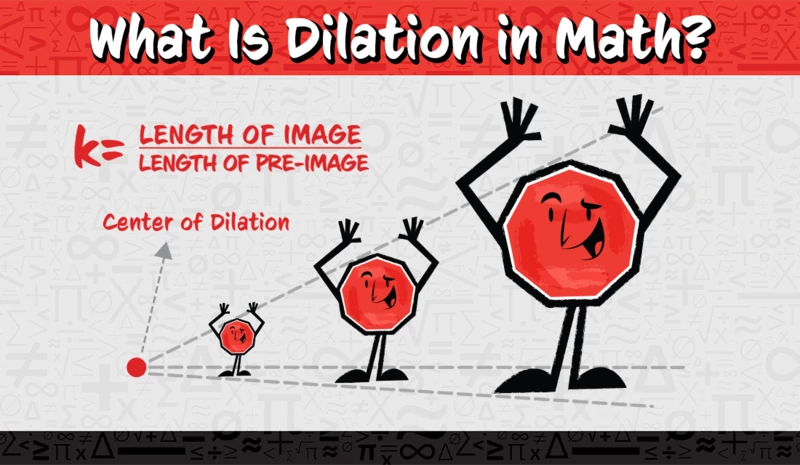
A transformation that either enlarges or reduces a geometric figure proportionately.
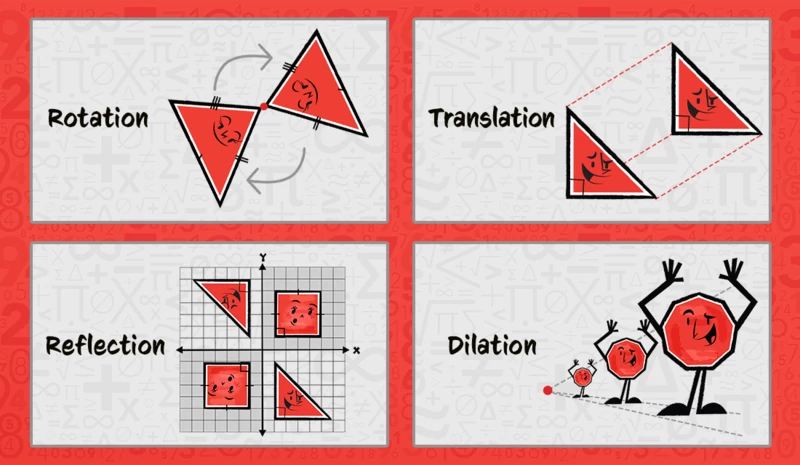
In geometry, dilation is a transformation that changes the size of a shape but keeps its overall proportions the same. That means the shape becomes bigger or smaller, but it doesn’t change shape: angles stay the same, and the sides remain in the same ratio.
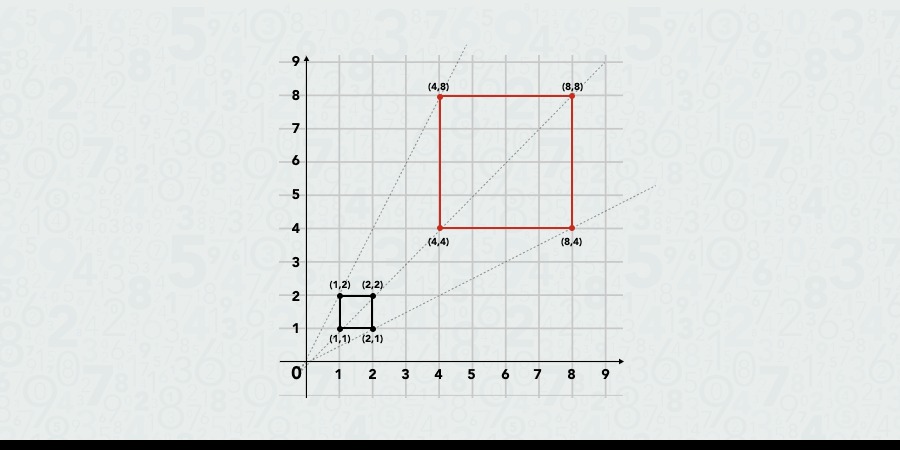
For example, if you dilate a triangle by a scale factor of 3, each side of the triangle becomes three times as long, and the entire figure is an enlarged version of the original. A scale factor less than 1 (like 0.5) would shrink the triangle while keeping its proportions.
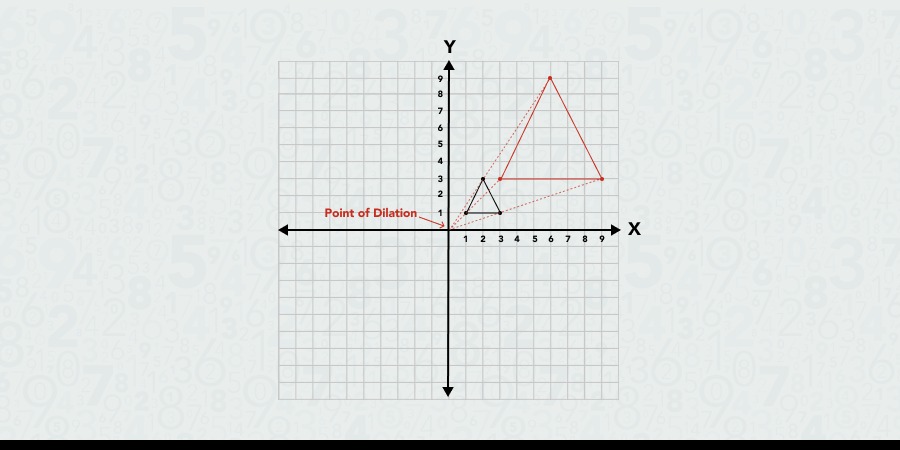
Dilation helps students understand scale, proportional relationships, and how shapes behave under transformations. It also connects to real-world applications like resizing images or creating scale models.
When Do Students Learn About Dilations?
Students begin learning about dilations as part of their introduction to geometric transformations in middle school.
Grades 6–8 – Introduction to Dilations
Students begin exploring geometric transformations, including dilations. They learn about scale factors and how shapes grow or shrink proportionally.
Find middle school math tutors
Grades 9+ – Applying Dilations in Geometry
Students apply dilations to solve problems involving similarity, coordinates, and geometric proofs. They use dilation as part of a larger toolkit of transformations.