








Straight lines in space that are neither parallel nor intersecting.
Skew lines are lines that exist in three-dimensional space and never meet but are also not parallel. They travel in completely different directions and at different levels, so they have no points in common and no shared plane.
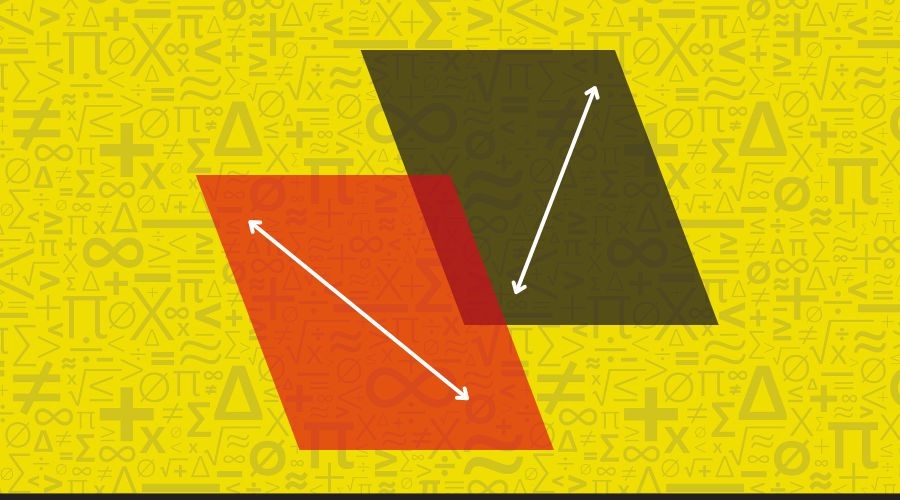
This is a concept that only makes sense in 3D. In a flat, two-dimensional plane, two lines must either intersect or be parallel — there is no third option. But once we move into three dimensions, skew lines become possible.
A helpful way to picture them: imagine a highway overpass. The road on the bridge and the road below it do not cross each other at that point, and they are not running in the same direction. They are skew lines.
Skew lines are easy to confuse with parallel lines, since neither type intersects. The key difference is that parallel lines lie in the same plane and travel in the same direction, while skew lines do not share a plane at all.
When Do Students Learn About Skew Lines?
Students encounter skew lines once they begin exploring geometry in three dimensions.
Grades 6–8 – Introduction to 3D Geometry
Students begin working with three-dimensional figures and spatial reasoning, setting the stage for understanding how lines can behave differently in 3D space.
Grades 9+ – Skew Lines in Formal Geometry
Students formally identify and work with skew lines in the context of three-dimensional geometry, distinguishing them clearly from parallel and intersecting lines.