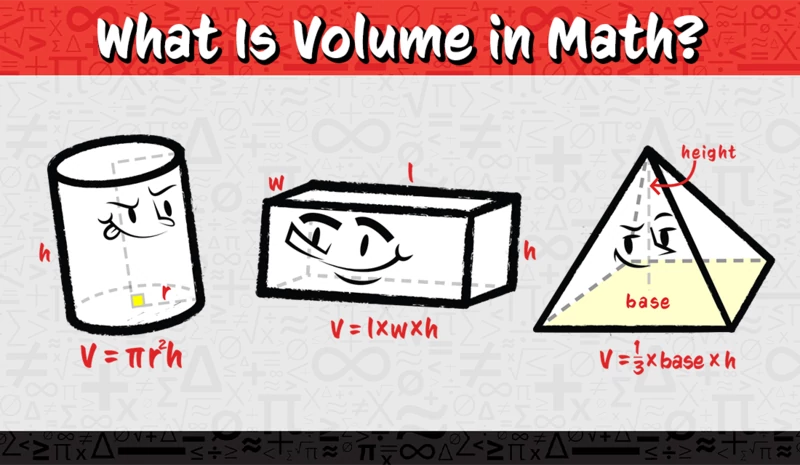












What is Three-Dimensional (3D)?
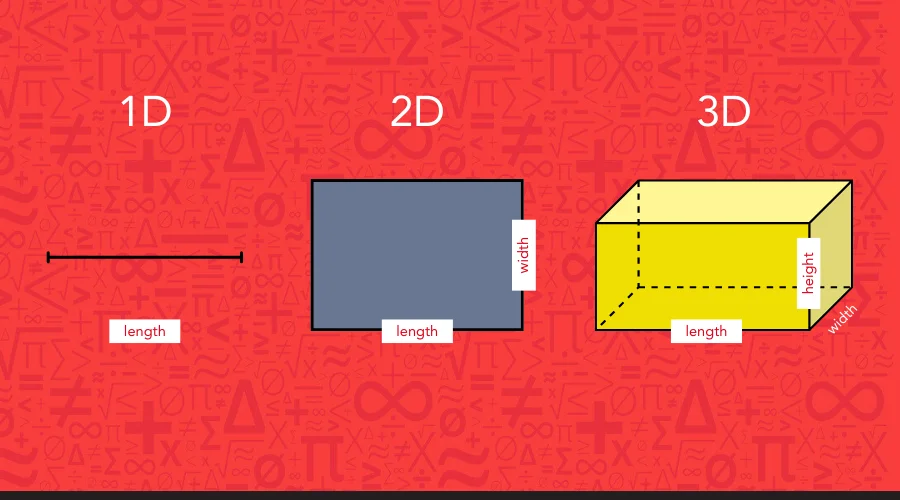
Having length, width, and depth (or height)
A three-dimensional (3D) shape is a solid object that takes up space. Unlike two-dimensional (2D) shapes, 3D shapes have a third dimension: depth (or height) in addition to length and width. This means they can be held, touched, or measured in the real world.
Examples of 3D shapes include:
- Cube (like a box)
- Sphere (like a ball)
- Cylinder (like a can)
- Cone (like an ice cream cone)
- Rectangular prism (like a brick)
We can measure properties of 3D objects such as:
- Volume – how much space is inside an object, like how much water a box could hold if you filled it to the top
- Surface area – the total area of all its faces, like calculating the wall and ceiling surfaces we want to paint
When Do Students Learn About 3D Shapes?
Students begin learning about 3D shapes after they are familiar with 2D shapes.
Grades K–2 – Recognizing 3D Shapes
Students identify solid objects in the real world (like balls, boxes, and cans) and learn their names.
Grades 3–5 – Measuring 3D Shapes
Students explore the volume and surface area of simple 3D shapes and connect them to real-world contexts.
Grades 6+ – Applying 3D Geometry
Students calculate volume and surface area of complex solids and solve multi-step geometry problems.