







What is a Line?
The path traced by a moving point
In math, a line is a straight path that goes on forever in both directions. It’s made up of an endless number of points and has no endpoints, curves, or thickness. A line can be thought of as the path a point would create if it kept moving straight without stopping.
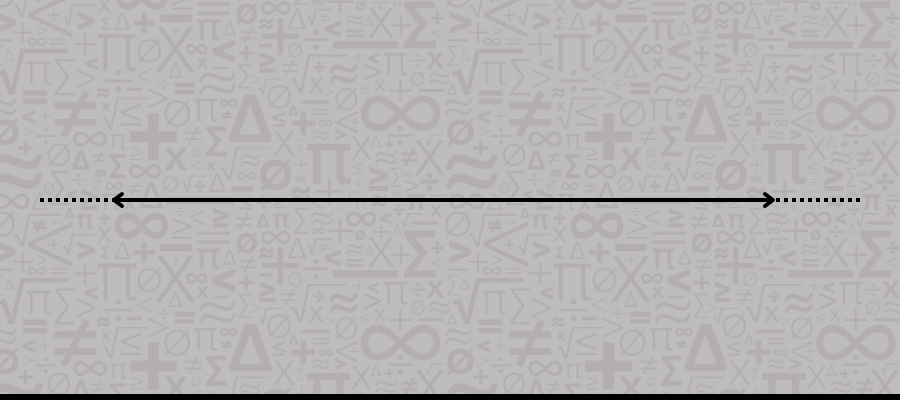
Lines are one of the most basic ideas in geometry, and they help us describe shapes, angles, and directions.
Unlike a line segment (which has a start and end) or a ray (which starts at one point and goes on forever in one direction), a line has no beginning or end. 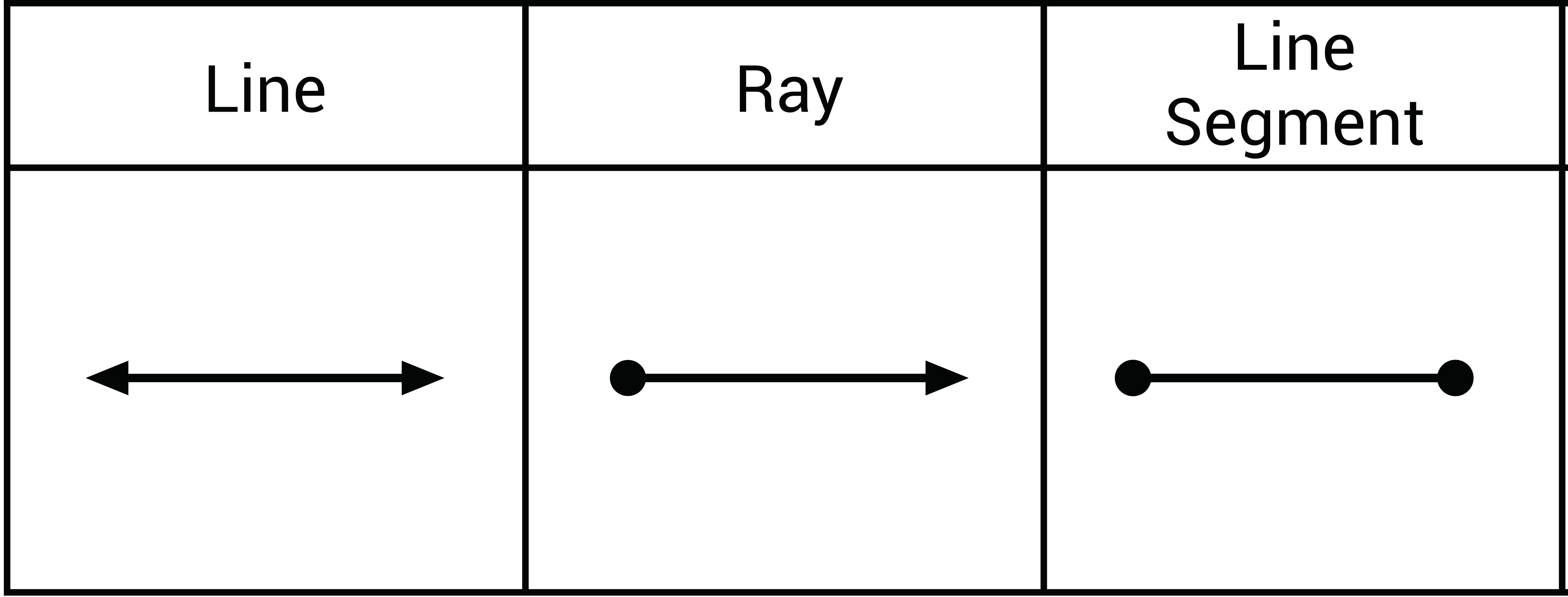
We use lines to:
- Draw shapes and angles
- Graph equations
- Understand directions and slopes
When Do Students Learn About Lines?
Students begin learning about lines and other geometric terms in early grades and continue building on this understanding in middle and high school.
Grades 1–2 – Recognizing Lines and Line Segments
Students begin to draw lines, rays, and line segments and learn basic vocabulary related to geometry.
Grades 3–5 – Working with Lines in Geometry
Students begin drawing lines, identifying parallel and perpendicular lines, and exploring lines of symmetry.
Grades 6+ – Lines in Algebra and Geometry
Students graph linear equations, work with coordinate planes, and study slopes and line relationships.