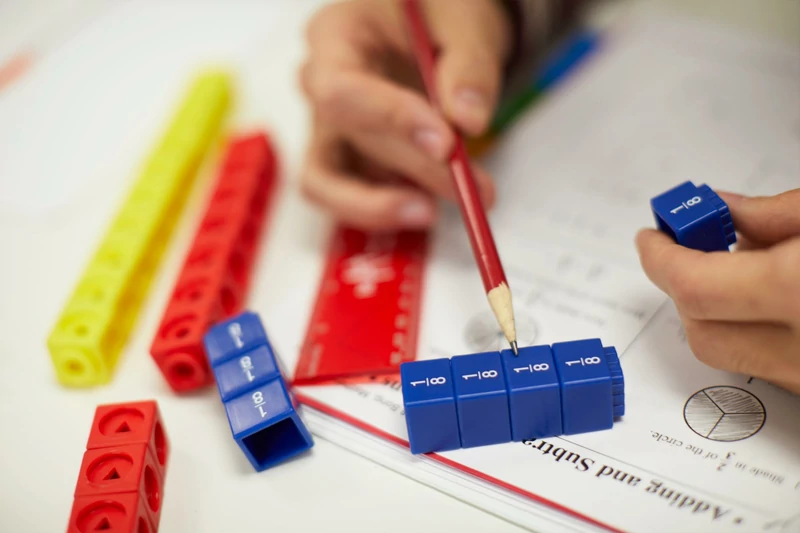
When students first come to Mathnasium, many carry the belief that math is rigid. The thinking goes: follow the formula, stick to the steps, get the right answer, and boom, you're done.
Our tutors work to break that mindset.
How?
By teaching students to tackle problems from multiple angles, using visual tools, manipulatives, and real-world examples. This helps them develop into flexible thinkers.
So, with flexible thinking as inspiration today, our seasoned tutors explain what multiple representations are and how they can deepen students' understanding of math.
What Are Multiple Representations in Math?
At its core, multiple representations in math mean showing the same idea in more than one form. That might be a picture, a written explanation, a table of values, or even a hands-on model. Each version shows the same idea from a new angle, giving students more ways to make sense of it.
So what does that look like in real life?
Think about fractions. \(\Large\frac{3}{4}\) on paper is one representation. For a certain number of students, that’s enough to make sense of it right away. For others, it feels like two numbers stacked on top of each other.
Now picture \(\Large\frac{3}{4}\) as part of a circle that’s shaded in. Or place it on a number line between 0 and 1. Suddenly, it feels more concrete. The student can see what the fraction stands for and doesn’t have to rely on guessing.
The same goes for algebra, which has a reputation for being abstract. Take something like y = 2x + 1. Students usually meet it as an equation and treat it like something they’re supposed to “solve.” That’s just one way to interact with it.
-
a table, where students plug in x-values and watch y change
-
a graph, where they see the pattern become a straight line
-
a real situation, like earning $2 per chore plus a $1 starting bonus
That’s multiple representations.
Still think math feels rigid?
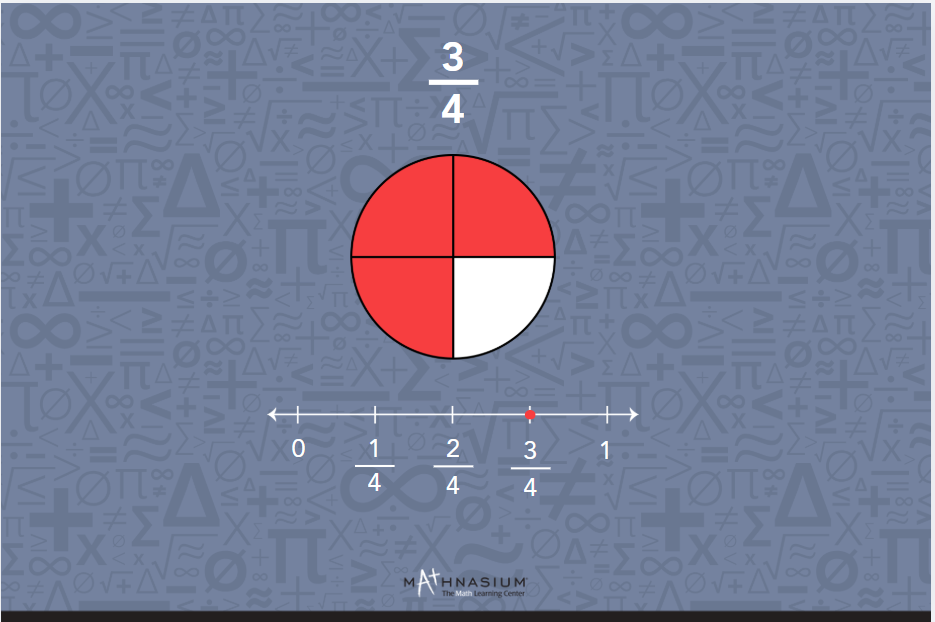
Fractions are ideal for multiple representations.
What Happens When Students See the Same Problem Multiple Ways?
It’s easy to assume that presenting math in different ways is just about variety. In practice, though, it shapes how students absorb ideas, how they learn, and how much they retain. With that in mind, our tutors have highlighted a few patterns we see as this approach takes hold.
A. They Begin to See the Structure Below the Steps
In education, Algorithmic Reasoning (AR) refers to solving problems by applying a known procedure or recalling a provided method. In simpler terms, it’s when students are shown exactly how to solve something and are expected to repeat the same steps.
Many math textbooks rely on this approach, walking students through a process and then assigning similar problems to practice.
Multiple representations take a different path. They fall more in line with what education researchers call Creative Mathematical Reasoning (CMR), an approach that encourages students to build their own methods by making sense of the problem first.
CMR has been shown to promote deeper understanding and longer-term retention.
Different formats of the same problem help students pick up on structure instead of leaning on memorized procedures.
Here’s what that can look like:
Take the surface area of a rectangular prism. A formula like SA = 2(lw + wh + lh) might be introduced early, and students are expected to plug in numbers. They can do that, and many do, without ever thinking about what those numbers represent.
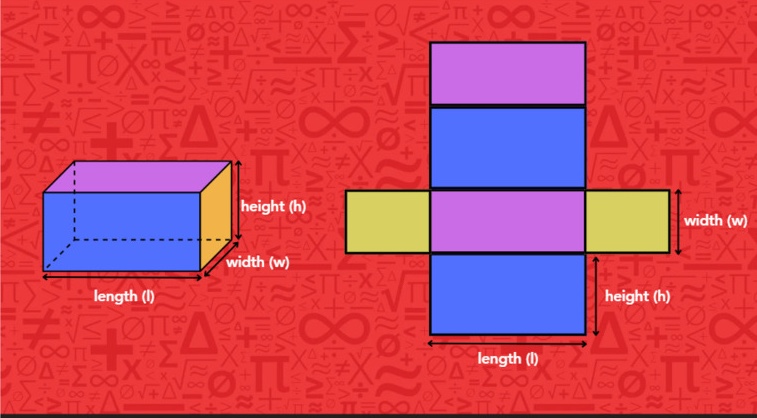
Now, see what we did here.
We unfolded the prism into a net. The faces aren’t abstract but laid out and labeled.
The expression inside the parentheses matches the three unique face pairs, and multiplying by 2 accounts for all six. What starts as a compact formula becomes something students can see and trace.
📕 You May Also Like: 5 Reasons Why Students Should Not Prioritize Speed in Math
B. They Build Connections Across Math Topics
Curriculum often presents math in different strands: ratios, graphs, equations, and then geometry. But when students work with multiple representations, those strands start to connect.
Say a student is learning about proportional relationships.
-
They begin with a recipe problem: 4 cups of water for every 1 cup of rice. That’s one way to see the ratio.
-
Then they create a table to scale it up: 4:1 becomes 8:2, 12:3, 16:4.
-
Next, they plot those points on a graph and notice a straight line forming.
-
Later, in algebra, they encounter the equation y = 4x, and it clicks. That’s the same relationship they saw in the table, the graph, the context, and the equation.
Each version offers a different angle, but they all build toward the same understanding.
📕 You May Also Like: 6 Ways to Help Your Middle Schooler Understand Proportionality
C. They Enhance Problem-Solving Skills
Students used to the kind of Algorithmic Reasoning we mentioned earlier (learn the formula, apply the formula, obey the formula) tend to get stuck when a problem doesn’t look exactly like the ones they’ve practiced.
What our tutors notice quite frequently is this: when students start working with multiple representations, they begin to move past that point.
Imagine a student working on this problem: A shirt costs $24 after a 20% discount. What was the original price?
At first, he’s not sure how to start. The numbers are clear, but the setup feels backwards. So he draws a quick percent bar, labels 100% as the full price, then marks off 20% to show the discount. That helps him see that the $24 must represent the remaining 80%. From there, he builds a proportion to work out the full price.
The more representations students are exposed to, the more aces they have up their sleeve when tackling math problems or, as we like to call it at Mathnasium, problem-solving skills.
📕 You May Also Like: 6 Activities to Strengthen Math Problem-Solving Skills
D. They Retain More
We’ve already settled that memorizing steps leads to shallow learning. Or to put it more plainly, the kind of learning that disappears once the chapter ends or the test is over.
With multiple representations, the picture looks different. One education study found that students exposed to a variety of representations showed significantly higher levels of conceptual understanding and retention.
We couldn’t agree more.
A student who’s worked with integers on a number line, used them in word problems, and thought of them in real-life situations, like temperature or elevation, is far less likely to mix them up later. They’re not guessing whether –7 is smaller than –2.
They’ve seen it play out, in more than one form, across more than one context. And that’s what helps the concept move from short-term performance to long-term memory.
📕 You May Also Like: 5 Ways Reflection Improves Math Retention + Parent Tips
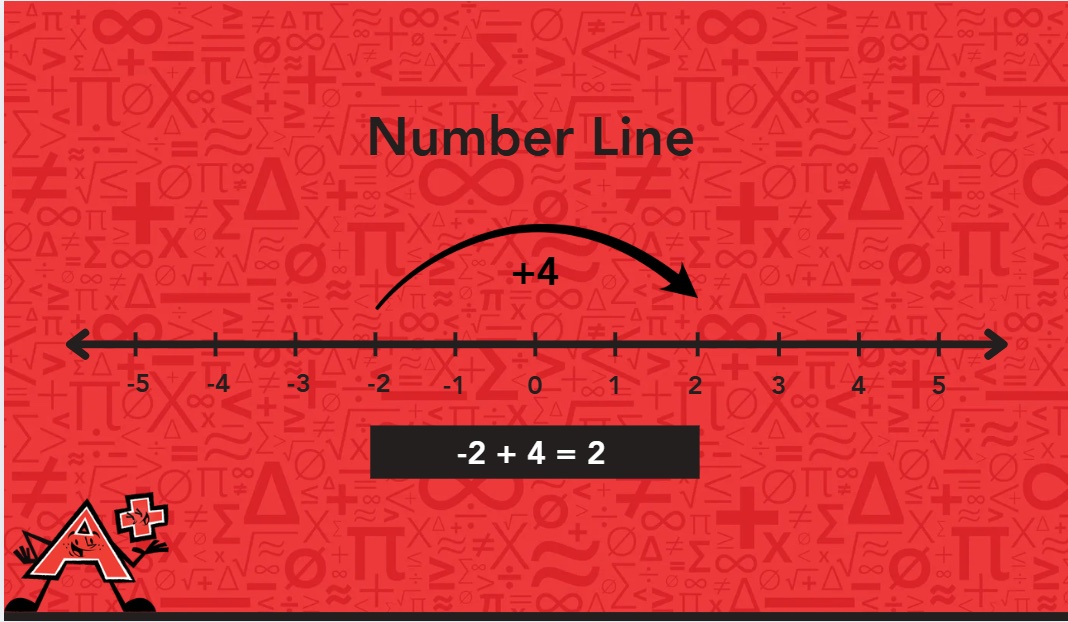
Number lines show up across topics, such as integers, distance, and operations.
Try This at Home: Simple Ways to Represent the Same Math Idea Differently
You don’t need a full lesson plan to help your child understand math from more than one angle. Try varying how a concept is shown or discussed. Here are some easy ways to start:
-
Place Value: Use base-ten blocks, expanded form, or money to break down numbers. Visual stacking or regrouping with manipulatives helps students grasp size and structure.
-
Multiplication: Show it with equal groups, arrays, or area models to highlight structure. You can also use repeated addition to connect the operation back to counting.
-
Fractions: Use part–whole visuals like pie diagrams, number lines to show size, or real-world ratios (like slices of pizza). Physical objects like paper strips or tiles can help make fractional parts more tangible.
-
Integers: Try number lines, temperature changes, or money gains and losses. These help students see how positive and negative values behave in real situations.
-
Percents: Represent them as “out of 100,” on percent bars, or as decimals and fractions. Shopping discounts or tips are great ways to make percents feel useful.
-
Equations: Write them as expressions, build value tables, or graph to visualize relationships. Real-world scenarios (like earning money per hour) help make equations meaningful.
-
Geometry: Let kids draw shapes, measure sides, or fold paper to explore properties. Using common objects (boxes, lids, string) brings spatial reasoning into daily life.
-
Ratios and Proportions: Show them with double number lines, tape diagrams, or recipe adjustments. These tools help students compare quantities in ways that feel intuitive.
📕 You May Also Like: How to Teach Math to Visual Learners with Pictures & Manipulatives

At Mathnasium, multiple representations are one of the key ways we build flexible math thinkers.
How Mathnasium Fosters Flexible Math Thinking
When students turn to Mathnasium for math support, it’s usually with a clear goal in mind. That might be mastering a foundational skill like fractions, preparing for a high-stakes test, clearing up algebra confusion, or finally getting comfortable with more advanced concepts.
Whatever the goal, we help them reach it, but not by handing out the same set of drills to every student.
Instead, we focus on helping students unlock their full math potential. That starts with building flexible math thinkers, or students who can see problems from more than one angle, reason through unfamiliar formats, and make connections that last.
That flexibility is one of the core outcomes of the Mathnasium Method™, our proprietary teaching approach designed to help students truly understand math.
To build a deep understanding of any math concept, our approach includes:
-
Personalization on a granular level: Each student begins their Mathnasium enrollment with a diagnostic assessment. This helps us identify their strengths, potential knowledge gaps, and how they approach math in general. With these insights, we create a learning plan customized to each student’s needs.
-
Teaching for understanding: We use natural, student-friendly language to phrase math concepts. We also combine verbal, visual, mental, tactile, and written teaching techniques to help students truly make sense of what they’re learning.
-
Caring, supportive tutors: Our tutors are specially trained in math as well as the technical and emotional aspects of teaching. This means they know how to encourage a student who’s stuck and how to challenge one who’s ready to stretch their thinking.
-
Problem-solving and critical thinking skills: During sessions, we always allow time for productive struggle, then rejoin students to check and correct their processes. This helps them learn to rely on their own thinking. We guide them through both the how and the why behind each math problem, not only the final answer. This approach develops the problem-solving and critical thinking tools they’ll use in math and life.
-
Singular focus on math: Our proprietary curriculum includes over 1,000 pages dedicated to math and math only. This singular focus allows us to dive deeper into how students best learn, absorb, and retain math skills.
-
An empowering, fun learning environment: We often hear students say our sessions don’t feel like conventional lessons. That’s because we incorporate a lot of game-based activities and rewards to keep students motivated and engaged.
And the results? They speak for themselves:
-
94% of parents report an improvement in their child's math skills and understanding
-
93% of parents report an improved attitude towards math after attending Mathnasium
-
90% of students saw an improvement in their school grades
With over 1,100 centers across the U.S, Mathnasium brings top-rated math instruction close to your home.
For families located in or near Redondo Beach, CA, Mathnasium of Redondo Beach is the go-to local center with years of experience transforming not only skills but also how students think and feel about math.
Whether your child needs to catch up, keep up, or get ahead in math, our team is happy to help!
Ready to get started?
📅 Schedule a Free Diagnostic Assessment at Mathnasium of Redondo Beach
Not near Redondo Beach?
📍 Find a Mathnasium Learning Center Near You


 (424) 247-7304