





What are Axes?
Axes are two or more mutually perpendicular lines, regarded as a frame of reference.
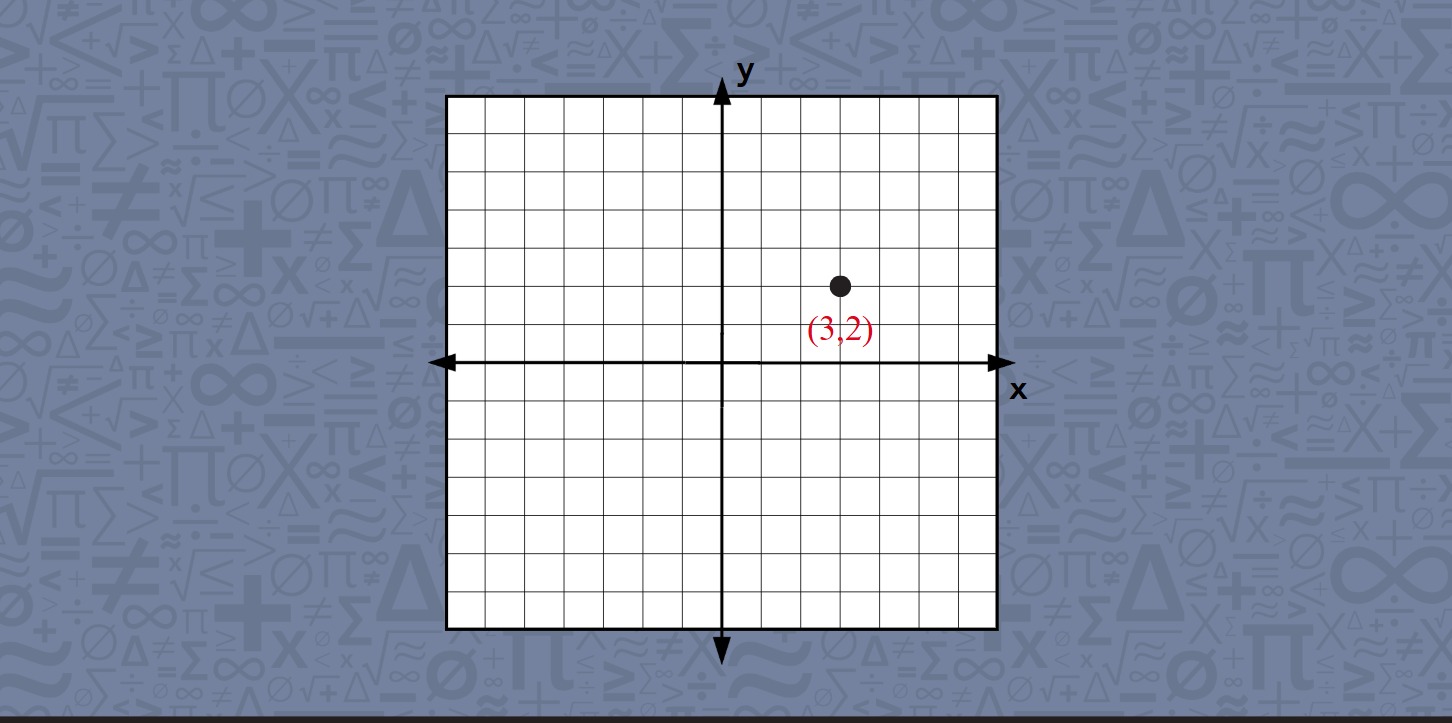
In math, axes (plural of axis) are the lines we use to build a coordinate system. They meet at a point called the origin and are used to describe the position of points on a graph.
In two dimensions, we use the x-axis (horizontal) and the y-axis (vertical). In three dimensions, we also include the z-axis.
For example, when graphing on a coordinate plane, you can describe any point by its position along the x- and y-axes, like (3, 2), which means 3 units over on the x-axis and 2 units up on the y-axis.
Axes help us:
-
Graph points, lines, and curves
-
Understand spatial relationships
-
Solve equations graphically
-
Explore geometry, algebra, and functions
When Do Students Learn About Axes?
Students begin learning about axes when they are introduced to graphing and coordinate systems.
Grades 3–5 – Introduction to Axes
Students learn about number lines, coordinate grids, and begin plotting points on the x- and y-axes.
Grades 6+ – Graphing with Axes in Algebra and Geometry
Students graph linear equations, interpret coordinate planes, and use axes to solve problems in algebra, geometry, and data analysis.