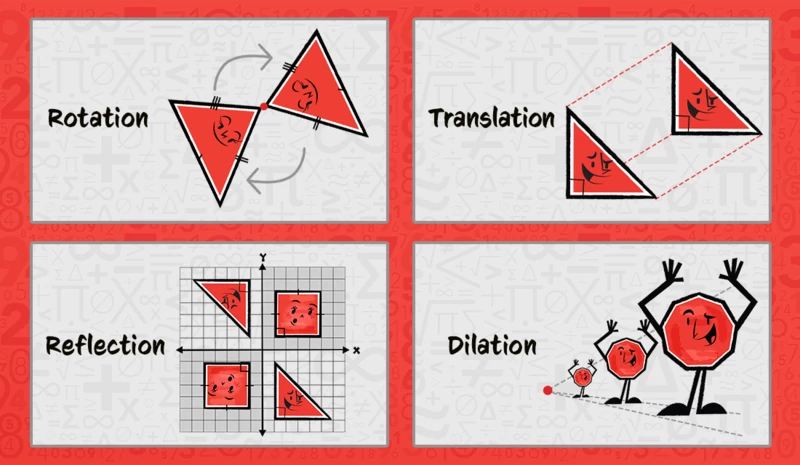












A transformation, also called a reflection, that produces a mirror image of a geometric figure.
In geometry, a flip is a transformation that creates a mirror image of a shape across a line. This transformation is also called a reflection.
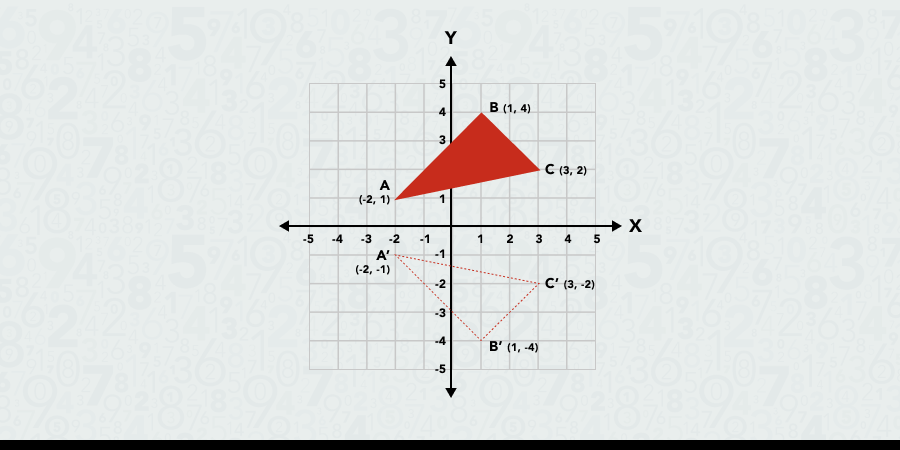
When we flip a shape, it stays the same size and shape; it just faces the opposite direction, like looking at its reflection in a mirror.
Here’s how to think about a flip:
-
Imagine flipping a playing card over a line on the table. It turns over but doesn’t change size or shape.
-
Or picture looking in a mirror: your image is flipped from left to right.
Flips are part of a group of geometric transformations that also include slides (translations), turns (rotations), and dilations (resizing). They help students understand symmetry, movement, and spatial reasoning.
Flips appear in:
-
Symmetrical designs like snowflakes
-
Reflected shapes in drawings or tessellations
-
Mirror images in puzzles or logos
When Do Students Learn About Flips in Math?
Students are introduced to flips and other transformations in elementary and middle school as they study geometry.
Grades 3–5 – Exploring Symmetry and Reflections
Students identify and draw lines of symmetry and begin to explore flips as part of understanding basic geometric transformations.
Grades 6+ – Using Flips in Geometry
Students work with flips more formally as reflections across axes or lines, using coordinates and rules to describe transformations.