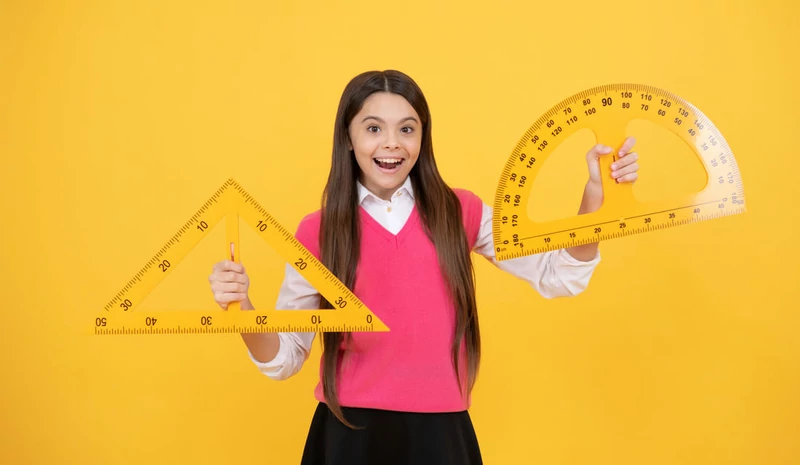




A semicircular instrument for measuring and constructing angles
A protractor is a tool we use in geometry to measure and draw angles. It looks like a half-circle (or sometimes a full circle) with numbers around the curved edge showing degrees from 0° to 180° (or 360° for full-circle protractors).
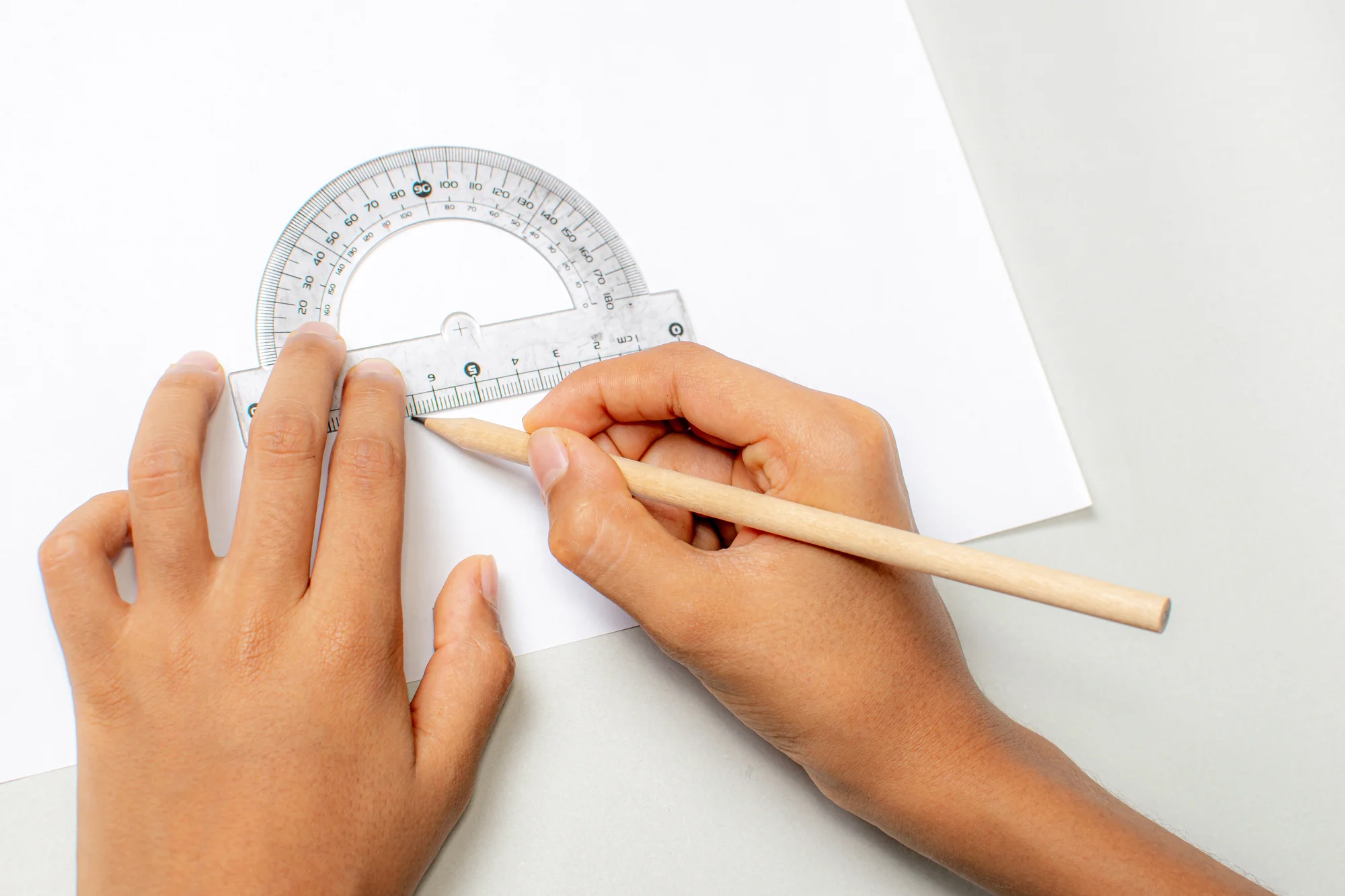
Protractors help us measure how wide or narrow an angle is. For example:
- An angle that measures 90° forms a right angle.
- An angle that measures less than 90° is an acute angle.
- An angle that measures more than 90° but less than 180° is an obtuse angle.
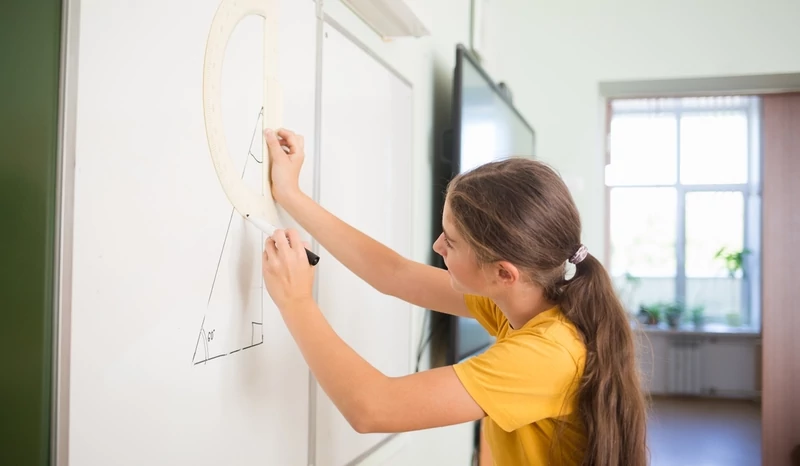
When we place a protractor so its center point is on the vertex (the point where two lines meet), we line it up with one side of the angle and read the measurement where the other side crosses the scale.
Protractors are useful in:
- Geometry
- Engineering and design
- Art and architecture
When Do Students Use Protractors in K–12 Grades?
Students begin using protractors when they start measuring and constructing angles in geometry lessons.
Grades 4–5 – Introduction to Protractors
Students learn how to measure angles using a protractor and identify different types of angles by their size.
Grades 6+ – Using Protractors in Geometry
Students use protractors to solve angle problems, draw geometric shapes, and explore angle relationships.