







What is the Coordinate Plane?
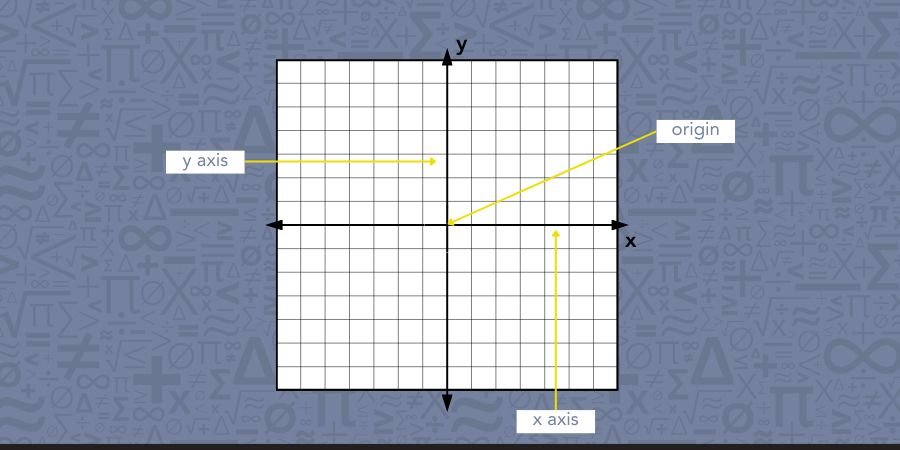
A coordinate plane is a flat surface formed by two number lines that are perpendicular and cross at a point called the origin
In math, the coordinate plane is a two-dimensional surface used to show positions or locations. It’s made up of two number lines:
- A horizontal line called the x-axis
- A vertical line called the y-axis
These lines meet at a point called the origin, which is where both values are zero (0, 0).
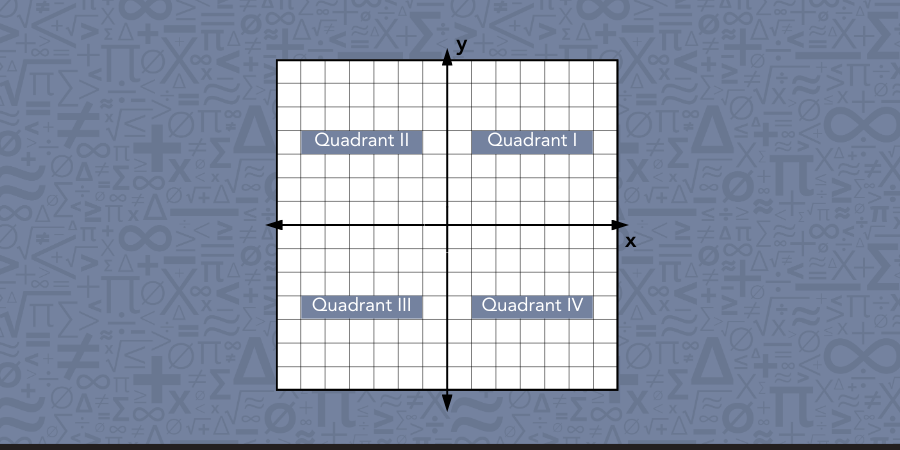
The coordinate plane is divided into four sections, called quadrants.
Each point on the plane is represented by a pair of numbers called an ordered pair (x, y). The first number tells us how far to move along the x-axis, and the second tells us how far to move along the y-axis.
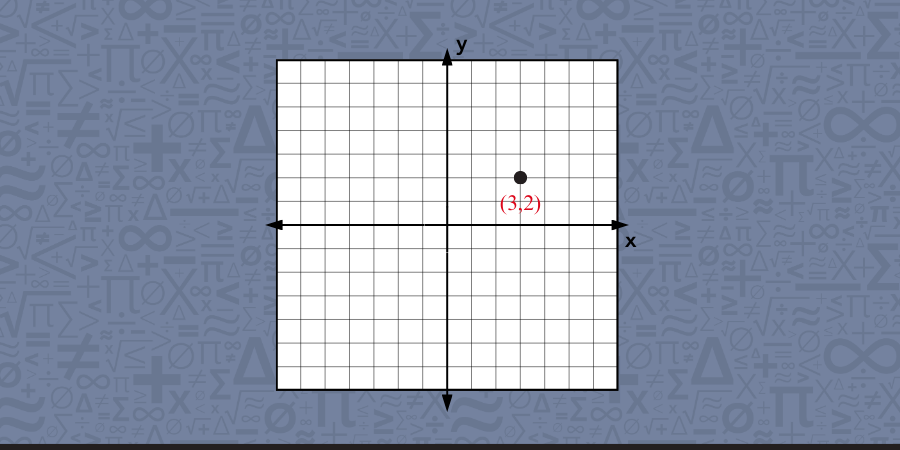
For example:
- The point (3, 2) means 3 units to the right and 2 units up from the origin.
- The point (–4, –1) means 4 units to the left and 1 unit down.
As you progress on your math journey, you will encounter coordinate planes frequently. We use them in:
- Math (to graph lines and shapes)
- Science (to track experiments)
- Maps (to find locations)
- Video games (to place objects or move characters!)
When Do Students Learn About the Coordinate Plane?
Grades 4–5 – Introduction to Coordinate Grids
Students begin plotting and reading points on the coordinate plane, usually in the first quadrant.
Grades 6+ – Graphing and Geometry
Students work with all four quadrants, graph equations, and explore transformations, distance, and slope.