











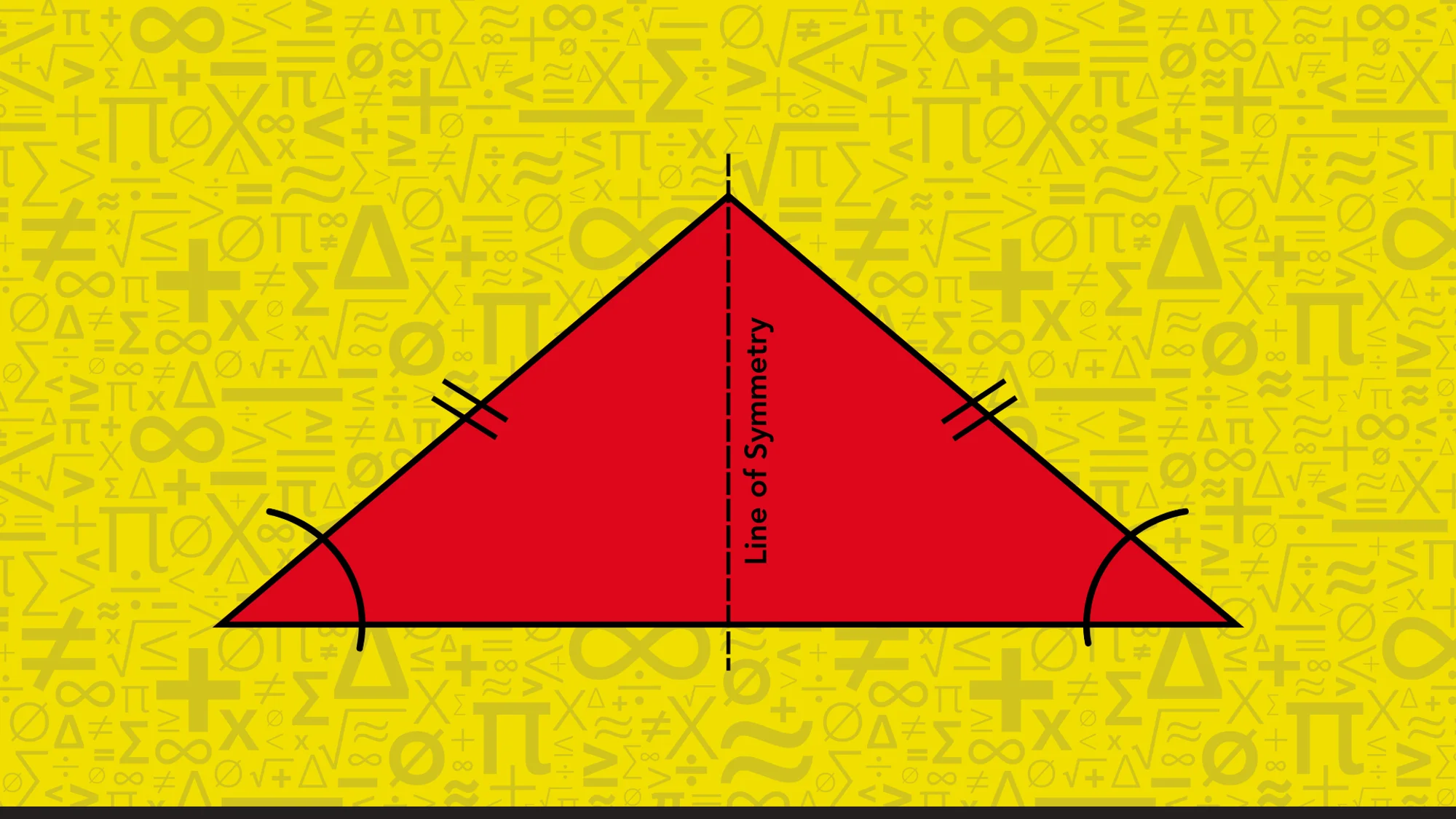
A triangle with two equal sides (and hence two equal angles).
An isosceles triangle is a triangle that has two sides that are the same length and two equal angles opposite those sides.
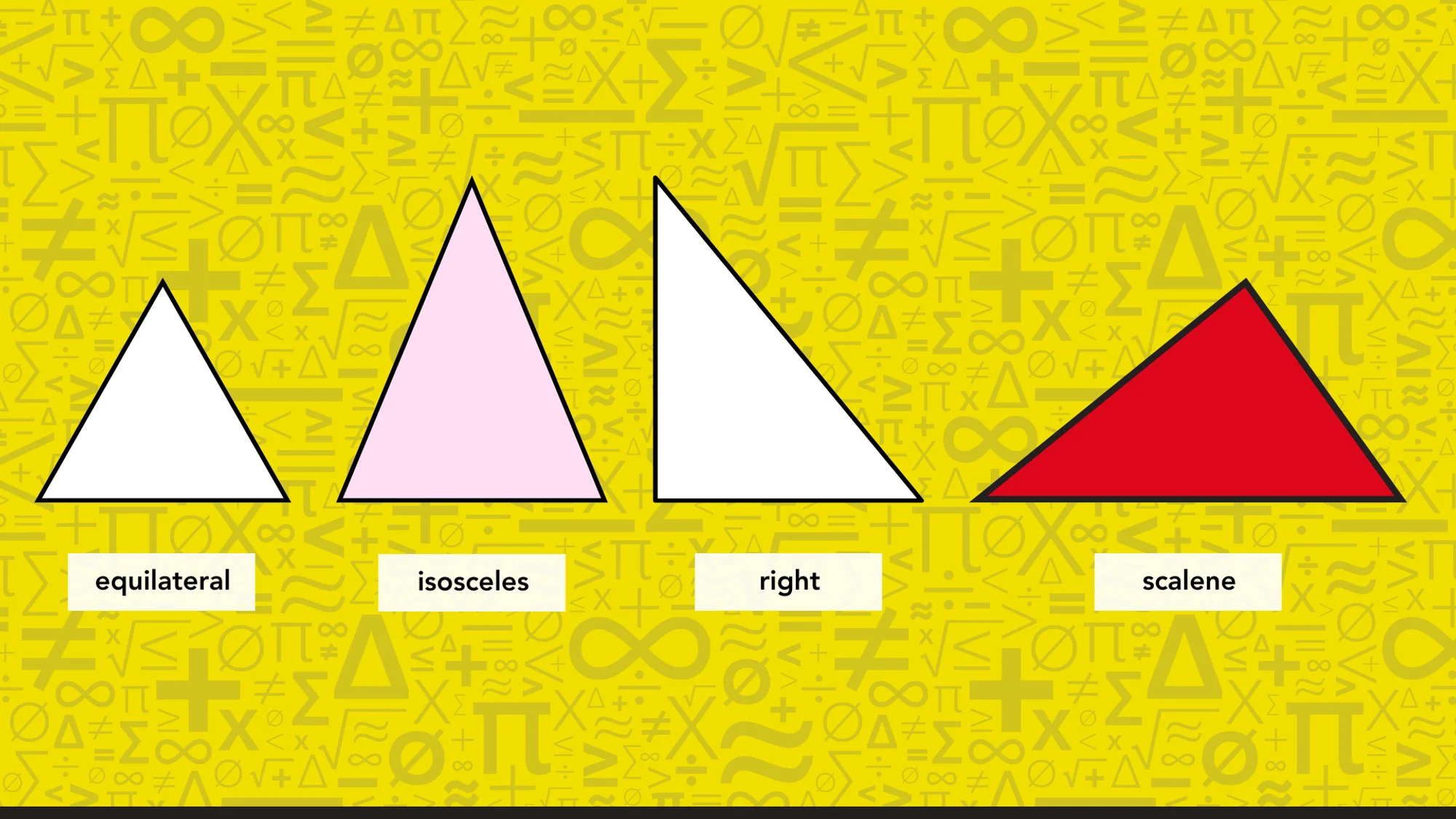
If two sides of a triangle are both 5 cm long, and the third side is different — say 8 cm — then we’ve got an isosceles triangle.
These two matching sides create two matching angles on the other side. That’s part of what makes this triangle so special: it has symmetry.
If you folded it down the middle, both sides would match – that's the line of symmetry.
Why do we care about isosceles triangles?
Because they help us:
-
Explore symmetry and angle relationships
-
Solve geometry problems with unknown angles or sides
-
Learn how different triangles behave and how to classify them
We can find isosceles triangles in roof designs, bridge supports, and even in art. And as we learn more about geometry, this triangle comes back again and again in new ways.
When Do Students Learn About Isosceles Triangles?
Students begin learning about different types of triangles—including isosceles triangles—as part of their early geometry lessons.
Grades 3–5 – Introduction to Triangle Types
Students learn to recognize and classify triangles based on side length and angle measurements, including isosceles, equilateral, and scalene triangles.
Grades 6+ – Using Triangle Properties
Students use triangle classifications, including isosceles triangles, in geometry problems involving angles, symmetry, and congruence.