











What is a Triangle?
A three-sided, three-angled polygon. Three sides is the minimum number of sides that a polygon can have.
A triangle is a flat shape (polygon) with three straight sides and three angles. Because it has the fewest sides possible for a polygon, we say that it’s the simplest polygon in geometry.
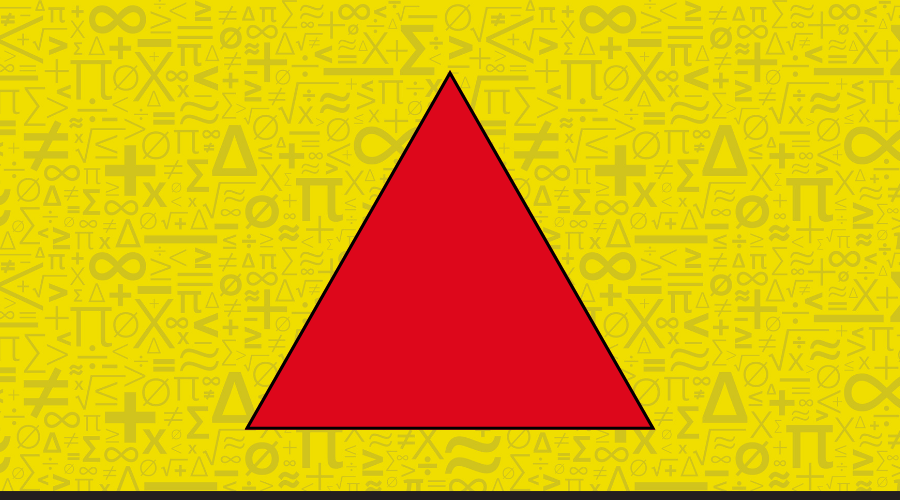
Triangles can look different depending on the size of their sides or angles, but they all share the same basic features:
- 3 sides
- 3 angles
- The sum of the interior angles always equals 180°
We can classify triangles based on their sides:
- Equilateral triangle: All three sides and angles are equal (each angle is 60°)
- Isosceles triangle: Two sides (and two angles) are equal
- Scalene triangle: All sides and angles are different
We can also classify them by their angles:
- Acute triangle: All angles are less than 90°
- Right triangle: One angle is exactly 90°
- Obtuse triangle: One angle is greater than 90°
Since triangles are flat, two-dimensional (2D) shapes, we usually see them as part of the surfaces of three-dimensional objects like the triangular sides of a tent, the faces of a roof truss, or designs on a road sign.
When Do Students Learn About Triangles?
Students are introduced to triangles in early geometry lessons and continue studying their properties in more detail through middle and high school.
Grades 1–2 – Recognizing Triangles
Students learn to identify triangles and distinguish them from other polygons.
Grades 3–5 – Understanding Triangle Properties
Students classify triangles by sides and angles, measure angles, and explore symmetry.
Grades 6+ – Triangles in Geometry and Trigonometry
Students study triangle congruence, similarity, and the Pythagorean Theorem, and begin using triangles in trigonometry.