











A 2-D figure made up of sides of any length
A polygon is a flat (2-D), closed shape made entirely of straight lines. These lines are called sides, and they connect at points called vertices (corners). Polygons always have at least three sides, and the sides never cross or curve.
We name polygons based on how many sides they have:
-
A triangle has 3 sides
-
A quadrilateral has 4 sides
-
A pentagon has 5 sides
-
A hexagon has 6 sides
-
And so on...
Polygons can be regular or irregular.
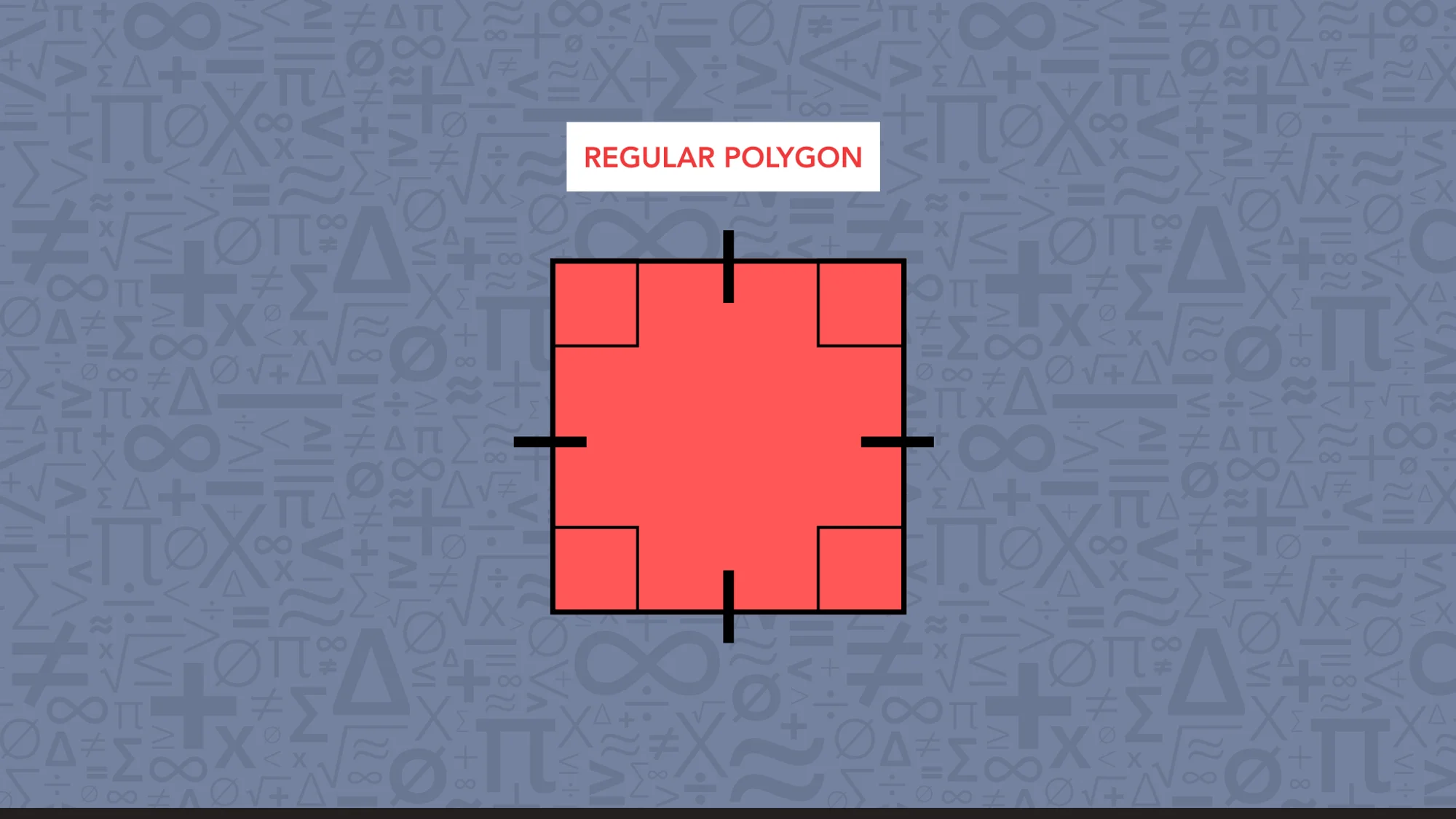
A regular polygon’s sides and angles are equal. What’s an example of a flat shape made of straight lines that are all the same and form the same angles between them?
A square!
So, if a regular polygon has sides and angles that are all equal, then what makes a polygon irregular?
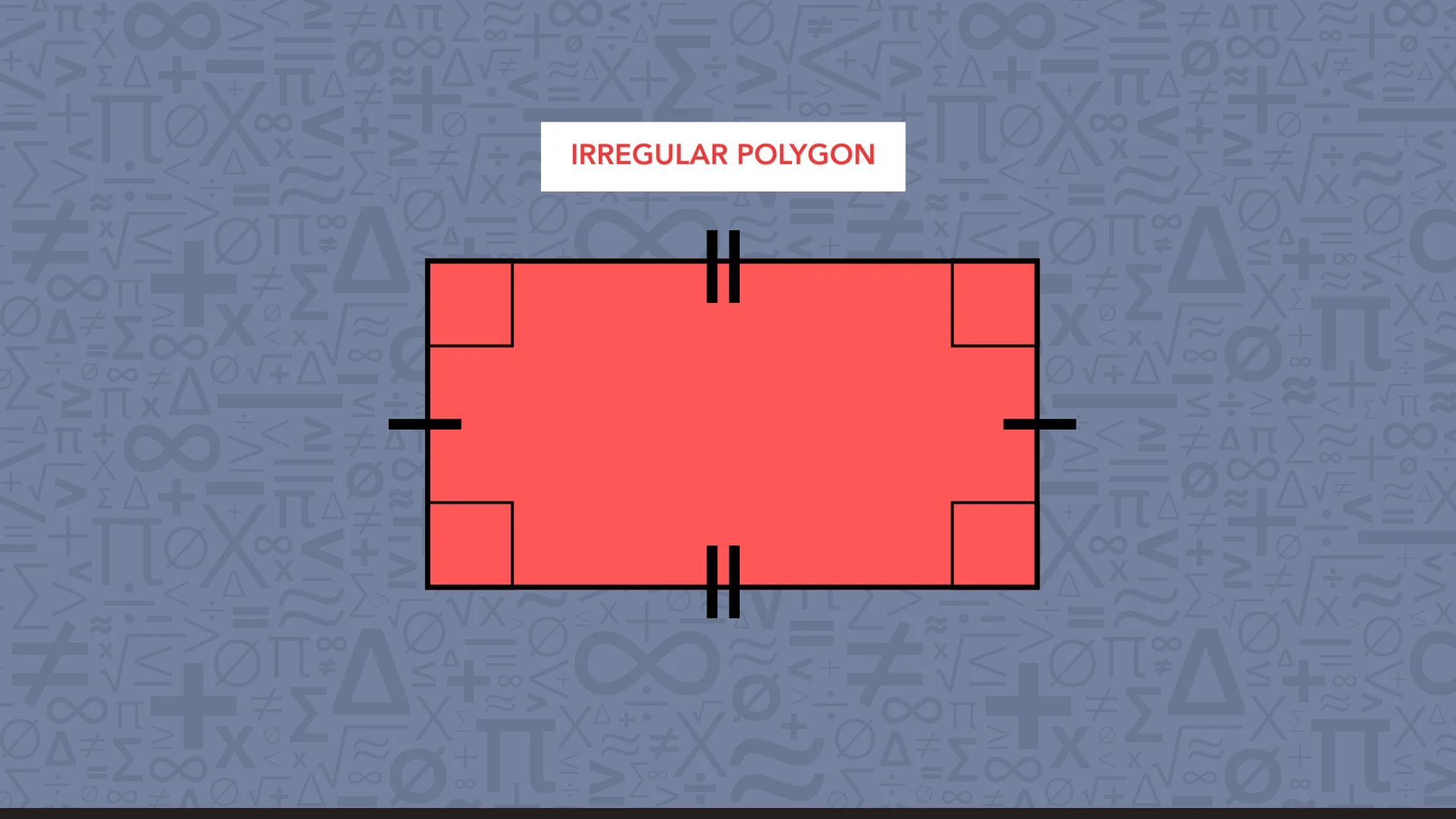
That’s right: the sides and angles aren’t all equal.
Example? A rectangle! Its opposite sides are equal, but not all four.
How about polygons in everyday life?
-
A stop sign is a regular octagon (8 sides)
-
A rectangle is a type of quadrilateral (4 sides)
-
A triangle can be found in road signs and design patterns
When Do Students Learn About Polygons?
Students begin learning about basic polygons early in elementary school and build on this knowledge with more complex concepts as they progress.
Grades 1–2 – Recognizing and Naming Polygons
Students identify simple polygons like triangles, rectangles, and squares and begin counting sides and vertices (corners).
Grades 3–5 – Classifying and Comparing Polygons
Students classify polygons based on the number of sides, angles, and symmetry, distinguishing between regular and irregular shapes.
Grades 6+ – Polygons in Geometry
Students calculate side lengths, interior and exterior angles, and explore formulas for polygons in coordinate geometry and transformations.