







A prism with a rectangular base. A box.
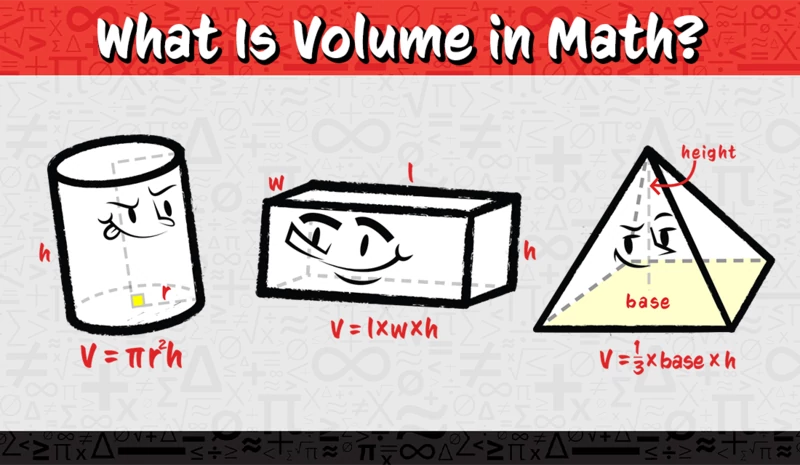
A rectangular solid is a three-dimensional shape with six rectangular faces, eight vertices, and twelve edges. Every face meets the adjacent faces at right angles. In everyday life, we call this shape a box.
Some familiar examples of rectangular solids:
-
A cereal box
-
A brick
-
A book
-
A shipping carton
A rectangular solid has three key measurements: length, width, and height. We use these to calculate two important values:
-
Surface area: the total area of all six faces, calculated by adding the areas of each pair of opposite faces
-
Volume: the amount of space inside, calculated by multiplying length × width × height
A cube is a special type of rectangular solid where all three measurements are equal, which means that every face is a square.
Rectangular solids are also called rectangular prisms. Both names refer to the same shape, and students may encounter either term depending on their textbook or teacher.
When Do Students Learn About Rectangular Solids?
Students encounter rectangular solids as some of the first three-dimensional shapes they explore.
Grades K–2 – Recognizing 3D Shapes
Students identify boxes and other rectangular solids in the real world and begin describing their features, such as faces, edges, and corners.
Grades 3–5 – Volume and Surface Area
Students calculate the volume and surface area of rectangular solids, applying multiplication and area skills to three-dimensional figures.
Grades 6+ – Rectangular Solids in Geometry and Problem Solving
Students work with rectangular solids in more complex problems, including those involving composite figures, unit conversions, and algebraic expressions for volume and surface area.